







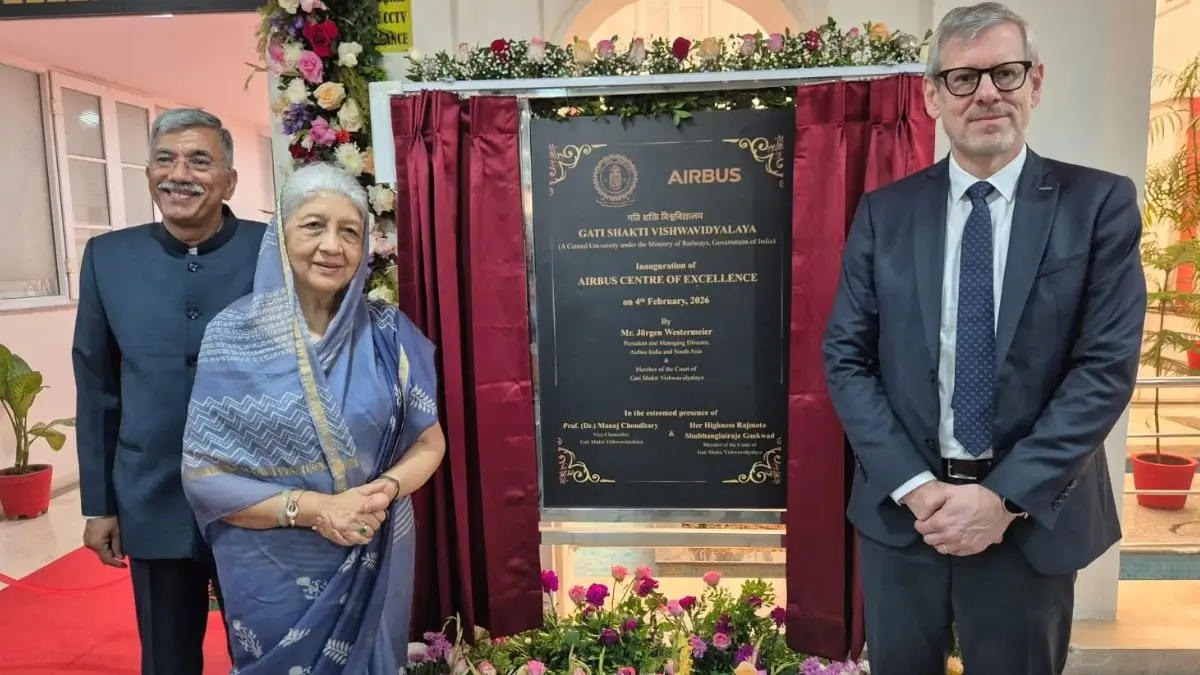
Airbus sustainable aviation centre in Gujarat opens new opportunities in green aviation, research and skill development — key current affairs topic for competitive exams.
Airbus Inaugurates Centre of Excellence for Sustainable Aviation in Gujarat
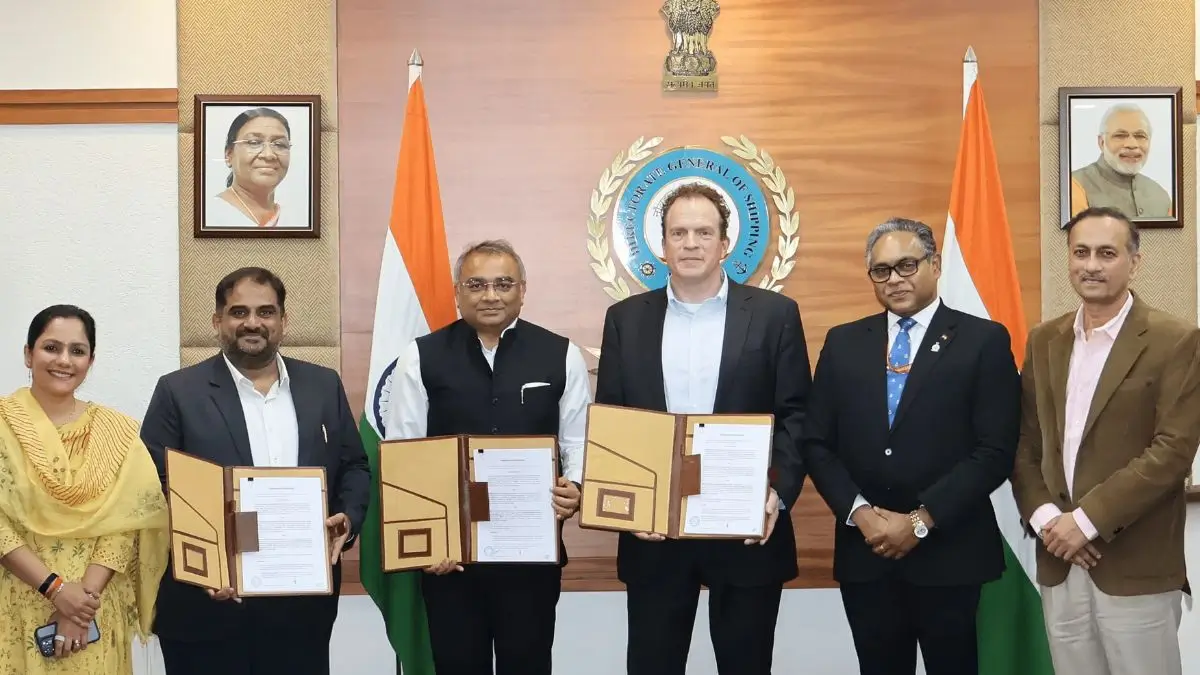
Airbus — a global aerospace leader — has opened a Centre of Excellence for Sustainable Aviation at Gati Shakti Vishwavidyalaya in Vadodara, Gujarat. This development marks a major step forward in advancing sustainable aviation technologies and shaping India’s future aerospace ecosystem.
Introduction to the Centre of Excellence
On February 5, 2026, Airbus inaugurated a dedicated Centre of Excellence (CoE) at Gati Shakti Vishwavidyalaya (GSV) in Vadodara — one of India’s key hubs for transportation and logistics education. The initiative seeks to build a sustainable aerospace ecosystem by focusing on R&D, innovation, and advanced technologies such as sustainable aviation fuels (SAF) and waste-to-fuel conversion.
This CoE is part of a long-term partnership between Airbus and GSV — a collaboration aimed at strengthening indigenous research capabilities, encouraging student innovation, and enhancing India’s capacity in cutting-edge aerospace sectors.
Key Focus Areas of the CoE
The Centre of Excellence will concentrate on:
- Sustainable Aviation Technologies: Developing solutions such as sustainable aviation fuel (SAF) that can significantly reduce carbon emissions in civil aviation.
- Research and Innovation: Encouraging students and researchers at GSV to engage in advanced aerospace projects and collaborations.
- Skill Development: Bridging the gap between academic knowledge and industry requirements in aerospace and aviation sectors.
These efforts align with India’s broader goals of strengthening green aviation practices, fostering innovation, and supporting the global shift toward environmentally responsible air travel.
Industry and Academic Collaboration
The Airbus CoE at GSV symbolizes deeper industry-academic engagement. Airbus officials highlighted that working with a central university like GSV — which is industry-driven and focused on logistics — creates a unique knowledge ecosystem.
This partnership not only facilitates hands-on aerospace research but also prepares Indian students for future opportunities in aviation technology, sustainability, and engineering.
Support for Aatmanirbhar Bharat
Airbus’ move supports India’s Aatmanirbhar Bharat campaign by encouraging local research and innovation in the aerospace sector. By building sustainable aviation capabilities domestically, the CoE strengthens India’s self-reliance and competitiveness in global aerospace technology.

Why This News Is Important
Relevance to Government Exam Aspirants
This development is significant for students preparing for government exams, especially in sections such as Science & Technology, Economy, Environment, and General Awareness. It highlights how global aerospace majors are investing in India’s innovation ecosystem — a topic frequently tested in UPSC, SSC, Banking, and other competitive exams.
Impact on India’s Aviation and Environment Goals
The Centre targets sustainable aviation technologies, including research on sustainable aviation fuels (SAF), which may play a critical role in reducing aviation carbon emissions. This connects directly to India’s commitments under international climate agreements and national goals for green growth. Aspirants must understand such initiatives as part of India’s environmental policy and industry transformation.
Boost to Skill Development and Innovation
By fostering research collaboration between a global leader and an Indian university, this project creates opportunities for skill enhancement, technology transfer, and employment prospects in high-technology sectors — topics relevant to economic and social development segments in exams.
Alignment with National Policies
The initiative aligns with India’s Make in India, Skill India, and Aatmanirbhar Bharat missions — key policies often referenced in current affairs questions across government exams.
Historical Context — Sustainable Aviation in India
Growth of India’s Aviation Sector
India is among the fastest-growing aviation markets globally. With increasing passenger traffic and aircraft orders, the aviation industry is a major contributor to economic growth. However, it also faces environmental challenges due to emissions.
Shift Toward Sustainability
To address climate concerns, the industry is shifting toward sustainable aviation fuel (SAF) and other low-emission technologies. Airbus and other OEMs (Original Equipment Manufacturers) have promoted SAF as a key tool for reducing aviation’s carbon footprint.
Academic and Industry Partnerships
Airbus has previously partnered with Indian institutions and companies for pilot training, engineering centres, and manufacturing activities, indicating long-term engagement with India’s aerospace ecosystem.
The establishment of this Centre of Excellence builds on such collaborations and reflects India’s evolving role in global sustainable aviation research and skill development.
Key Takeaways from “Airbus Opens Centre of Excellence for Sustainable Aviation”
| S. No. | Key Takeaway |
|---|---|
| 1 | Airbus inaugurated a Centre of Excellence for Sustainable Aviation at Gati Shakti Vishwavidyalaya in Vadodara, Gujarat. |
| 2 | The Centre focuses on sustainable aviation technologies, innovation, and research. |
| 3 | It strengthens ties between industry and academia to boost aerospace research and skills. |
| 4 | The initiative supports India’s goals of sustainability, green growth, and self-reliance. |
| 5 | Students and researchers are expected to benefit from enhanced training and innovation opportunities. |
FAQs: Important Exam-Oriented Questions
1. Where has Airbus opened its Centre of Excellence for Sustainable Aviation?
Airbus has opened the Centre of Excellence (CoE) for Sustainable Aviation at Gati Shakti Vishwavidyalaya (GSV), Vadodara, Gujarat. This location is important because Gujarat is emerging as a hub for aerospace and logistics education in India.
2. What is the main objective of this Centre of Excellence?
The primary objective is to promote sustainable aviation technologies, research, and innovation. It focuses on developing eco-friendly aviation solutions such as sustainable aviation fuels (SAF) and strengthening India’s aerospace research ecosystem.
3. Which institution is collaborating with Airbus for this initiative?
Airbus is collaborating with Gati Shakti Vishwavidyalaya, a central university under the Ministry of Railways, Government of India, specializing in transportation and logistics education.
4. How is this initiative relevant to India’s national development goals?
The initiative supports Aatmanirbhar Bharat, Make in India, and Skill India by promoting domestic research, skill development, and innovation in the aviation sector.
5. Why is sustainable aviation important for India?
Sustainable aviation helps reduce carbon emissions, supports India’s climate commitments, and promotes green growth. It is crucial as India is one of the fastest-growing aviation markets in the world.
6. Which exam sections can include questions from this topic?
This topic is relevant to Science & Technology, Environment, Economy, and Current Affairs sections of UPSC, SSC, Banking, Railways, Defence, and State PSC exams.
7. What is Sustainable Aviation Fuel (SAF)?
SAF is an alternative aviation fuel produced from renewable resources that reduces greenhouse gas emissions compared to conventional jet fuel.
Some Important Current Affairs Links