






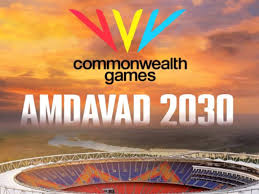
Ahmedabad 2030 Commonwealth Games confirmed as host city, marking the centenary edition. Learn about venues, sports disciplines, infrastructure, and significance for India’s global sporting image.
Ahmedabad officially secures 2030 Commonwealth Games — What it Means for India
Ahmedabad wins bid to host 2030 Commonwealth Games
On 26 November 2025, the global governing body of Commonwealth sport formally confirmed that Ahmedabad (also called Amdavad) has been chosen as host city for the 2030 Centenary Commonwealth Games, after its bid was approved at the General Assembly in Glasgow.
Ahmedabad beat out competition from Abuja (Nigeria) for the right to stage the event.
A landmark centenary edition — significance of 2030
The 2030 Games will mark 100 years since the first Commonwealth Games, making this a symbolic “Centenary Edition.”
The event is expected to feature 15–17 sports disciplines, expanding well beyond the scaled-down 10-sport format of the 2026 Games. Confirmed events include athletics, swimming, table tennis, bowls, weightlifting, artistic gymnastics, netball, boxing — along with their para-sport counterparts.
Additional disciplines under review include archery, badminton, T20 cricket, diving, hockey, shooting, various gymnastics forms, triathlon, and wrestling — giving scope for a broad and inclusive sporting programme.
Infrastructure readiness and India’s Olympic ambition
Ahmedabad’s selection is backed by its robust and growing sports infrastructure. The city already boasts the famed Narendra Modi Stadium — the world’s largest cricket stadium — along with existing arenas and complexes upgraded under Gujarat’s sports development push.
Local authorities have indicated that most venues needed for the 2030 Games are either ready or under advanced stages of development, and a formal organising committee is expected to be constituted soon. The 2030 Games are also being viewed as a potential stepping stone toward India’s ambition to host the 2036 Summer Olympics, signalling long-term planning in sporting infrastructure and global positioning.
Emphasis on inclusivity, sustainability and legacy
The 2030 Games will emphasize accessibility and inclusivity, with para-sports forming an integral part of the schedule.
The organising plan also envisions sustainable infrastructure: venues with renewable energy, low-emission transport links, waste-management systems, and inclusive spaces for athletes and visitors. Officials of the national and Gujarat governments have described the selection as a moment of national pride, signalling India’s readiness and growing maturity in hosting international multi-sport events.

Why This News Is Important
Signifies global recognition of India’s sporting infrastructure
The official hosting of the 2030 Commonwealth Games is a landmark in India’s sporting history. It reflects global confidence in the country’s ability to organise large scale, multi-sport international events. For aspirants of civil services, banking, railways, defence or administrative roles, this development underscores India’s evolving international stature and the government’s growing emphasis on sports diplomacy and global engagement.
Economic, infrastructural and employment impact
Hosting the Games will likely catalyze major infrastructure upgrades — stadiums, transport, housing, urban development — especially in Ahmedabad and surrounding regions. Such expansion often leads to employment generation in sectors like construction, hospitality, security, logistics, services, and more. For students eyeing government jobs (especially in railways, public administration, urban development, and allied sectors), this could translate into increased opportunities and demands for public-sector services, policing, youth affairs, and urban planning.
Boost to India’s long-term ambitions and global sports image
With the 2030 Games doubling as the centenary edition, the success of this event can strengthen India’s bid to host bigger global spectacles, such as the 2036 Olympics. This signifies a strategic push by the government, reflecting long-term vision — something that civil service or defence aspirants must be aware of, because such decisions shape policy priorities, national infrastructure planning, and resource allocation.
Relevance for current affairs & exam aptitude
For aspirants preparing for exams like civil service (IAS/PCS), banking, railways, etc., this development is an important current-affairs topic: it touches upon governance, international relations (hosting global events), economy (infrastructure, employment), sports policy, and urban development — all of which are commonly tested in general-awareness/current-affairs sections.
Historical Context
Previous Indian hosting — 2010 Commonwealth Games
India last hosted the Commonwealth Games in 2010, in the national capital, New Delhi. That edition, though notable for India’s medal tally, was marred by controversies — last-minute construction delays, incomplete infrastructure, allegations of mismanagement, and concerns over athlete safety and facility readiness.
Criticism over cost overruns and delays affected India’s global image in terms of hosting capabilities.
Shift in approach — improved planning and infrastructure readiness
Learning from past mistakes, the 2030 bid by Ahmedabad reflects a markedly different approach: emphasis on ready infrastructure, clear funding, sustainable planning, and long-term vision rather than short-term spectacle. Officials have publicly assured that venues, funding, and planning are better laid out this time.
Moreover, the location — Ahmedabad — already boasts world-class sporting venues, including the Narendra Modi Stadium, and has institutional backing from both state and central governments.
From hosting national tournaments to global stage — India’s evolving sports journey
Over the past two decades, India has steadily increased hosting international sporting events, improved sports infrastructure, and developed policy emphasis on sports. The 2030 Games represent not just a one-off event but a next step in India’s ambition to integrate sports, urban development, and global identity. The selection of Ahmedabad indicates the maturity of this ambition, and provides a long-term legacy roadmap for sports, infrastructure, and urban growth.
Key Takeaways from This News
| # | Key Takeaway |
|---|---|
| 1 | Ahmedabad has been officially confirmed as the host city for the 2030 Commonwealth Games, decided at the Commonwealth Sport General Assembly held on 26 November 2025 in Glasgow. |
| 2 | The 2030 edition will be the Centenary Commonwealth Games — marking 100 years of the Commonwealth Games movement — giving it special historical significance. |
| 3 | The Games are expected to feature 15–17 sports, significantly more than the 2026 edition; confirmed events include athletics, swimming, table tennis, weightlifting, artistic gymnastics, netball, boxing, with para-sport disciplines included. |
| 4 | Ahmedabad’s existing infrastructure (like Narendra Modi Stadium) and planned developments make it a strategically suitable host; the plan includes sustainable venues, improved transport, athlete village, and urban renewal. |
| 5 | Hosting CWG 2030 aligns with India’s long-term ambition to host global events (e.g. 2036 Olympics) and could boost economy, employment, international visibility, and urban-development — aspects relevant for future civil-service, infrastructure, and public-policy oriented careers. |
FAQs: Frequently Asked Questions
1. Where will the 2030 Commonwealth Games be held?
The 2030 Commonwealth Games will be hosted in Ahmedabad, Gujarat, India.
2. When was Ahmedabad confirmed as the host city for the 2030 Commonwealth Games?
Ahmedabad was officially confirmed on 26 November 2025 during the Commonwealth Sport General Assembly in Glasgow.
3. What is the significance of the 2030 Commonwealth Games?
The 2030 Games will be the Centenary Edition, marking 100 years since the first Commonwealth Games.
4. How many sports are expected in the 2030 Commonwealth Games?
The Games are expected to feature 15–17 sports disciplines, including athletics, swimming, boxing, gymnastics, netball, and para-sports events.
5. Why is hosting the 2030 Commonwealth Games important for India?
It reflects India’s growing global stature, promotes urban infrastructure development, boosts employment, and strengthens India’s potential bid for future global events like the Olympics.
6. What existing infrastructure makes Ahmedabad suitable for hosting the Games?
Ahmedabad already has the Narendra Modi Stadium, multiple sports arenas, and proposed venues for athletics, swimming, and other competitions, along with planned sustainable infrastructure.
7. Will para-sports be included in the 2030 Games?
Yes, para-sports will be an integral part of the event to ensure inclusivity.
8. What are some long-term benefits of hosting the Games for Ahmedabad?
Enhanced urban infrastructure, sports promotion, tourism boost, employment opportunities, and international visibility are key benefits.
Some Important Current Affairs Links