
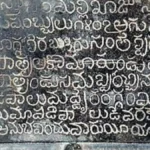









Gajapathi inscription discovered in Lakshmi Narasimha Swamy Temple, Guntur dating back to 15th century, highlighting medieval administration, temple practices, and inter-regional cultural ties.
Rare Medieval Gajapathi Inscription Discovered in Guntur Temple
Recently, a significant archaeological discovery was made in the historic city of Guntur, Andhra Pradesh. A rare medieval inscription linked to the Gajapathi dynasty was unearthed inside the Lakshmi Narasimha Swamy Temple in Ramachandrapura Agraharam. This discovery has caught the attention of historians and competitive exam aspirants alike due to its historical and cultural significance.
🔍 Excavation and Location Details
The inscription was found engraved on a stone pillar within the mandapa (hall) of the temple. Written in the Telugu language, the inscription is believed to date back to the 15th century CE, during the period of one of the most powerful rulers of the Gajapathi dynasty, King Purushottama Deva.
📖 What the Inscription Reveals
According to epigraphists and experts studying the find, the inscription mentions Kumaraguru Mahapatra, who served as an administrative officer under King Purushottama Deva. This indicates that the Gajapathi administrative influence extended into the coastal Andhra region, revealing political, cultural, and territorial interactions between Odisha and Andhra during the late medieval period.
🏛️ Architectural and Temple Context
Temple authorities and local traditions suggest that parts of the temple, including stone pillars and the idol of Lord Narasimha, may have been brought from Kondaveedu Fort. This reinforces the idea that the region had active cultural exchanges and movement of architectural elements during medieval times, possibly due to warfare or ceremonial relocation.
📚 Administrative and Religious Importance
The inscription not only highlights political authority but also provides insights into temple management practices. It reportedly contains detailed instructions on rituals and even aspects like ritual offerings and cattle management practices associated with temple activities, which helps historians reconstruct socio‑religious life of that era.
🧠 Contribution to Historical Research
Finds like this stone inscription are invaluable for epigraphic studies, as they expand our understanding of administrative systems and inter‑regional connections in medieval India. For students preparing for exams like UPSC, SSC, RRB, or State PSCs, such discoveries serve as key cultural and historical facts that can appear in syllabus topics like Indian History, Art and Culture, and Society.

📌 Why This News Is Important
🏛️ Cultural and Historical Significance
The discovery of the medieval Gajapathi inscription in Guntur is monumental for Indian history because it highlights political connections between eastern and southern regions of India during the 15th century. It provides concrete evidence of interaction between the Gajapathi kingdom of Odisha and coastal Andhra, expanding our understanding of cultural and administrative networks in medieval India. This is important for students studying Indian history and culture, as such archaeological finds deepen historical context and can often be asked in competitive exam sections.
📘 Relevance to Competitive Exams
For aspirants preparing for exams like UPSC Civil Services, SSC CGL, RRB, or State PSCs, this news is directly relevant to the History and Culture syllabus. It demonstrates how epigraphical evidence helps scholars piece together past political systems, territorial influences, and administrative structures — topics frequently covered in Indian History sections of examinations.
🧠 Enhances Understanding of Regional Dynamics
The inscription provides clues about medieval governance and temple practices that shaped regional politics. It points to the administrative spread of one dynasty into another region, illustrating how kingdoms of medieval India were interwoven through conquest, governance, and cultural influence. Such insights are valuable when answering analytical questions in exams that test understanding of socio‑political history.
📜 Historical Context
🏹 The Gajapathi Dynasty: An Overview
The Gajapathi dynasty, rooted in present‑day Odisha, rose to prominence in the medieval period. The term Gajapathi literally means “Lord of Elephants”, symbolizing military strength and sovereignty. The dynasty reached its zenith under rulers like Kapileswara Deva and Purushottama Deva, who expanded their influence across eastern India.
🌐 Expansion into Coastal Andhra
During the 15th century, the Gajapathi kingdom extended its reach into parts of modern Andhra Pradesh, including the Guntur region. This was a time when dynastic kingdoms often controlled territories beyond their traditional boundaries, forming complex socio‑political networks. The discovery of the Gajapathi inscription in a Telugu temple underscores these historical interactions.
📜 Importance of Epigraphic Evidence
Inscriptions have long been a key source for reconstructing India’s past. Like other inscriptions such as the Hathigumpha inscription or temple records from various South Indian kingdoms, the Gajapathi inscription serves as a primary source revealing political authority, administration, land grants, and religious practices.
📊 Key Takeaways from “Rare Medieval Gajapathi Inscription Discovered in Guntur Temple”
| S. No. | Key Takeaway |
|---|---|
| 1 | A medieval Gajapathi inscription was discovered in the Lakshmi Narasimha Swamy Temple in Guntur, Andhra Pradesh. |
| 2 | The inscription is in Telugu and dates back to the 15th century CE, linked to King Purushottama Deva. |
| 3 | It mentions Kumaraguru Mahapatra, indicating administrative influence of the Gajapathi rulers in the region. |
| 4 | Temple traditions suggest earlier architectural elements came from Kondaveedu Fort, showing cultural movement. |
| 5 | The find enhances understanding of political and cultural ties between Odisha and coastal Andhra in medieval times. |
FAQs: Frequently Asked Questions
1. What is the Gajapathi inscription discovered in Guntur?
The Gajapathi inscription is a rare medieval stone inscription found in the Lakshmi Narasimha Swamy Temple, Guntur. It dates back to the 15th century CE and mentions administrative activities under King Purushottama Deva of the Gajapathi dynasty.
2. In which language is the inscription written?
The inscription is written in Telugu, which was commonly used in the region during medieval times.
3. Who was mentioned in the inscription?
The inscription references Kumaraguru Mahapatra, an administrative officer under the Gajapathi king, highlighting the political reach of the dynasty in Andhra Pradesh.
4. Why is this discovery significant for students preparing for exams?
This discovery provides insights into medieval Indian history, administration, temple management, and inter-regional politics, which are important for exams like UPSC, SSC, RRB, State PSCs, and history sections in banking exams.
5. What does the inscription reveal about temple practices?
The inscription contains instructions on ritual offerings, temple management, and administrative practices, giving historians and students a glimpse into socio-religious life in medieval India.
6. Where did parts of the temple architecture come from?
Local traditions suggest that stone pillars and idols may have been brought from Kondaveedu Fort, reflecting cultural and architectural exchanges in the medieval period.
Some Important Current Affairs Links