









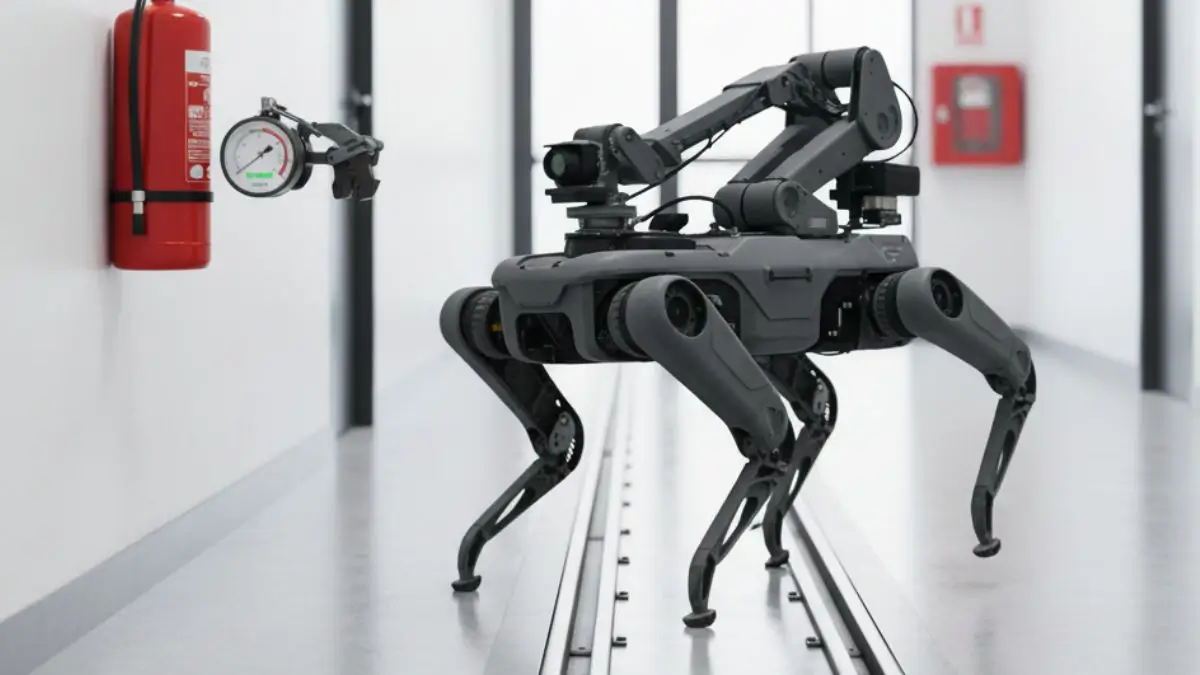
SCORP robot India leads in robotics innovation with the first legged mobile manipulator for disaster management, industrial use, and autonomous operations.
SCORP: India’s First Legged Mobile Manipulator – A Leap in Robotics Innovation
India has taken a major stride in robotics by unveiling SCORP, the country’s first legged mobile manipulator robot. Developed by the Kanpur-based startup xTerra Robotics with support from IIT Kanpur, SCORP represents a significant technological breakthrough in indigenous robotics and automation.
SCORP stands out from conventional robotic systems due to its four-legged design that combines agile locomotion — similar to that of a robotic dog — with a versatile robotic arm capable of manipulation tasks. This unique blend of mobility and functionality positions SCORP well above traditional wheeled robots, especially in environments where terrain is unpredictable and accessibility is limited.
Unlike robots with wheels or tracks, SCORP’s legs allow it to traverse uneven surfaces, debris, stairs, and rough terrain — making it suitable for challenging settings such as disaster zones, industrial complexes, tunnels, and search and rescue operations. Its integrated robotic arm can inspect objects, grasp tools, interact with its surroundings, and perform tasks that previously required human intervention.
The robot also incorporates a suite of sensors and intelligent algorithms that enable it to perceive and adapt to its environment in real time. For example, depth sensors and high-resolution cameras help SCORP detect obstacles and navigate autonomously when required. These features ensure that the robot can execute complex tasks safely and reliably, even in risky situations.
Role in Atmanirbhar Bharat and Tech Innovation
SCORP aligns with India’s Atmanirbhar Bharat initiative by reducing dependence on costly imports and strengthening the domestic deep-tech ecosystem. It also places India among a select group of nations capable of designing and producing advanced legged robotic platforms — an area traditionally dominated by countries with advanced tech infrastructure.
In addition to industrial and rescue applications, SCORP has the potential to support future endeavors such as planetary exploration missions, where robots may be required to withstand rugged extraterrestrial terrains. This extends its importance beyond Earth-based tasks, indicating India’s growing ambition in space and robotics technology.

Why This News Is Important
Advancement in Indigenous Technology
SCORP’s development highlights India’s expanding capabilities in advanced robotics and automation — sectors crucial for technological competitiveness in the 21st century. The creation of an indigenous legged mobile manipulator reduces dependency on foreign tech and boosts national self-reliance in deep-tech domains. This aligns with the government’s vision of Atmanirbhar Bharat and enhances India’s standing in the global innovation ecosystem.
Relevance for Government Exams
For students preparing for competitive exams — including Civil Services (IAS/PCS), Banking, SSC, Railways, Defence, and Teaching roles with a technology focus — understanding developments like SCORP is crucial in the Science & Technology and Current Affairs sections. This robot illustrates practical applications of robotics in disaster management, industrial automation, and future warfare technologies — themes frequently tested in exam syllabi.
Historical Context: Growth of Robotics in India
The robotics ecosystem in India has evolved significantly over the past decade. Initially, most advanced robotics systems were imported, but continued emphasis on research and development has led to notable homegrown innovations. Institutes such as IITs and IISc, along with startups like xTerra Robotics, have driven breakthroughs in automation, AI, and robotics.
Government initiatives like the National Strategy for Robotics aim to position India as a global leader in robotics by 2030. This includes funding research, promoting industry-academia partnerships, and incentivizing startups. SCORP’s unveiling represents the tangible result of these policies — moving from theoretical planning to real technological products.
Key Takeaways from “SCORP: India’s First Legged Mobile Manipulator”
| S. No. | Key Takeaway |
|---|---|
| 1 | SCORP is India’s first legged mobile manipulator robot developed by xTerra Robotics with IIT Kanpur’s support. |
| 2 | Its four-legged design allows it to traverse difficult and uneven terrains. |
| 3 | The robot includes a manipulator arm for handling objects and performing inspection tasks. |
| 4 | SCORP’s capabilities make it suitable for disaster response, industrial use, and hazardous environments. |
| 5 | The development boosts India’s self-reliance in deep technology and supports future robotics innovation. |
FAQs: Frequently Asked Questions about SCORP
1. What is SCORP?
SCORP is India’s first legged mobile manipulator robot developed by xTerra Robotics with technical support from IIT Kanpur. It combines four-legged mobility with a manipulator arm for performing complex tasks.
2. What makes SCORP different from conventional robots?
Unlike wheeled or tracked robots, SCORP can navigate uneven terrains, stairs, debris, and rough surfaces. Its robotic arm allows it to interact with objects, making it suitable for disaster response, industrial, and hazardous environments.
3. Which organization supported the development of SCORP?
SCORP was developed by xTerra Robotics, a startup based in Kanpur, with technical guidance from IIT Kanpur.
4. What are the key applications of SCORP?
SCORP is designed for disaster management, industrial automation, search and rescue operations, and hazardous environment tasks. It also has potential applications in planetary exploration missions.
5. How does SCORP contribute to India’s technological growth?
SCORP strengthens India’s indigenous robotics capabilities under the Atmanirbhar Bharat initiative, reducing reliance on imports and enhancing deep-tech innovation.
6. What kind of sensors and technologies does SCORP use?
SCORP uses depth sensors, high-resolution cameras, and intelligent algorithms to perceive its environment, avoid obstacles, and navigate autonomously.
7. Why is SCORP significant for government exam aspirants?
SCORP is important for exams like IAS, PCS, SSC, Banking, Railways, Defence, and Teaching as it highlights India’s advancements in science & technology, robotics, and automation, which are frequently asked in current affairs sections.
Some Important Current Affairs Links