









DRDO indigenous air defence system: India successfully tested the Integrated Air Defence Weapon System (IADWS) with QRSAM, VSHORADS, and Directed Energy Weapon, marking a milestone under Mission Sudarshan Chakra for a multi-layered security shield by 2035.
Maiden Flight-Test of India’s Indigenous Integrated Air Defence Weapon System (IADWS)
Introduction
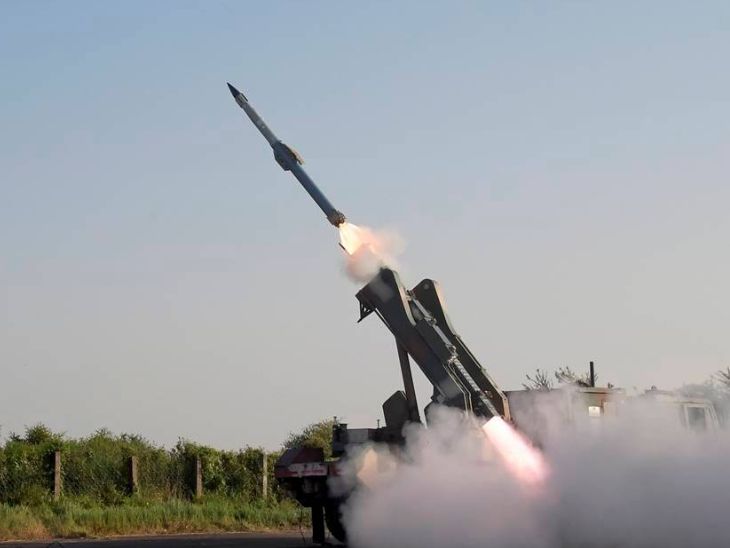
The Defence Research and Development Organisation (DRDO) successfully conducted the maiden flight-test of the Integrated Air Defence Weapon System (IADWS) on August 23, 2025, off the coast of Odisha, marking a major step forward in India’s indigenous multi-layered air-defence capability.
Multi-Layered Defence Architecture
The IADWS brings together three critical components—Quick Reaction Surface-to-Air Missiles (QRSAM), Very Short Range Air Defence System (VSHORADS) missiles, and a high-power laser-based Directed Energy Weapon (DEW)—to engage threats across various ranges and altitudes. The centralized command and control centre, developed by DRDO’s lab, enables coordinated operation across these systems.
Flight Test Performance and Targets Engaged
During the trials, IADWS engaged and destroyed three diverse aerial threats simultaneously—two high-speed fixed-wing UAVs simulating fighter jets, and a multi-copter drone—demonstrating its versatile and robust response across target types and ranges. Radars, communications, and detection equipment performed flawlessly, with range instruments at Integrated Test Range, Chandipur, confirming the results.
Strategic Integration: Mission Sudarshan Chakra
This test is integral to Prime Minister Narendra Modi’s ‘Mission Sudarshan Chakra’ initiative—a comprehensive, networked, multi-layered national security shield envisioned by 2035.The IADWS is poised to integrate with existing systems like the IAF’s Integrated Air Command and Control System (IACCS) and the Army’s Akashteer.
Strategic Implications and Indigenous Self-Reliance
The successful trial underscores India’s growing self-reliance (Aatmanirbharta) in defence technology. By integrating multiple indigenous systems—including missiles and directed-energy weapons—into one seamless platform, IADWS enhances readiness to counter modern aerial threats ranging from drones to high-speed aircraft. Defence Minister Rajnath Singh lauded the achievement, noting it strengthens area defence around critical installations.
B) Why This News Is Important
Heading: Strengthening India’s Aerial Security Posture
The successful maiden flight-test of the Integrated Air Defence Weapon System (IADWS) underscores a significant leap in bolstering India’s aerial defence capabilities. The convergence of missile interceptors (QRSAM and VSHORADS) with a cutting-edge Directed Energy Weapon (DEW) enables a layered defence mechanism capable of neutralizing a wide spectrum of threats—from unmanned drones to fast-moving aerial targets—across multiple ranges and altitudes.
Heading: Paving Way for Mission Sudarshan Chakra
This test is a pivotal milestone under the broader ‘Mission Sudarshan Chakra’, announced by Prime Minister Modi, in establishing a multi-domain defence network by 2035. The performance of IADWS lays the foundation for India’s vision of a self-reliant and resilient defence infrastructure, dovetailing seamlessly with systems like IACCS and Akashteer to create an integrated national shield.
Heading: Amplifying Indigenous Defence Ecosystem
The entirely home-grown nature of this system—which includes missile systems and laser-based weapons, managed via a centralized command module—highlights India’s stride towards technological sovereignty, reducing reliance on foreign imports and enhancing strategic defence autonomy.
C) Historical Context
Heading: Evolution of India’s Integrated Air Defence Systems
- Akashteer’s Operational Debut: India’s AI-enabled, fully automated air defence control system, Akashteer, was inducted in 2024 and played a decisive role during Operation Sindoor in 2025 by intercepting drones and missiles with a 100% success rate.
- The Build-Up to IADWS: The inception of IADWS aligns with India’s broader defence modernization trajectory, transitioning from siloed missile systems to integrated platforms capable of layered threat interception. Integration with systems like IACCS underscores this shift.
- Mission Sudarshan Chakra Vision: Announced on Independence Day 2025, this strategic initiative aims to establish a multi-domain, networked defence shield by 2035. IADWS serves as an operational building block in actualizing this vision.
D) Key Takeaways from This News
Key Takeaways from the IADWS Test
| Serial No. | Key Takeaway |
|---|---|
| 1 | DRDO conducted the maiden flight-test of IADWS on August 23, 2025, off the Odisha coast. |
| 2 | IADWS integrates QRSAM, VSHORADS, and a high-power laser (DEW) into a unified, multi-layered defence system. |
| 3 | The system engaged and destroyed three targets simultaneously: two high-speed fixed-wing UAVs and one multi-copter drone. |
| 4 | A centralized command and control center synchronizes operations across missile and laser components. |
| 5 | The test is foundational to India’s Mission Sudarshan Chakra (shield by 2035), integrating IADWS with systems like IACCS and Akashteer. |
FAQs: Frequently Asked Questions
Q1. What is the Integrated Air Defence Weapon System (IADWS)?
The IADWS is an indigenous multi-layered defence system developed by DRDO that integrates Quick Reaction Surface-to-Air Missiles (QRSAM), Very Short Range Air Defence Systems (VSHORADS), and Directed Energy Weapons (DEW).
Q2. When and where was the maiden flight test of IADWS conducted?
The maiden flight test was conducted on August 23, 2025, at the Integrated Test Range (ITR), Chandipur, off the Odisha coast.
Q3. What targets were destroyed during the IADWS maiden test?
The system simultaneously destroyed two high-speed fixed-wing UAVs simulating fighter aircraft and one multi-copter drone.
Q4. How does IADWS contribute to Mission Sudarshan Chakra?
IADWS is a key element of Mission Sudarshan Chakra, aimed at building a nationwide multi-layered security shield by 2035, integrating with IAF’s IACCS and Army’s Akashteer systems.
Q5. Why is IADWS significant for India’s defence preparedness?
It demonstrates self-reliance in air-defence technology, strengthens defence around critical installations, and enhances India’s capacity to counter modern aerial threats such as drones, UAVs, and fast-moving aircraft.
Q6. What role does the command and control centre play in IADWS?
The centralized command and control centre ensures real-time synchronization and coordination between missile systems and directed energy weapons.
Q7. What is the difference between QRSAM and VSHORADS?
QRSAM provides quick-reaction defence against aircraft and missiles at medium ranges, while VSHORADS targets low-flying threats such as helicopters and drones at shorter ranges.
Q8. Which ministry oversees DRDO’s development of such defence systems?
The Ministry of Defence, Government of India, supervises DRDO’s projects and trials.
Q9. Who lauded the maiden test of IADWS?
Defence Minister Rajnath Singh praised the successful test and highlighted its importance for safeguarding vital national assets.
Q10. How does IADWS support Aatmanirbhar Bharat?
Being fully indigenous, it reduces dependence on foreign weapon imports and promotes India’s defence manufacturing ecosystem.
Some Important Current Affairs Links




