









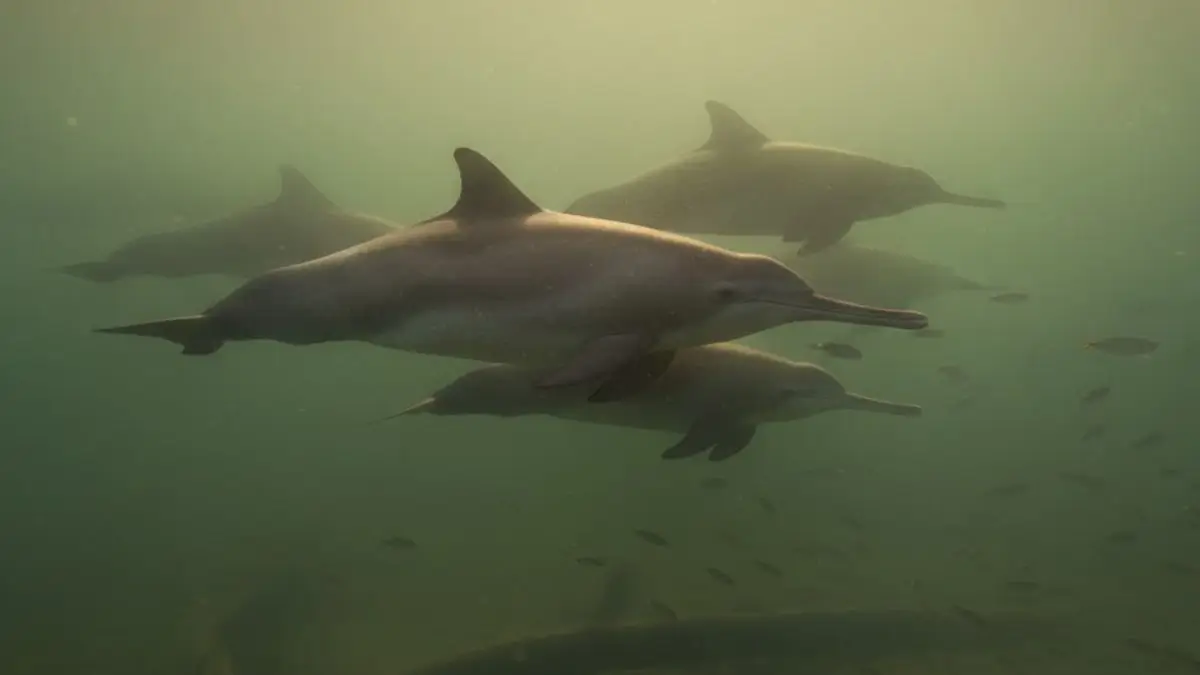
Second Range-Wide Dolphin Survey under Project Dolphin launched in India to assess dolphin populations, monitor river health, and guide conservation policies.
🐬 Second Range-Wide Dolphin Survey Launched Under Project Dolphin: A Comprehensive Conservation Effort
India has commenced the second range-wide dolphin survey under Project Dolphin, a major conservation initiative by the Union Government aimed at protecting the country’s freshwater and estuarine dolphin species. The survey began from Bijnor in Uttar Pradesh and will span across multiple major river systems in India. This exercise aims to assess the current status of dolphin populations, examine habitat conditions, and identify key threats to these indicator species.
The nationwide survey, conducted in two extensive phases, will provide updated scientific data to guide conservation planning and policy action under Project Dolphin. It will cover the main stem of the Ganga from Bijnor to Ganga Sagar, the Indus River, Brahmaputra and its tributaries, and even coastal regions such as the Sundarbans and parts of Odisha.
📌 What Is Project Dolphin?
Launched by the Government of India, Project Dolphin is a flagship conservation programme focused on the protection of India’s riverine and estuarine dolphins and the ecosystems they inhabit. It is designed not only to monitor dolphin populations but also to restore habitats, reduce threats like pollution and fishing entanglement, and promote community engagement and scientific research. By doing so, the project contributes to broader freshwater and coastal ecosystem health and sustainability.
🌊 Survey Coverage and Methodology
The current dolphin estimation will be conducted in two major phases:
- Phase I: Focus on the Ganga River from Bijnor to Ganga Sagar and the Indus River basin.
- Phase II: Coverage expands to the Brahmaputra river system, lengthy tributaries of the Ganga, the Sundarbans delta, and finally coastal waters near Odisha.
This broad approach ensures that both riverine dolphins (including Ganges and Indus River dolphins) and estuarine dolphins such as the Irrawaddy dolphin are included in the assessment. Beyond animal counts, the survey teams will record habitat conditions, human pressures and ecological threats.
🧠 Scientific and Policy Significance
Dolphins are recognized as indicator species, meaning their presence or absence reflects the overall health of freshwater ecosystems. Healthy dolphin populations often indicate cleaner water, robust prey availability, and lesser habitat fragmentation. By comparing current findings with the results of the first survey conducted between 2021 and 2023, authorities will be better positioned to evaluate whether conservation efforts are yielding positive outcomes and where additional interventions are required.

📍 Why This News Is Important for Government Exam Aspirants
This development is significant for students preparing for competitive government exams such as UPSC (IAS/PCS), SSC, banking, railways, teaching, defence and police services for several reasons:
📌 Environmental Conservation and Policy
Understanding Project Dolphin and related surveys highlights India’s approach to biodiversity conservation, an important component of General Studies syllabi, especially for Environment and Ecology sections in UPSC and state PCS exams. It reflects how scientific data drives policy and conservation action, aligning with international environmental commitments.
🌏 Indicator of Ecosystem Health
Freshwater dolphins like the Ganges river dolphin are indicator species. Their conservation status provides insights into the health of major Indian river systems — topics frequently covered in environment-related current affairs questions.
📊 Scientific Research and Methodology
The use of scientific estimation methods, two-phase surveys, habitat monitoring, and advanced tools underscores the importance of methodological rigor in national programmes. For aspirants, being aware of government-led scientific surveys helps answer case studies and analytical questions.
🌱 Biodiversity and Sustainable Development Goals
This survey contributes to India’s progress toward Sustainable Development Goals (SDGs), particularly those related to life below water and life on land. Question patterns in civil services exams often link national schemes to SDG targets, making this news key for conceptual clarity.
🧾 Historical Context: Evolution of Dolphin Conservation in India
India’s formal efforts to conserve dolphins trace back to the launch of Project Dolphin in 2020, an initiative aimed at protecting freshwater and marine dolphin species across the country. With the release of the first nationwide dolphin population survey (2021–2023), India recorded an estimated 6,327 riverine dolphins across major river basins such as the Ganga, Brahmaputra and Indus systems — data that formed the baseline for future conservation planning.
The Ganges river dolphin, locally known as ‘Susu’, was declared the National Aquatic Animal of India, reflecting its ecological and cultural significance. Conservation challenges such as water pollution, habitat fragmentation by dams, sand mining and fishing net entanglements have historically threatened dolphin populations, making surveys critical to informed policy.
By incorporating additional species like the Irrawaddy dolphin and expanding survey regions, the latest range-wide estimation builds on historic conservation momentum and reflects India’s growing commitment to biodiversity protection at both national and global levels.
📋 Key Takeaways from Second Range-Wide Dolphin Survey Launched Under Project Dolphin
| Sr. No. | Key Takeaway |
|---|---|
| 1. | India launched the second nationwide dolphin survey under Project Dolphin from Bijnor, Uttar Pradesh. |
| 2. | The survey will be conducted in two phases covering major rivers like the Ganga, Indus, Brahmaputra, Sundarbans and Odisha. |
| 3. | It includes counts of riverine dolphins (Ganges and Indus) and estuarine species such as Irrawaddy dolphins. |
| 4. | Dolphin surveys help assess habitat health, threats, and inform conservation policy and action. |
| 5. | The initiative is coordinated by the MoEFCC with scientific support from wildlife institutes and conservation partners. |
FAQs: Frequently Asked Questions
1. What is Project Dolphin in India?
Answer: Project Dolphin is a flagship conservation initiative launched by the Government of India in 2020 to protect riverine and estuarine dolphins and restore their habitats across the country.
2. When did the second range-wide dolphin survey start?
Answer: The second range-wide dolphin survey started in January 2026 from Bijnor, Uttar Pradesh.
3. Which dolphin species are covered under the survey?
Answer: The survey includes riverine dolphins like the Ganges and Indus river dolphins and estuarine dolphins like the Irrawaddy dolphin.
4. What are the objectives of the dolphin survey?
Answer: The objectives include estimating dolphin populations, assessing habitat conditions, identifying threats, and guiding policy for conservation under Project Dolphin.
5. Why are dolphins called indicator species?
Answer: Dolphins are called indicator species because their population and health reflect the overall condition of freshwater and estuarine ecosystems.
6. Which rivers are part of the survey?
Answer: Major rivers covered include the Ganga, Indus, Brahmaputra, Sundarbans delta, and coastal regions near Odisha.
7. Which ministry is responsible for Project Dolphin?
Answer: The Ministry of Environment, Forest and Climate Change (MoEFCC) oversees Project Dolphin in India.
8. What historical survey data does the current survey build upon?
Answer: The first range-wide dolphin survey (2021–2023) recorded approximately 6,327 riverine dolphins across India’s major rivers, providing a baseline for the current survey.
Some Important Current Affairs Links