









CRIB blood group discovery in India marks a historic breakthrough in immunohematology. Learn about the rarest blood group, confirmed by ISBT in 2025, and its importance for exams like UPSC, PSC, Railways, and Banking.
India Discovers World’s Rarest Blood Group – CRIB
Discovery During Routine Surgery
In early August 2025, a 38‑year‑old woman from Kolar district, near Bengaluru, underwent a routine cardiac surgery. Despite being typed as O Rh‑positive, none of the available O‑positive blood units matched her sample. This puzzling pan‑reactive result prompted further investigation at the Rotary Bangalore TTK Blood Centre’s Advanced Immunohematology Reference Laboratory
Identification of the CRIB Blood Group
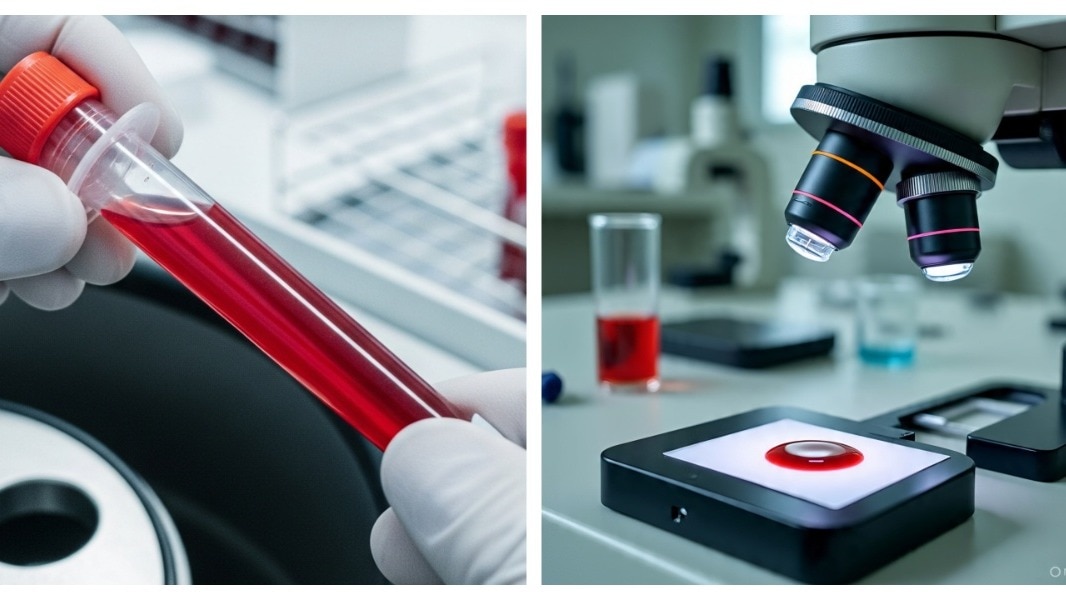
Using advanced serological techniques, the team discovered that her blood exhibited a previously unrecorded antigen profile. It did not match any antigen within the 43 recognised blood group systems. The new antigen was subsequently designated CRIB, and categorised under the IN RA (Indian Rare Antigen) system by the International Society of Blood Transfusion (ISBT)
Confirmatory Testing and International Validation
Samples from 20 of her family members failed to provide a compatible donor. The patient underwent surgery without a transfusion under close caution. Her samples were sent to the International Blood Group Reference Laboratory (IBGRL) in Bristol, UK, for definitive confirmation. In June 2025, during the 35th ISBT Congress in Milan, CRIB was officially recognised as a new antigen within the Cromer system
What Makes CRIB Unique
The CRIB blood group is unique due to a novel antigen within the Cromer system, associated with Decay‑Accelerating Factor (DAF) proteins on red cells. The woman lacked a high‑prevalence antigen found in nearly all other people—resulting in universal incompatibility with standard blood units
National and Global Implications
This discovery places India at the frontier of rare blood research. For healthcare systems, it highlights the need to expand rare blood donor registries, establish specialised testing protocols, and organise emergency strategies for individuals with ultra‑rare blood profiles. The findings also benefit management of Hemolytic Disease of Fetus and Newborn (HDFN), prenatal diagnostics, and transfusion safety globally
B) Why This News is Important
Relevance to Government Exam Aspirants
This news is highly significant for students preparing for defence, civil services (like PCS or IAS), railway, banking, teacher recruitment, and police exams, especially under the General Science and Healthcare current affairs section. Policy‑making and healthcare reforms often prioritise discoveries like this to strengthen national health infrastructure and rare disease protocols.
Implications for Healthcare & Policy
The CRIB blood group discovery underscores the urgency for policy support in rare‑donor registries and advanced immunohematology. Government healthcare schemes and preparedness programs need updating—whether under National Blood Transfusion Services or biosafety councils—making this highly relevant for questions on recent healthcare policy developments.
C) Historical Context
Background: Blood Group Systems in India
India has been a prominent contributor to rare blood antigen research. In 2022, the ISBT officially recognised the INRA (Indian Rare Antigen) system, first identified in an Indian woman. The discovery of CRIB adds another layer to this legacy of rare blood‑group research from India
Timeline of Events
- 2022: ISBT recognises INRA system.
- July 2025: During pre‑operative tests in Kolar, incompatibility is discovered.
- June 2025: ISBT Congress in Milan officially recognises CRIB antigen
- August 2025: Indian doctors and UK lab collaborations confirm India as site of world’s rarest blood group discovery.
Key Takeaways from CRIB Discovery
| S. No. | Key Takeaway |
|---|---|
| 1 | CRIB is a newly recognised, globally ultra‑rare blood group antigen identified in a 38‑year‑old woman from Kolar, Karnataka. |
| 2 | The antigen belongs to the Cromer blood group system and lacks a prevalent antigen found in nearly all people. |
| 3 | CRIB was confirmed via advanced serology at Rotary Bangalore TTK Blood Centre and validated by IBGRL (UK) and ISBT in June 2025. |
| 4 | No compatible donor was found even among 20 relatives; surgery was performed without transfusion. |
| 5 | The finding underlines policy implications: need for rare‑donor registries, improved genetic screening, and preparedness in transfusion medicine. |
Frequently Asked Questions (FAQs)
1. What is the CRIB blood group?
CRIB is an ultra-rare blood group antigen discovered in a woman from Kolar, Karnataka. It is part of the Cromer blood group system and lacks a common antigen found in nearly all human blood types.
2. How was CRIB discovered?
CRIB was discovered during routine pre-operative blood tests when all available blood units showed incompatibility, prompting advanced serological analysis.
3. Why is this discovery important?
It has implications for national blood transfusion policies, emergency preparedness for rare antigen carriers, and genetic screening programs.
4. Which organisation validated this blood group?
The International Blood Group Reference Laboratory (IBGRL), UK, confirmed the antigen, and the International Society of Blood Transfusion (ISBT) officially recognised it in June 2025.
5. Which Indian lab was involved in the discovery?
The Rotary Bangalore TTK Blood Centre’s Advanced Immunohematology Reference Lab played a key role in identifying and confirming the rare blood antigen.
6. How does this affect public healthcare?
It shows the urgent need for rare-donor registries and can improve diagnosis and treatment for Hemolytic Disease of the Fetus and Newborn (HDFN).
7. Has India discovered any other rare blood groups?
Yes. In 2022, the Indian Rare Antigen (INRA) system was also recognised by the ISBT.
8. What is the Cromer blood group system?
It is a lesser-known blood group system related to the Decay-Accelerating Factor (DAF) proteins on red blood cells, of which CRIB is now a new member.
9. Can a person live with a CRIB blood group?
Yes, but it poses critical challenges during surgeries or accidents due to extreme blood incompatibility with regular donors.
10. What exams might include this topic?
This topic is relevant for General Science or Current Affairs sections in exams like UPSC, SSC CGL, RRB NTPC, Banking, CDS, State PSCs, and teacher recruitment exams.
Some Important Current Affairs Links