






Coal India and NSTFDC join hands to empower tribal students in Eklavya Schools with digital learning, mentorship, and improved infrastructure. Learn key benefits, funding, and impact of this CSR initiative for 30,000 students.
Coal India & NSTFDC Join Hands to Empower Tribal Students Through Eklavya Schools
MoU Signing: What Has Been Decided
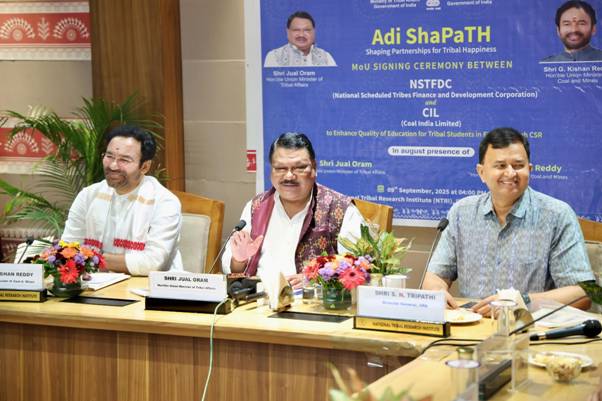
On September 9, 2025, a Memorandum of Understanding (MoU) was signed in New Delhi between Coal India Limited (CIL) and the National Scheduled Tribes Finance and Development Corporation (NSTFDC), which is a Section-8 company under the Ministry of Tribal Affairs. The agreement aims to uplift the infrastructure, education, mentorship, and hygiene facilities in Eklavya Model Residential Schools (EMRS) across four states: Chhattisgarh, Jharkhand, Madhya Pradesh, and Odisha.
Scope & Components of the Project
The scheme covers 76 EMRS in the aforementioned four states. The total funding committed by CIL under its Corporate Social Responsibility (CSR) is ₹10 crore. Key infrastructural and capacity-building measures include:
- Provision of 1,200 computers along with UPS units.
- Distribution of 110 tablets to facilitate digital learning.
- Installation of 420 sanitary pad vending machines and 420 sanitary pad incinerators to address menstrual hygiene.
- Career counselling and mentorship for more than 6,200 students in classes 10 and 12.
Beneficiaries & Reach
More than 30,000 tribal students are expected to benefit from this initiative. The EMRS system already includes 479 functional schools across India, which provide holistic development — education, nutrition, healthcare, and other support services to Scheduled Tribe (ST) children. This new intervention is designed to enhance these facilities in selected EMRS.
Implementation & Expected Outcomes
NSTFDC will execute the project in a time-bound manner. The components such as digital infrastructure, mentorship programmes, and hygiene facilities are expected to bridge gaps in access to education, gender equality (through better menstrual hygiene), and digital divide between tribal and non-tribal students. The inclusion of STEM (Science, Technology, Engineering, Mathematics) supportive learning via computers and tablets is likely to strengthen academic outcomes.
Statement from the Authorities
- Jual Oram, Union Minister for Tribal Affairs, welcomed CIL’s support and expressed hope that more companies will participate in such CSR efforts for tribal education.
- G. Kishan Reddy, Union Minister of Coal & Mines, emphasized that CIL’s CSR priorities — education, health, women empowerment, rural development — will gain wider impact through this cooperation.
Why This News Is Important
Significance for Tribal Education
This initiative marks a substantial step in narrowing educational and infrastructural disparities faced by tribal students. By improving access to digital devices and quality mentorship, it helps level the playing field for ST youth, who often have limited exposure to such resources. It also directly addresses gender-based barriers through menstrual hygiene provisions, which are critical for retention and performance of girl students.
Alignment with Government Priorities & CSR
The MoU aligns with multiple government agendas: the Ministry of Tribal Affairs’ goal to empower ST communities, national aims for digital inclusion, and improving the quality of rural/tribal schools. It also reflects the growing role of Corporate Social Responsibility (CSR) in supporting social welfare and education. The ₹10 crore investment by CIL shows how major public sector undertakings can boost governmental schemes through partnerships.
Broader Impact & Exam Relevance
For students preparing for various competitive examinations (SSC, Banking, Railways, Civil Services, Teaching posts), this is a relevant current affair because it touches upon key themes such as: inclusive growth, tribal welfare, educational reforms, CSR, women empowerment, digital divide — all of which are frequent topics in General Studies papers. Additionally, factual details such as amounts, numbers of beneficiaries, states, and government agencies involved are often asked in banking and insurance quizzes.
Historical Context
What Are Eklavya Model Residential Schools (EMRS)
Eklavya Model Residential Schools (EMRS) are institutions established by the Ministry of Tribal Affairs, Government of India, to provide quality middle and secondary education to Scheduled Tribe (ST) children in remote tribal areas. The objective is holistic development through not only academics but also boarding, nutrition, health, sports, and cultural activities. Over the years, EMRS have served as flagship schemes for tribal welfare.
NSTFDC and Its Mandate
The National Scheduled Tribes Finance and Development Corporation (NSTFDC) is a Section-8 company functioning under the Ministry of Tribal Affairs. Its mandate includes financing, skill development, and other supports for Scheduled Tribe beneficiaries. It often collaborates via government schemes to extend support to tribal youth.
Previous Similar Interventions
India has in recent years made efforts to integrate CSR funds into educational infrastructure, digital learning, and improving gender equality, especially in rural and tribal schooling. Provision of computers, tablets, and facilities like sanitary pad vending machines have been part of past programmes under schemes like CSR by private/public sector, Samagra Shiksha, and National Education Policy (NEP) 2020 aspirations. However, this MoU is significant in scale (30,000 students across four states) and combines multiple interventions (digital, hygiene, mentorship) under one package.
Key Takeaways from Coal India-NSTFDC MoU
| S.No | Key Takeaway |
|---|---|
| 1 | MoU Parties & Date: Coal India Limited and NSTFDC signed the MoU on September 9, 2025, in New Delhi. |
| 2 | Coverage & Beneficiaries: 76 Eklavya Model Residential Schools across Chhattisgarh, Jharkhand, Madhya Pradesh, Odisha, benefiting over 30,000 tribal students. |
| 3 | Financial Commitment: Coal India has allocated ₹10 crore under CSR to implement this project. |
| 4 | Key Interventions: Will provide 1,200 computers with UPS, 110 tablets, 420 sanitary pad vending machines & incinerators; career counselling/mentorship for ~6,200 students in classes 10 & 12. |
| 5 | Significance Themes: Focuses on digital inclusion, gender hygiene, mentorship, infrastructure in tribal education; aligns with government’s tribal welfare, CSR, and educational equity goals. |
FAQs: Coal India & NSTFDC MoU for Tribal Students
Q1. What is the main objective of the MoU signed between Coal India and NSTFDC?
A1. The MoU aims to empower tribal students in Eklavya Model Residential Schools (EMRS) through digital learning, mentorship, improved infrastructure, and hygiene facilities.
Q2. How many students are expected to benefit from this initiative?
A2. More than 30,000 tribal students across Chhattisgarh, Jharkhand, Madhya Pradesh, and Odisha will benefit.
Q3. How much financial support has Coal India committed under its CSR for this project?
A3. Coal India has committed ₹10 crore to implement the project.
Q4. What digital facilities are being provided under this MoU?
A4. 1,200 computers with UPS units and 110 tablets will be provided to enhance digital learning.
Q5. How does the initiative promote gender equality?
A5. The project includes 420 sanitary pad vending machines and incinerators in EMRS to improve menstrual hygiene for girl students.
Q6. Which students will receive career counseling and mentorship?
A6. Students in classes 10 and 12, totaling around 6,200, will receive career guidance and mentorship.
Q7. What is the role of NSTFDC in this project?
A7. NSTFDC will execute and monitor the implementation of the project in a time-bound manner.
Q8. Why is this MoU relevant for competitive exams?
A8. It touches themes like tribal welfare, digital inclusion, CSR, government schemes, education reform, and gender equality — frequently asked topics in government exams.
Some Important Current Affairs Links