







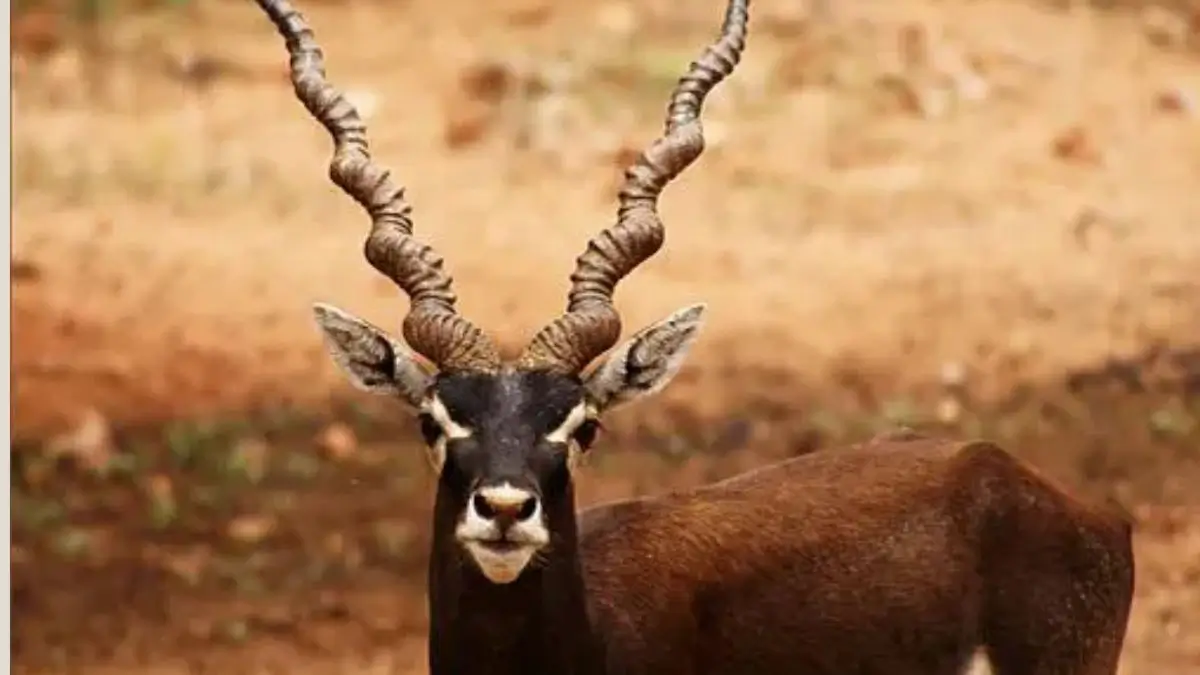
Blackbuck conservation success in Chhattisgarh after nearly a century highlights wildlife restoration, biodiversity protection, and ecological balance initiatives.
Blackbucks Make a Comeback in Chhattisgarh After Nearly a Century
Chhattisgarh has achieved a remarkable milestone in wildlife conservation as the blackbuck (Antilope cervicapra), once declared locally extinct in the state, has now made a successful comeback after nearly a century.
Once widespread across the grasslands of central India, blackbucks disappeared from Chhattisgarh in the early 20th century — with last official records dating back to 1927. However, a concerted effort over the past several years under state wildlife conservation initiatives has revived their population in the Barnawapara Wildlife Sanctuary.
🔬 Scientific Reintroduction and Strategic Conservation
The state government initiated a scientific reintroduction program in 2018 to re-establish the species in its former habitats. The early phase involved translocating blackbucks from captive sources — including zoos like the National Zoological Park, New Delhi, and Kanan Pendari Zoological Garden, Bilaspur — under a carefully planned acclimatization strategy.
These animals were initially kept in enclosures, allowing them to adapt to local grassland conditions before being released gradually into the wild. Regular monitoring, anti‑poaching patrols, and habitat management have been crucial for their survival and growth.
🐾 Population Growth and Ecosystem Impact
As of now, around 130 blackbucks have been released into the wild, while approximately 80 remain in enclosures pending future release — bringing the total population under the program’s care to nearly 190 individuals.
This success has significant ecological implications. Being grassland grazers, blackbucks help maintain the health of open grassy ecosystems, preventing domination by unpalatable grasses and supporting biodiversity. Their presence also strengthens predator‑prey dynamics by supporting herbivore populations that larger carnivores depend on.
🌿 Expansion Plans and Future Goals
Buoyed by the success, forest officials plan to introduce the species into Gomardha Wildlife Sanctuary in the Sarangarh‑Bilaigarh district. This will enhance the species’ range and contribute further to ecological restoration within Chhattisgarh.
The project highlights how sustained scientific efforts, legal protection under wildlife laws, and continuous habitat management can reverse losses in biodiversity and restore extinct species to their natural homes.

📌 Why This News Is Important
🧠 Significance for Biodiversity and Ecosystem Restoration
The return of the blackbuck to Chhattisgarh after nearly a century is a landmark achievement in India’s conservation history. It showcases effective implementation of wildlife restoration strategies, which is crucial for maintaining ecological balance.
For exam aspirants, the news is significant because it reflects government commitment to biodiversity conservation, aligning with environmental policies and international conservation goals. It also demonstrates how protected area management, translocation science, and ecological monitoring can restore species populations that once vanished from a region.
🌍 Relevance to Government Exams
In exams like UPSC, PSC, SSC, banking and others, questions are often asked on:
- Conservation success stories in India
- Species recovery and reintroduction efforts
- Wildlife Protection Act and Schedule I protections
- Role of grassland ecosystems in environmental balance
This news helps candidates answer such questions with concrete examples and factual insights, enhancing their awareness of India’s environmental governance frameworks.
📊 Policy and Sustainable Development Context
The blackbuck comeback aligns with Sustainable Development Goals (SDGs), especially those related to life on land (SDG‑15). It demonstrates how science‑based policies and long‑term planning can contribute to ecological sustainability — a frequent topic in General Studies and Environment sections of competitive exams.
📜 Historical Context: Blackbucks in Chhattisgarh
The blackbuck (Antilope cervicapra) is a medium‑sized antelope species native to the Indian subcontinent, especially thriving in open grassland ecosystems. Historically, it was found across many regions of central and western India, including Chhattisgarh.
However, during the 20th century, extensive habitat loss, poaching, and human encroachment led to a drastic decline in its numbers. By the late 1920s, blackbucks had become locally extinct in Chhattisgarh, although they survived in other parts of India like Gujarat, Rajasthan, and Tamil Nadu.
Under the Wildlife Protection Act, 1972, the blackbuck has been listed in Schedule I, receiving the highest level of legal protection. Efforts to conserve the species intensified in the late 20th and early 21st centuries, especially with coordinated efforts by forest departments, NGOs, and conservation scientists.
In 2018, recognizing the ecological value of restoring blackbucks to their former habitats, the Chhattisgarh Forest Department launched a reintroduction program through translocation and scientific management. Over the years, this project has gradually rebuilt the population, marking one of the major species recovery programs in India.
📊 Key Takeaways from Blackbucks’ Comeback in Chhattisgarh
| S.No. | Key Takeaway |
|---|---|
| 1 | Blackbucks were locally extinct in Chhattisgarh for nearly 100 years, last recorded in the state around 1927. |
| 2 | The species has been reintroduced through a scientific program launched in 2018 at Barnawapara Wildlife Sanctuary. |
| 3 | Around 130 blackbucks are now in the wild, with another 80 in enclosures set for future release. |
| 4 | Blackbucks play an important ecological role as grassland grazers that support ecosystem balance. |
| 5 | Plans are underway to expand the population to Gomardha Wildlife Sanctuary to ensure long‑term sustainability. |
FAQs: Blackbucks Make a Comeback in Chhattisgarh
1. What is the scientific name of the blackbuck?
The blackbuck’s scientific name is Antilope cervicapra, a medium-sized antelope native to the Indian subcontinent.
2. When did blackbucks become locally extinct in Chhattisgarh?
Blackbucks were last officially recorded in Chhattisgarh around 1927, making them locally extinct for nearly a century.
3. Which wildlife sanctuary in Chhattisgarh saw the reintroduction of blackbucks?
The Barnawapara Wildlife Sanctuary was chosen for the reintroduction program due to its suitable grassland ecosystem.
4. How many blackbucks are currently in the wild in Chhattisgarh?
Approximately 130 blackbucks have been released into the wild, with another 80 in enclosures awaiting future release.
5. Why are blackbucks important for the ecosystem?
Blackbucks are grassland grazers, which help maintain the health of open grassy ecosystems, support biodiversity, and strengthen predator-prey dynamics.
6. Which laws protect blackbucks in India?
Blackbucks are protected under the Wildlife Protection Act, 1972, listed in Schedule I, granting them the highest level of legal protection.
7. What future plans exist for blackbuck population expansion?
Forest officials plan to introduce blackbucks to the Gomardha Wildlife Sanctuary to increase their range and ensure long-term survival.
8. How were blackbucks reintroduced into Chhattisgarh?
Through a scientific translocation program, blackbucks were acclimatized in enclosures from captive sources before release into the wild.
9. Which zoos contributed blackbucks for reintroduction?
Zoos like the National Zoological Park, New Delhi, and Kanan Pendari Zoological Garden, Bilaspur provided individuals for the program.
10. How does the blackbuck comeback align with sustainable development?
The initiative supports SDG-15 (Life on Land) and demonstrates science-based wildlife management, ecological restoration, and biodiversity conservation.
Some Important Current Affairs Links