




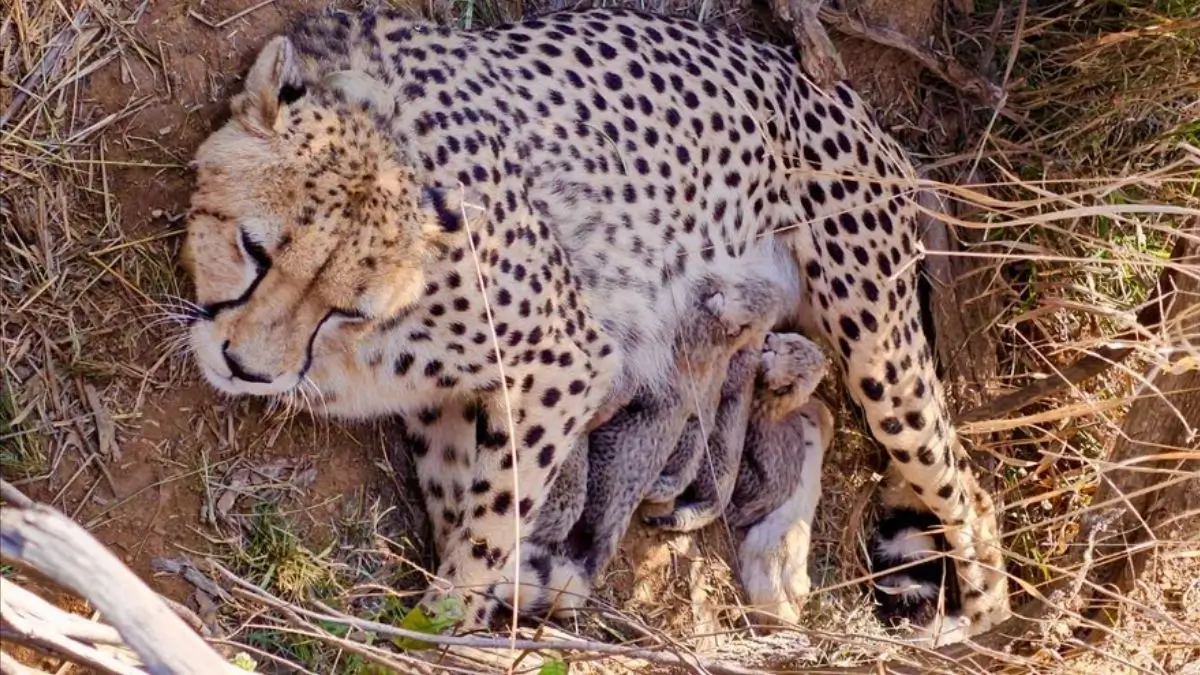
Cheetah population in India reaches 53 after Jwala gives birth to five cubs at Kuno National Park. Learn about Project Cheetah, conservation efforts, and Indian-born cheetah cubs.
India’s Cheetah Population Reaches 53 After Jwala Gives Birth to Five Cubs at Kuno National Park
Major Boost to India’s Cheetah Conservation Efforts
India’s ambitious cheetah reintroduction programme achieved a significant milestone after a female cheetah named Jwala gave birth to five cubs at Kuno National Park. With the birth of these cubs, the total number of cheetahs in India has increased to 53, marking a major step forward in wildlife conservation under the national initiative known as Project Cheetah.
The announcement was made by Bhupender Yadav, who described the event as an important milestone for restoring the species in India. The successful birth of five cubs highlights the adaptability of the cheetahs introduced from African countries and their ability to thrive in the Indian ecosystem.
Jwala’s Third Litter Strengthens Conservation Success
The five cubs born to Jwala represent her third successful litter in India, making her one of the most productive mothers in the reintroduction programme. Experts believe that the increasing number of successful births indicates that the habitat at Kuno is suitable for cheetah breeding and long-term survival.
According to official information, the birth of this litter has also increased the number of Indian-born cheetah cubs to 33, marking the 10th successful cheetah litter since the species was reintroduced to the country. This demonstrates that the conservation strategy is beginning to yield encouraging results.
Kuno National Park Emerging as the New Home for Cheetahs
Located in the Sheopur district of Madhya Pradesh, Kuno National Park has become the centre of India’s cheetah conservation initiative. The park was selected after extensive scientific studies on prey availability, habitat suitability, and ecosystem balance.
Most of the cheetahs currently living in India are housed in Kuno, although some have been relocated to other wildlife reserves such as the Gandhi Sagar Sanctuary to ensure better habitat distribution and management.
Significance for Wildlife Conservation in India
The birth of five cubs is considered a major achievement because the cheetah had been declared extinct in India in 1952 due to overhunting and habitat loss. The reintroduction of cheetahs through Project Cheetah aims to restore ecological balance, enhance biodiversity, and revive grassland ecosystems in India.
Wildlife experts believe that successful breeding in the wild indicates that the animals are adapting well to Indian conditions. This development strengthens the long-term goal of establishing a self-sustaining cheetah population in the country.

Why This News is Important
1. Milestone in Wildlife Conservation
The birth of five cubs at Kuno National Park marks a significant milestone for India’s wildlife conservation efforts. Crossing the 50-mark in cheetah population demonstrates that the reintroduction programme is making measurable progress. This development shows that India’s conservation strategies and wildlife management practices are producing positive results.
2. Success of Project Cheetah
The event highlights the growing success of Project Cheetah, which aims to establish a viable population of the species in India. Since the cheetah had been extinct in the country for over seven decades, successful breeding proves that the species can adapt to Indian ecosystems. It also validates the decision to relocate cheetahs from African countries like Namibia and South Africa.
3. Strengthening Biodiversity and Ecosystem Balance
Cheetahs play an important role as apex predators in grassland ecosystems. Their presence helps regulate herbivore populations, maintain ecological balance, and improve biodiversity. The increase in their population therefore contributes to the overall health of wildlife habitats.
4. Important for Competitive Examinations
For students preparing for government exams such as UPSC, SSC, banking, railways, and state PSCs, this development is important because it relates to topics such as wildlife conservation, biodiversity, national parks, and environmental policies. Questions related to Project Cheetah, Kuno National Park, and species conservation frequently appear in current affairs sections of competitive exams.
Historical Context: Background of Cheetah Reintroduction in India
Extinction of Cheetahs in India
Cheetahs once roamed widely across India’s grasslands and forests. However, excessive hunting during the colonial period, combined with habitat destruction and declining prey populations, led to their rapid decline. In 1952, the Government of India officially declared the cheetah extinct in the country.
Launch of Project Cheetah
To restore the species, the Government of India launched Project Cheetah in 2022, marking the world’s first intercontinental translocation of large carnivores. The first batch of cheetahs was brought from Namibia and released into Kuno National Park. Later, additional cheetahs were relocated from South Africa.
Development of Kuno National Park
Kuno was selected as the primary site for cheetah reintroduction after detailed ecological studies showed that the park had suitable habitat, adequate prey base, and the potential to support a viable cheetah population. Over the years, conservation authorities have expanded the programme by introducing more animals and improving habitat management.
Key Takeaways from This News
| S.No. | Key Takeaway |
|---|---|
| 1 | Female cheetah Jwala gave birth to five cubs at Kuno National Park in Madhya Pradesh. |
| 2 | With the new births, India’s total cheetah population has reached 53. |
| 3 | The birth represents the 10th successful cheetah litter since the reintroduction programme began. |
| 4 | The number of Indian-born cheetah cubs has reached 33, indicating successful adaptation to the environment. |
| 5 | The development is considered a major milestone for Project Cheetah, aimed at restoring cheetahs in India after their extinction in 1952. |
FAQs: Frequently Asked Questions
1. How many cheetahs are currently in India?
As of March 2026, India’s total cheetah population has reached 53, following the birth of five cubs to the female cheetah Jwala at Kuno National Park.
2. What is Project Cheetah?
Project Cheetah is India’s wildlife conservation initiative launched in 2022 to reintroduce cheetahs into the country after they became extinct in 1952. The programme involves relocating cheetahs from African countries like Namibia and South Africa to Indian national parks.
3. Why was Kuno National Park chosen for cheetah reintroduction?
Kuno National Park in Madhya Pradesh was selected due to its suitable habitat, abundant prey species, and ecosystem balance, making it ideal for supporting a viable cheetah population.
4. Who is Jwala and why is she significant?
Jwala is a female cheetah who has given birth to three successful litters in India, including the latest one with five cubs. She is considered one of the most productive mothers in India’s cheetah reintroduction programme.
5. Why is the birth of cheetah cubs important for India’s ecosystem?
Cheetahs are apex predators and play a critical role in maintaining ecological balance by controlling herbivore populations and promoting biodiversity in grassland ecosystems.
6. How many Indian-born cheetah cubs are there now?
There are 33 Indian-born cheetah cubs as of the latest litter, showing successful adaptation of the species to Indian conditions.
Some Important Current Affairs Links