






Cashless toll payment India 2026 update: FASTag and UPI mandatory at toll plazas from April 11. Know rules, penalty, benefits, and exam relevance.
India Goes Cashless at Toll Plazas: FASTag and UPI Become Mandatory from April 11, 2026
Introduction: A Major Shift in India’s Toll Collection System
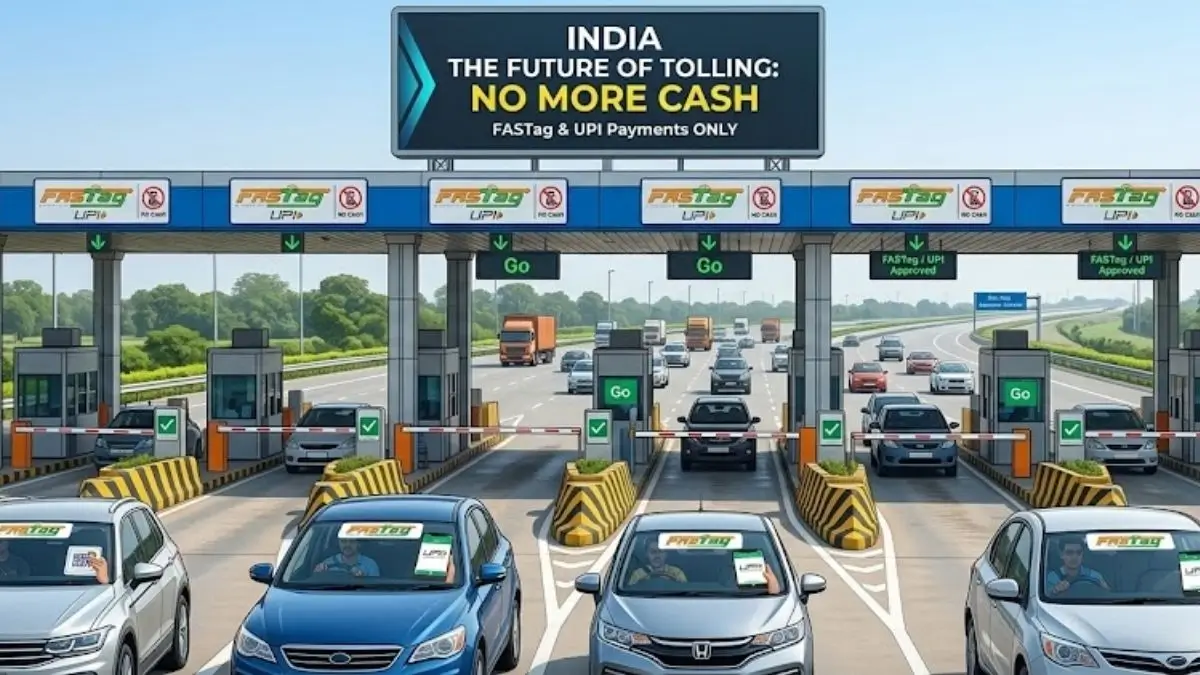
India has taken a significant step toward digital transformation by eliminating cash payments at all National Highway toll plazas from April 11, 2026. The government has made it mandatory for all toll payments to be conducted through digital modes such as FASTag and Unified Payments Interface (UPI). This reform aims to modernize the country’s transport infrastructure, reduce congestion, and enhance transparency in toll collection systems.
What Are the New Toll Rules?
Under the new rules issued by the Ministry of Road Transport and Highways, all vehicles passing through toll plazas must use FASTag or UPI for payment. Cash transactions have been completely discontinued across the country’s National Highway network.
However, vehicles without a valid FASTag can still make payments using UPI, but they will be charged 1.25 times the regular toll fee. This additional charge is intended to encourage wider adoption of FASTag and streamline the payment process.
Understanding FASTag and UPI
FASTag is an electronic toll collection system that uses RFID technology to automatically deduct toll charges from a linked bank account, allowing vehicles to pass through toll plazas without stopping.
UPI, on the other hand, is a real-time digital payment system that enables instant bank-to-bank transactions using mobile devices, widely used across India.
Objectives Behind the Cashless Toll System
The government aims to improve traffic flow and reduce waiting times at toll plazas. By eliminating cash transactions, vehicles can move faster, leading to reduced fuel consumption and lower emissions.
Additionally, the shift enhances transparency and minimizes leakages in toll revenue collection. It also aligns with the government’s broader push toward a digital economy and smart transportation systems.
Implementation Challenges and Exceptions
While the rule has been implemented nationwide, some states such as Tamil Nadu, Kerala, Assam, West Bengal, and the Union Territory of Puducherry have temporarily delayed implementation due to the Model Code of Conduct during elections.
Despite these exceptions, the long-term plan is to ensure uniform digital toll collection across the entire country.

📌 Why This News is Important
Impact on Daily Commuters and Travelers
This policy directly affects millions of daily commuters, commercial drivers, and long-distance travelers. With cash payments no longer accepted, individuals must ensure they have an active FASTag or access to UPI-based payment systems. This makes digital literacy and preparedness crucial for seamless travel.
Boost to Digital Economy
The move is a major push toward India’s digital economy. By mandating digital payments, the government is encouraging the adoption of cashless transactions, which improves financial transparency and reduces the risk of corruption.
Reduction in Traffic Congestion
One of the key benefits of this policy is reduced waiting time at toll plazas. Vehicles no longer need to stop for cash payments, which helps in faster movement of traffic and reduces long queues.
Environmental Benefits
With less idling time at toll plazas, fuel consumption is expected to decrease. This contributes to reduced carbon emissions and supports India’s environmental sustainability goals.
📜 Historical Context: Evolution of Toll Collection in India
From Manual Collection to Digital Systems
Initially, toll collection in India was entirely manual, involving cash payments at booths. This often led to long queues, delays, and inefficiencies in revenue collection.
Introduction of FASTag
To address these challenges, the government introduced FASTag in 2014 as part of the National Electronic Toll Collection (NETC) program. Over time, FASTag usage became mandatory for vehicles, significantly improving efficiency.
Gradual Move Toward Cashless Systems
In recent years, the government has promoted digital payments through initiatives like Digital India. The elimination of cash at toll plazas is the latest step in this ongoing transition toward a fully digital transport ecosystem.
📊 Key Takeaways from This News
| S. No. | Key Takeaway |
|---|---|
| 1 | Cash payments at toll plazas are completely discontinued from April 11, 2026 |
| 2 | Only FASTag and UPI are accepted for toll payments |
| 3 | Vehicles without FASTag must pay 1.25 times the toll fee via UPI |
| 4 | The move aims to reduce congestion, fuel consumption, and improve transparency |
| 5 | It is part of India’s broader push toward digital infrastructure and smart mobility |
Frequently Asked Questions (FAQs)
1. When did India implement cashless toll payments?
India implemented a fully cashless toll collection system on April 11, 2026, making FASTag and UPI mandatory at toll plazas.
2. What payment methods are allowed at toll plazas now?
Only FASTag and UPI (Unified Payments Interface) are allowed for toll payments on National Highways.
3. What happens if a vehicle does not have FASTag?
Vehicles without FASTag can pay through UPI but will be charged 1.25 times (25% extra) of the toll fee as a penalty.
4. What is FASTag and how does it work?
FASTag is an electronic toll collection system using RFID technology that automatically deducts toll charges from a linked bank account without stopping the vehicle.
5. Which ministry is responsible for this rule?
The policy is implemented by the Ministry of Road Transport and Highways.
6. What is the main objective of this policy?
The main objectives are to reduce traffic congestion, improve transparency, and promote digital payments.
7. How does this move support the Digital India initiative?
By eliminating cash transactions, the system encourages digital financial inclusion and strengthens India’s digital economy.
8. Are there any exemptions or delays in implementation?
Yes, some states temporarily delayed implementation due to the Model Code of Conduct during elections.
9. What environmental benefits are expected?
Reduced waiting time at toll plazas leads to lower fuel consumption and reduced carbon emissions.
10. Why is this topic important for competitive exams?
It is important for exams like UPSC, SSC, Banking, Railways, and State PSCs as it relates to government policies, digital economy, and infrastructure development.
Some Important Current Affairs Links