






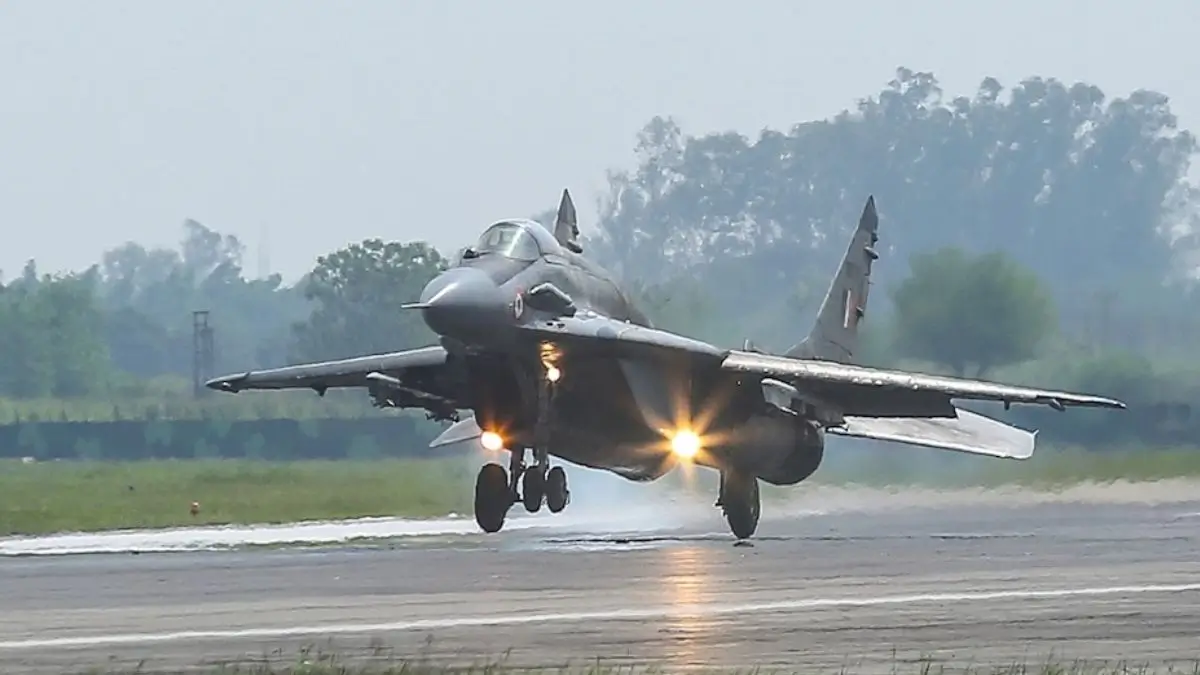
ASRAAM missile integration strengthens Indian Air Force MiG‑29 jets, enhancing short-range air combat capabilities. Know details, strategic impact, and defence modernization.
Indian Air Force to Equip MiG‑29 Jets with Advanced ASRAAM Air‑to‑Air Missiles
The Indian Air Force (IAF) has initiated a major upgrade of its fighter fleet by planning to arm its MiG‑29 fighter jets with Advanced Short Range Air‑to‑Air Missiles (ASRAAM). This move is part of a strategic defence effort to significantly enhance aerial combat capabilities in modern warfare. The Ministry of Defence (MoD) issued a Request for Proposal (RFP) on March 25, 2026, for the integration and testing of these advanced missiles on the upgraded MiG‑29 UPG variant.
Understanding ASRAAM: A Precision Air‑to‑Air Missile
ASRAAM stands for Advanced Short Range Air‑to‑Air Missile, a European‑designed heat‑seeking missile developed by the defence firm MBDA. It is designed for short‑range aerial combat engagements, also known as dogfights, where rapid targeting and high agility are crucial. The missile uses an infrared imaging seeker and operates on a “fire‑and‑forget” principle—once launched, it automatically tracks and engages the enemy aircraft without further input from the pilot.
This missile system has already been successfully integrated on modern Indian platforms such as the HAL Tejas and Jaguar combat aircraft, and now the IAF intends to expand its deployment to the MiG‑29 fleet.
Why the Upgrade Matters for IAF’s Combat Capability
The current missile used on MiG‑29 jets, the R‑73 missile, is an older Soviet‑era weapon with a range of approximately 10–15 km. In contrast, ASRAAM offers a strike range of over 25 km, providing a substantial improvement in close‑range aerial engagement performance. This enhancement effectively doubles the engagement envelope and enhances the jet’s ability to dominate within visual range (WVR) combat scenarios.
The integration program also includes necessary launchers, equipment and comprehensive training for aircrew and ground personnel, which shows the comprehensive nature of the upgrade effort.
Strategic Impact on India’s Defence Posture
Equipping MiG‑29 aircraft with ASRAAM strengthens India’s air defence grid and improves deterrence against adversaries such as China and Pakistan. The enhanced missiles will help the IAF maintain a modern aerial combat edge in dynamic battlefield environments.
In addition, under a 2021 agreement between MBDA and Bharat Dynamics Limited (BDL), India is working on local assembly and testing facilities for these missiles, aligning with the national goal of defence indigenization and Atmanirbhar Bharat (self‑reliant India).

Why This News is Important for Exam Aspirants
Relevance to Defence and Strategic Studies
The news of upgrading MiG‑29 jets with advanced air‑to‑air missiles has direct relevance for sections dealing with national security, defence modernization, and military technology—topics that regularly feature in competitive exams like UPSC (IAS/IPS), CDS, AFCAT, SSC CGL and other government recruitment papers. Understanding modern missile systems like ASRAAM helps students link real‑world defence capabilities with theoretical concepts in the syllabus.
Impact on India’s Defence Preparedness
This development demonstrates India’s ongoing efforts to modernize its armed forces. It reflects the defence ministry’s commitment to upgrading existing platforms rather than relying solely on procuring new platforms. This is crucial for exam questions related to military modernization plans, Make‑in‑India initiatives, and defence procurement policies.
Strategic Balance in South Asia
The aerial defence enhancements will significantly improve India’s ability to secure its airspace against neighbouring threats from China and Pakistan. This move contributes to questions on India’s strategic posture, regional security dynamics, or conflict scenarios—common themes in general knowledge and current affairs sections.
Historical Context: MiG‑29 and Air‑to‑Air Missile Evolution
About the MiG‑29 Fighter Jet
The Mikoyan MiG‑29, introduced into the Indian Air Force in 1987, has been a mainstay in air superiority and tactical combat roles. Over the years, the IAF has upgraded many of its fleet to the MiG‑29 UPG standard to improve avionics, weapons systems, and combat endurance.
Air‑to‑Air Missile Development in the IAF
The IAF has relied on various short‑ and beyond‑visual‑range missiles over decades, including the Soviet‑designed R‑73 and the Indian Astra missile for beyond‑visual‑range engagements. The integration of ASRAAM is part of a larger evolution where modern infrared‑guided missiles increasingly replace older generation armaments.
Make‑in‑India in Defence Manufacturing
India’s drive for indigenous defence production began earnestly with initiatives like Make‑in‑India. The collaboration with MBDA and Bharat Dynamics Limited to locally assemble and test ASRAAM missiles underscores efforts to reduce dependency on imports and strengthen domestic defence industrial capabilities.
Key Takeaways from ‘Indian Air Force to Equip MiG‑29 Jets with Advanced ASRAAM Air‑to‑Air Missiles’
| S.No | Key Takeaway |
|---|---|
| 1 | The Indian Air Force plans to equip MiG‑29 fighters with ASRAAM short‑range air‑to‑air missiles. |
| 2 | ASRAAM offers over 25 km range and fire‑and‑forget capability using an infrared seeker. |
| 3 | This upgrade replaces the older R‑73 missile, which has a shorter 10–15 km range. |
| 4 | The move includes launchers, equipment integration, and crew training under a MoD RFP. |
| 5 | Local assembly and testing facilities under a partnership between MBDA and Bharat Dynamics Limited support India’s defence indigenization. |
FAQs: Frequently Asked Questions
1. What is the ASRAAM missile and why is it important for the Indian Air Force?
ASRAAM (Advanced Short Range Air-to-Air Missile) is a heat-seeking, fire-and-forget missile designed for short-range aerial combat. It enhances IAF’s MiG‑29 capability with longer range (25 km) and high agility, replacing the older R‑73 missile.
2. Which aircraft in the Indian Air Force will be equipped with ASRAAM missiles?
The IAF plans to equip MiG‑29 UPG variant jets with ASRAAM missiles. Previously, platforms like HAL Tejas and Jaguar have already integrated this missile.
3. What is the key difference between ASRAAM and R‑73 missiles?
The R‑73 missile has a range of 10–15 km, while ASRAAM offers more than 25 km range, faster tracking, and infrared “fire-and-forget” capability, making it more effective in dogfights.
4. How does the integration of ASRAAM support India’s defence strategy?
Upgrading MiG‑29s with ASRAAM strengthens India’s air defence posture, improves combat readiness, and enhances deterrence against regional threats from China and Pakistan.
5. Is India producing ASRAAM missiles locally?
Yes, under a collaboration with MBDA and Bharat Dynamics Limited (BDL), India is establishing assembly and testing facilities for ASRAAM missiles, supporting Make-in-India and defence indigenization goals.
6. What does “fire-and-forget” mean in the context of missiles?
“Fire-and-forget” means the missile locks on the target after launch and does not require further guidance from the pilot, allowing for rapid and autonomous engagement.
7. When was the RFP for integration of ASRAAM on MiG‑29 issued?
The Ministry of Defence issued the Request for Proposal (RFP) on March 25, 2026 for missile integration and testing.
Some Important Current Affairs Links