




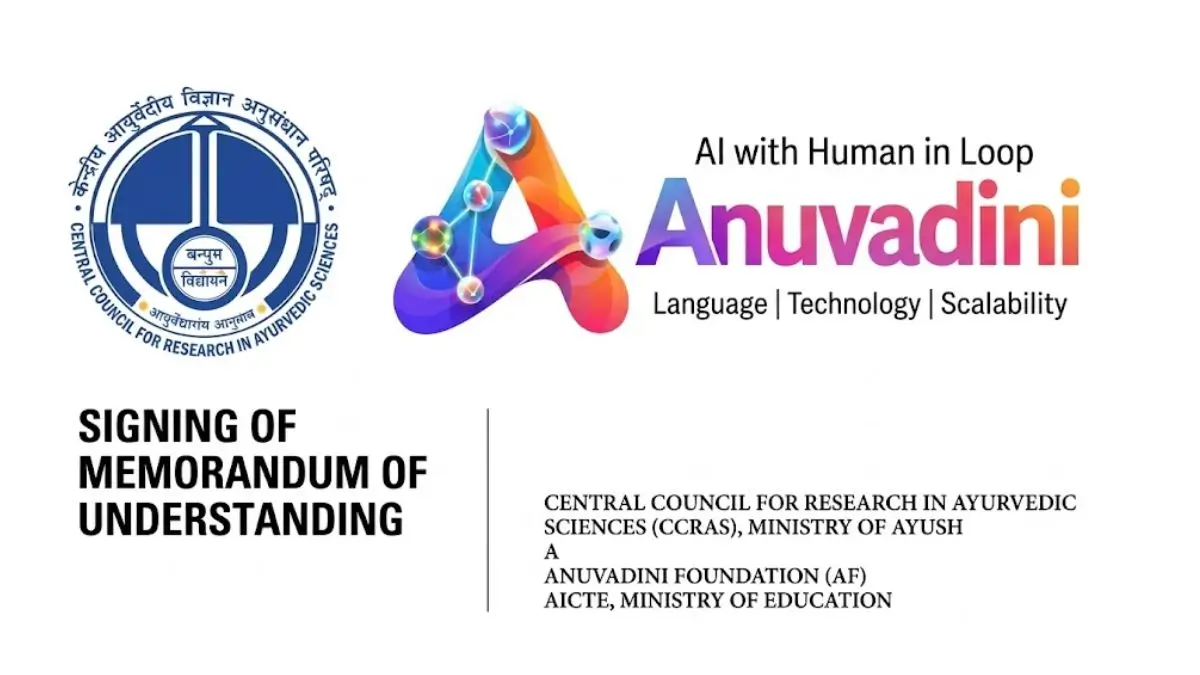
AI-driven Ayurveda research initiative in India is making scientific studies accessible in 13 Indian languages, promoting evidence-based practices for students, researchers, and practitioners.
India Launches AI-Driven Initiative to Make Ayurveda Research Accessible in 13 Languages
Introduction: India’s Push for Multilingual Ayurveda Knowledge
India has taken a significant step towards modernising and democratizing traditional healthcare research. The Ministry of Ayush recently announced an AI-driven initiative aimed at making Ayurveda research more accessible to the public and researchers alike. This project focuses on translating key research papers and scientific findings into 13 Indian languages, bridging the gap between regional language speakers and global Ayurveda studies.
Leveraging Artificial Intelligence for Ayurveda
The initiative leverages artificial intelligence (AI) and natural language processing (NLP) technologies to efficiently translate complex scientific literature. By utilising AI, the Ministry aims to reduce the time, cost, and human effort traditionally required for translation. This ensures that knowledge about Ayurveda’s therapeutic practices, clinical studies, and traditional formulations is widely available to both academics and practitioners in their native languages.
Focus on Multilingual Accessibility
With India’s vast linguistic diversity, the project focuses on 13 major Indian languages including Hindi, Bengali, Tamil, Telugu, Marathi, Gujarati, Kannada, Malayalam, Punjabi, Oriya, Assamese, Kashmiri, and Urdu. By providing multilingual access, the initiative ensures equitable dissemination of Ayurveda knowledge, making research accessible not only to urban scholars but also to rural practitioners and students preparing for healthcare and government examinations.
Integration with Government Research Platforms
The translated resources will be integrated with Ayush Digital Library and other government research portals. Students, researchers, and policymakers will be able to access high-quality, verified information online. This integration aligns with India’s broader Digital India and National AI Strategy, supporting innovation in healthcare research and education.
Promoting Evidence-Based Ayurveda
The initiative emphasises evidence-based practices in Ayurveda. By providing accurate translations of clinical trials, research papers, and pharmacological studies, the government is promoting a scientific approach to traditional medicine. This ensures that students, practitioners, and policymakers can make informed decisions based on verified research rather than anecdotal evidence.
Collaboration with AI Experts and Linguists
The project brings together experts in AI, computational linguistics, and Ayurveda. Collaborative efforts will ensure the translations are both linguistically accurate and scientifically reliable. Such partnerships are expected to enhance the quality of research dissemination and strengthen India’s position as a global leader in integrating technology with traditional medicine.

Why This News is Important
Empowering Students and Researchers
For students preparing for government exams, healthcare research, and academic competitions, access to multilingual Ayurveda resources provides an unprecedented opportunity to study evidence-based traditional medicine. It expands the knowledge base beyond English-language materials, which often dominate academic resources.
Enhancing Government Healthcare Initiatives
This initiative is crucial for government-led healthcare programs as it ensures that practitioners in rural and semi-urban areas can access the latest Ayurveda research in their local languages. This improves the reach and effectiveness of healthcare interventions and awareness campaigns.
Bridging Language Barriers
India’s diverse linguistic landscape has often been a barrier to the dissemination of scientific knowledge. By translating Ayurveda research into 13 languages, the initiative ensures equitable access, enabling a larger population to benefit from traditional medicine knowledge, and encouraging more students to engage with Ayurveda as a career or research domain.
Historical Context: AI and Ayurveda in India
India has a long-standing tradition of Ayurveda, dating back over 5,000 years. Historically, much of this knowledge was documented in Sanskrit texts such as Charaka Samhita and Sushruta Samhita, limiting accessibility to those trained in ancient languages. Modern efforts to digitise Ayurveda began in the early 2000s, with the Ayush Ministry establishing digital libraries and research databases.
In recent years, AI and machine learning technologies have been increasingly applied to healthcare, including predictive models for disease, drug discovery, and translation of medical literature. This new initiative represents the convergence of ancient knowledge and modern technology, enabling the wider dissemination of Ayurveda research across linguistic and geographical boundaries.
Key Takeaways from India’s AI-Driven Ayurveda Initiative
| S. No | Key Takeaway |
|---|---|
| 1 | India has launched an AI-driven initiative to make Ayurveda research accessible in 13 Indian languages. |
| 2 | The project uses artificial intelligence and natural language processing to translate scientific literature efficiently. |
| 3 | The initiative promotes evidence-based Ayurveda, supporting informed research and healthcare practices. |
| 4 | Translations will be integrated with government platforms like Ayush Digital Library for easy access. |
| 5 | The project involves collaboration between AI experts, computational linguists, and Ayurveda scholars to ensure accuracy and reliability. |
FAQs: Frequently Asked Questions
1. What is the AI-driven initiative launched by India in Ayurveda research?
The initiative uses artificial intelligence (AI) and natural language processing (NLP) to translate Ayurveda research papers and scientific studies into 13 Indian languages, making knowledge more accessible to students, practitioners, and researchers.
2. Which Indian languages are included in the project?
The project covers Hindi, Bengali, Tamil, Telugu, Marathi, Gujarati, Kannada, Malayalam, Punjabi, Oriya, Assamese, Kashmiri, and Urdu.
3. How does AI help in this initiative?
AI helps automate the translation process, reducing human effort, ensuring faster accessibility, and maintaining accuracy of technical and scientific information in multiple languages.
4. Why is this initiative important for students preparing for government exams?
Students gain access to evidence-based Ayurveda research in their regional languages, which can help in exams related to healthcare, public policy, and traditional medicine knowledge.
5. How will the translated content be made available?
The translated research papers and studies will be integrated with government platforms like Ayush Digital Library, enabling easy access for academics, practitioners, and students nationwide.
6. Who are the key collaborators in this initiative?
Experts in AI, computational linguistics, and Ayurveda collaborate to ensure both scientific reliability and linguistic accuracy of the translated content.
7. How does this initiative support evidence-based Ayurveda?
By providing translations of clinical trials, research papers, and pharmacological studies, the initiative ensures that practices are scientifically validated and accessible for informed decision-making.
Some Important Current Affairs Links