









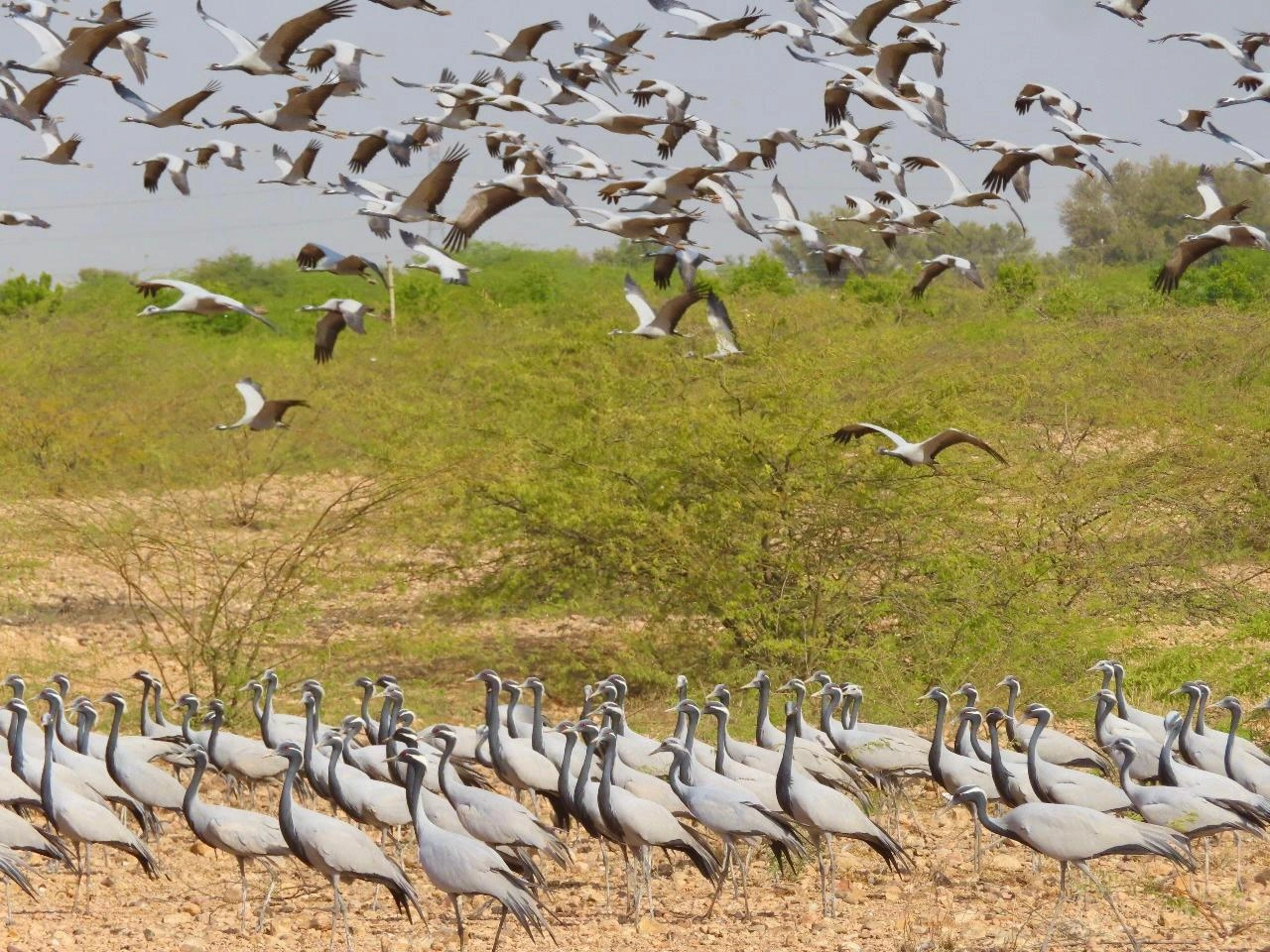
🌿 Khichan and Menar Wetlands Designated as Ramsar Sites
Introduction
On June 4, 2025, ahead of World Environment Day, the Union Ministry of Environment, Forest and Climate Change announced the designation of two wetlands in Rajasthan—Khichan in Phalodi and Menar in Udaipur—as Ramsar Sites. This brings India’s total Ramsar sites to 91, the highest in Asia, underscoring the nation’s commitment to wetland conservation.
Significance of Ramsar Designation
The Ramsar Convention, established in 1971 in Ramsar, Iran, aims to conserve wetlands of international importance. Designating Khichan and Menar as Ramsar Sites highlights their ecological value and ensures international support for their sustainable management. These sites play crucial roles in biodiversity conservation, water purification, and climate regulation.
Khichan Wetland: A Haven for Migratory Birds
Located in Phalodi, Khichan is renowned for hosting thousands of migratory Demoiselle cranes annually. This tradition began in the 1970s when a local couple started feeding pigeons, inadvertently attracting these cranes. Over time, the community’s efforts have transformed Khichan into a significant birdwatching destination. The establishment of the Kurja Conservation Reserve in 2023 further underscores the region’s commitment to crane conservation.
Menar Wetland: A Model of Community-Led Conservation
Situated near Udaipur, Menar Wetland comprises two seasonal lakes—Brahma Talab and Dhand Talab. These lakes support over 180 bird species, including the Bar-headed goose and Greater flamingo. Menar has earned the moniker “Bird Village” due to its community-driven conservation efforts, where locals actively protect the wetland and its avifauna. Recognized as an Important Bird Area (IBA) in 2024, Menar’s Ramsar designation further cements its status as a critical ecological site.
Rajasthan’s Growing Role in Wetland Conservation
With the inclusion of Khichan and Menar, Rajasthan now boasts four Ramsar Sites, joining Keoladeo National Park and Sambhar Lake. This expansion reflects the state’s proactive approach to wetland conservation and its alignment with national environmental goals.
National Recognition and Support
Prime Minister Narendra Modi expressed his appreciation for the designation, emphasizing the importance of public participation in environmental conservation. Union Environment Minister Bhupender Yadav highlighted the achievement as a testament to the government’s commitment to building a greener future.

✅ Why This News Is Important
Environmental Significance
The Ramsar designation of Khichan and Menar underscores India’s commitment to preserving its rich biodiversity and wetland ecosystems. These sites provide critical habitats for numerous migratory and resident bird species, contributing to global biodiversity conservation efforts.
Socio-Economic Impact
The recognition of these wetlands enhances eco-tourism opportunities, potentially boosting local economies through increased tourism and related activities. Community involvement in conservation also fosters sustainable livelihoods and environmental awareness.
Policy Implications
This development aligns with India’s environmental policies and international commitments under the Ramsar Convention, reinforcing the nation’s role in global environmental governance.
📜 Historical Context
The Ramsar Convention
The Ramsar Convention, established in 1971 in Ramsar, Iran, is an international treaty aimed at the conservation and sustainable use of wetlands. India became a signatory in 1982, with its first Ramsar Site being Keoladeo National Park in 1981. Since then, India has progressively increased its number of Ramsar Sites, reflecting a growing recognition of the importance of wetlands in ecological balance and human well-being.
Khichan’s Conservation Journey
Khichan’s transformation from a small village practice to a globally recognized wetland site is a testament to the power of community-led conservation. The establishment of the Kurja Conservation Reserve in 2023 marked a significant milestone in formalizing protection efforts for the Demoiselle cranes and their habitat.
Menar’s Ecological Importance
Menar’s recognition as an Important Bird Area (IBA) in 2024 highlighted its significance as a bird habitat. The community’s proactive conservation measures, including banning hunting and collaborating with the Forest Department, have been instrumental in maintaining the wetland’s ecological health.
📝 Key Takeaways from “Khichan and Menar Wetlands Get Ramsar Tag Ahead of World Environment Day”
| S.No | Key Takeaway |
|---|---|
| 1 | Khichan and Menar in Rajasthan have been designated as Ramsar Sites, bringing India’s total to 91. |
| 2 | Khichan is renowned for hosting thousands of migratory Demoiselle cranes annually. |
| 3 | Menar Wetland supports over 180 bird species and is known for its community-led conservation efforts. |
| 4 | Rajasthan now has four Ramsar Sites, including Keoladeo National Park and Sambhar Lake. |
| 5 | The Ramsar designation enhances international support for sustainable wetland management in India. |
FAQs: Frequently Asked Questions
Q1: What are the Khichan and Menar wetlands known for?
A1: Khichan is known for hosting thousands of migratory Demoiselle cranes annually, while Menar supports over 180 bird species and is recognized for community-led conservation.
Q2: What is the significance of a Ramsar Site designation?
A2: A Ramsar Site designation recognizes wetlands of international importance, ensuring their conservation and sustainable management under the Ramsar Convention.
Q3: How many Ramsar Sites does India currently have?
A3: India currently has 91 Ramsar Sites, the highest number in Asia.
Q4: Where are Khichan and Menar wetlands located?
A4: Khichan is located in Phalodi, Rajasthan, and Menar is near Udaipur, Rajasthan.
Q5: What role does community involvement play in the conservation of these wetlands?
A5: Community involvement is crucial, especially in Menar, where locals actively protect the wetland and its bird species, supporting sustainable conservation efforts.
Q6: Which state in India has Khichan and Menar wetlands as Ramsar Sites?
A6: Rajasthan.
Q7: Name two other Ramsar Sites in Rajasthan apart from Khichan and Menar.
A7: Keoladeo National Park and Sambhar Lake.
Q8: When was the Ramsar Convention established?
A8: The Ramsar Convention was established in 1971.
Some Important Current Affairs Links