




Turkey unveils the GAZAP bomb, its most powerful non-nuclear weapon developed by TÜBİTAK-SAGE. Learn about its features, strategic impact, and exam-relevant facts for UPSC, CDS, and SSC aspirants.
Turkey Unveils GAZAP: World’s Most Powerful Non-Nuclear Bomb
Introduction: A New Global Defence Milestone
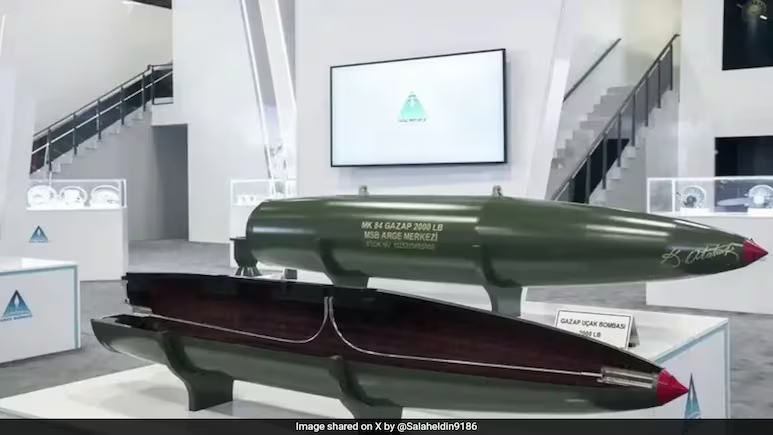
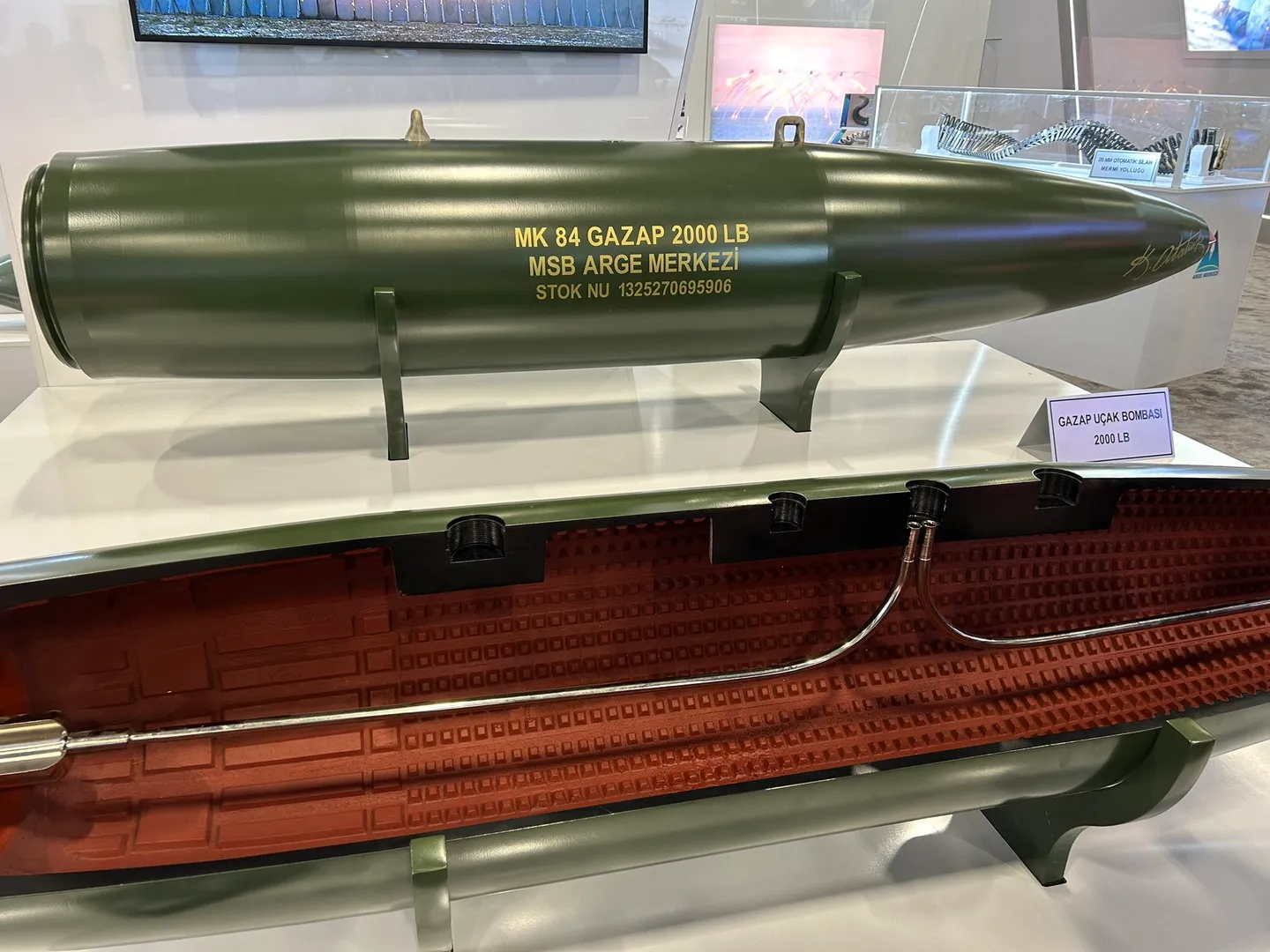
In a significant advancement in global military capabilities, Turkey has unveiled its most powerful non-nuclear weapon, the GAZAP bomb. Developed domestically by Turkey’s defence industry, this bomb weighs approximately 970 kilograms and is claimed to be among the most destructive non-nuclear weapons globally. The GAZAP bomb represents a critical leap in conventional warfare technology and reflects Turkey’s growing independence in arms production.
Key Features of the GAZAP Bomb
The GAZAP bomb is a type of thermobaric or vacuum bomb, designed to produce high-temperature and high-pressure explosions, making it extremely effective against fortified targets. Unlike traditional explosives, thermobaric bombs use atmospheric oxygen to create an intense blast wave, resulting in increased damage. GAZAP’s explosive capability significantly surpasses conventional bombs of similar size, making it a strategic asset in Turkey’s defence arsenal.
Developed by TÜBİTAK-SAGE
This bomb has been developed by TÜBİTAK-SAGE (Scientific and Technological Research Council of Turkey – Defense Industries Research and Development Institute), which is known for producing indigenous advanced weapon systems. GAZAP’s development showcases Turkey’s emphasis on reducing reliance on foreign defence equipment and asserting technological autonomy.
Potential Strategic and Global Implications
The unveiling of GAZAP could alter the balance of power in regional conflicts, particularly in areas where Turkey is actively involved, such as Syria. It also sends a strong signal to NATO allies and adversaries alike about Turkey’s expanding military capabilities. The use of such weapons in future conflicts could provoke international debate over ethical concerns and rules of engagement, especially since thermobaric weapons have faced scrutiny under international humanitarian law.
Impact on Global Defence Race
Turkey’s entry into the club of nations possessing such powerful non-nuclear weapons could spark a new conventional arms race. Countries like the US, Russia, and China already have similar capabilities, and Turkey’s advancement may prompt neighbouring nations to accelerate their military research and development programmes.
Why This News Is Important
Relevance to Defence and Civil Services Exams
For aspirants preparing for UPSC, CDS, or other civil service and defence exams, understanding global defence developments is essential. The unveiling of Turkey’s GAZAP bomb not only reflects a leap in military science but also ties into broader geopolitical, ethical, and strategic dimensions, often discussed in international relations and defence studies sections.
Highlights Technological Advancements
The GAZAP bomb symbolizes how emerging economies like Turkey are transitioning from defence importers to innovators. This shift is critical when studying global military-industrial trends, especially for candidates writing about self-reliance in defence technology in GS paper or essay sections.
Current Affairs and Static Linkage
This news links current affairs to static portions of the syllabus, such as international security, weapon systems, and arms control. It offers potential for questions in prelims (factual details) and mains (analytical implications), making it a high-yield topic for competitive exams.
Historical Context: Evolution of Thermobaric Bombs
Thermobaric weapons, also known as vacuum bombs, have been under development since the mid-20th century. First used extensively by Russia and the United States, these bombs gained notoriety due to their devastating impact in enclosed environments like caves and bunkers. Russia’s FOAB (Father of All Bombs) and the US’s MOAB (Massive Ordnance Air Blast) are notable examples. These weapons gained attention during military operations in Afghanistan, Iraq, and Syria.
Turkey’s development of the GAZAP bomb comes amid increasing military assertiveness and a desire for defence self-sufficiency. This effort aligns with President Recep Tayyip Erdoğan’s broader strategic objective to make Turkey a global defence leader. TÜBİTAK-SAGE has also been responsible for producing advanced munitions like SOM cruise missiles and various air-to-ground systems.
Key Takeaways from “Turkey Unveils GAZAP Bomb”
| S.No | Key Takeaway |
|---|---|
| 1 | Turkey unveiled its most powerful non-nuclear bomb, named GAZAP. |
| 2 | The GAZAP bomb weighs approximately 970 kg and is a thermobaric weapon. |
| 3 | Developed by TÜBİTAK-SAGE, the bomb uses atmospheric oxygen for explosion. |
| 4 | It is designed to destroy fortified enemy targets with extreme heat/blast. |
| 5 | GAZAP’s development signals Turkey’s growing independence in defence tech. |
FAQs: Frequently Asked Questions
1. What is the GAZAP bomb?
The GAZAP bomb is Turkey’s most powerful non-nuclear weapon, weighing approximately 970 kilograms. It is a thermobaric (vacuum) bomb developed for strategic military use.
2. Who developed the GAZAP bomb?
The GAZAP bomb was developed by TÜBİTAK-SAGE, a prominent defence R&D institution under the Scientific and Technological Research Council of Turkey.
3. What type of bomb is GAZAP classified as?
GAZAP is a thermobaric bomb, also known as a vacuum bomb. It uses atmospheric oxygen to fuel its blast, making it far more destructive than traditional explosives.
4. Why is GAZAP considered significant globally?
It places Turkey among a small group of countries—like the US, Russia, and China—with advanced non-nuclear bomb capabilities. It could impact regional security and global arms dynamics.
5. What are thermobaric weapons used for?
These weapons are primarily used to destroy bunkers, caves, and fortified enemy infrastructure due to their intense heat and pressure wave upon detonation.
6. Are thermobaric weapons legal under international law?
While not banned, thermobaric weapons face scrutiny under humanitarian laws. Their use must conform to principles of proportionality and discrimination in conflict zones.
7. What is the significance of TÜBİTAK-SAGE?
TÜBİTAK-SAGE is a Turkish defence R&D institute known for developing advanced missile and bomb technologies that support Turkey’s strategic autonomy.
8. How does this affect civil service and defence exams?
Such developments are highly relevant to current affairs, international relations, and science and tech portions of UPSC, CDS, CAPF, SSC, and other government exams.
Some Important Current Affairs Links