








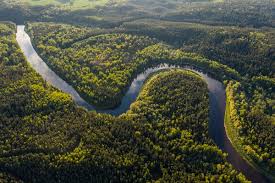
The Amazon Rainforest, often referred to as the “Lungs of the Earth,” plays a crucial role in maintaining global climate stability. Spanning across nine South American countries, it is the largest tropical rainforest in the world and is responsible for producing nearly 20% of the world’s oxygen. The Amazon Rainforest is a biodiversity hotspot and serves as a critical carbon sink, helping mitigate the effects of climate change.
Why is the Amazon Rainforest Called the ‘Lungs of the Earth’?
The Amazon Rainforest has earned this title due to its vital role in the global oxygen-carbon dioxide balance. Through the process of photosynthesis, trees absorb carbon dioxide and release oxygen. While not all of this oxygen is directly added to the Earth’s atmosphere due to respiration and decay processes, the Amazon still plays a significant part in regulating air quality and carbon levels.
Geographical Spread and Importance
Covering approximately 5.5 million square kilometers, the Amazon Rainforest stretches across Brazil, Peru, Colombia, Venezuela, Ecuador, Bolivia, Guyana, Suriname, and French Guiana. It is home to over 390 billion trees and 10% of the world’s known species, making it one of the most ecologically diverse regions on Earth.
Biodiversity and Ecological Significance
The Amazon Rainforest supports millions of species, including 40,000 plant species, 1,300 bird species, 400 mammal species, and 3,000 fish species. This rich biodiversity is essential for maintaining ecological balance, providing medicinal resources, and sustaining indigenous communities.
Threats to the Amazon Rainforest
Despite its importance, the Amazon faces severe threats due to deforestation, illegal logging, wildfires, and climate change. Large-scale deforestation for agriculture, mining, and urban expansion has led to habitat destruction and loss of biodiversity. Additionally, forest fires—both natural and human-induced—pose significant risks to the ecosystem.
Conservation Efforts
Several organizations and governments are working to protect the Amazon Rainforest through reforestation programs, conservation policies, and stricter regulations against deforestation. International collaborations like the Amazon Cooperation Treaty Organization (ACTO) aim to safeguard this vital ecosystem.
Why This News is Important?
Environmental Impact
The Amazon Rainforest plays a significant role in stabilizing the global climate. Any disruption in its ecosystem can lead to increased carbon emissions, rising global temperatures, and extreme weather patterns.
Biodiversity Preservation
The Amazon houses a vast range of flora and fauna, many of which are endangered. Conservation efforts are essential to protect these species and maintain ecological balance.
Global Oxygen Production and Carbon Sequestration
While the Amazon does not directly contribute 20% of the breathable oxygen we use, it acts as a major carbon sink that absorbs carbon dioxide and reduces the greenhouse effect.
Economic and Indigenous Livelihoods
Millions of indigenous people depend on the Amazon for their livelihood. Protecting the forest also means safeguarding the rights, culture, and survival of indigenous communities.
International Cooperation for Conservation
Countries around the world have recognized the Amazon’s importance and are making joint efforts to combat deforestation and climate change through policy initiatives and conservation projects.
Historical Context
The Amazon Through the Ages
The Amazon Rainforest has existed for approximately 55 million years. Historically, it has played a vital role in maintaining the planet’s ecological balance.
Deforestation Trends
Deforestation in the Amazon began accelerating in the 20th century, with increased logging, agriculture, and cattle ranching. In the 1980s and 1990s, annual deforestation rates peaked, leading to international concern.
Conservation Milestones
Organizations like the World Wildlife Fund (WWF), Greenpeace, and Amazon Watch have been actively involved in protecting the rainforest. Government initiatives, such as Brazil’s Amazon Fund and global climate agreements like the Paris Agreement, have also aimed at conservation.
Recent Developments
In recent years, satellite monitoring and AI-driven environmental protection strategies have been implemented to track deforestation patterns and strengthen conservation measures.
Key Takeaways from “Which Forest is Known as the Lungs of the Earth”
| Serial No. | Key Takeaway |
|---|---|
| 1 | The Amazon Rainforest is called the “Lungs of the Earth” because of its role in oxygen production and carbon absorption. |
| 2 | It covers approximately 5.5 million square kilometers across nine countries in South America. |
| 3 | The rainforest is home to over 10% of the world’s known species, making it a biodiversity hotspot. |
| 4 | Deforestation and climate change are major threats to the Amazon’s ecosystem. |
| 5 | International conservation efforts are being made to protect the Amazon and its ecological significance. |
FAQs: Frequently Asked Questions
1. Why is the Amazon Rainforest important?
The Amazon Rainforest plays a crucial role in oxygen production, carbon sequestration, climate regulation, and biodiversity conservation.
2. How much oxygen does the Amazon produce?
Although the Amazon produces nearly 20% of the world’s oxygen, most of it is consumed by the ecosystem itself through respiration and decay.
3. What are the main threats to the Amazon Rainforest?
Deforestation, illegal logging, climate change, wildfires, and expansion of agriculture are the major threats to the Amazon’s survival.
4. Which countries are part of the Amazon Rainforest?
The Amazon spans across Brazil, Peru, Colombia, Venezuela, Ecuador, Bolivia, Guyana, Suriname, and French Guiana.
5. What conservation efforts are being made to protect the Amazon?
Global initiatives such as reforestation programs, policy regulations, and conservation treaties aim to protect and restore the Amazon Rainforest.
Some Important Current Affairs Links