








Operation Midnight Hammer: US Iran nuclear strike 2025 targeted Iran’s key nuclear facilities using B‑2 bombers and bunker-buster bombs. Know key details, defence strategies, and exam-oriented facts here.
Operation Midnight Hammer – U.S. Precision Strike on Iran’s Nuclear Sites
Background & Overview
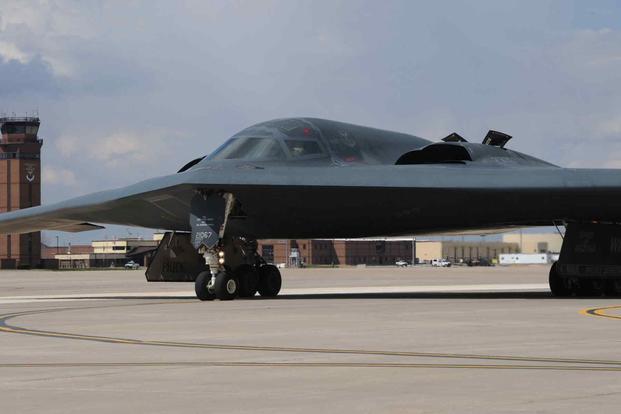
In the early hours of June 21, 2025, the U.S. launched Operation Midnight Hammer, a high-stakes aerial and maritime strike targeting Iran’s nuclear infrastructure. Central to the mission were seven B‑2 Spirit stealth bombers, which flew an 18-hour, publicly undisclosed route from Whiteman Air Force Base, Missouri, to Iran via multiple refueling stops, escorted by fighter jets and intelligence aircraft This marked the largest B‑2 operation in U.S. history, showcasing unparalleled stealth and reach
Tactical Execution & Weaponry
The operation combined bunker-buster bombs (GBU‑57 MOP) and Tomahawk cruise missiles. B‑2s dropped 14 MOP bombs—each weighing 30,000 lb—on deep-underground sites at Fordo and Natanz, while a submarine launched over two dozen Tomahawks at Isfahan
Operational Deception & Surprise
Decoys played a crucial role. Several B‑2s flew west to Guam—drawing media and radar attention—while the strike force flew east silently. Secrecy was strict, limited to a few planners and key leaders Iranian air defenses reportedly Did Not Detect the incoming arsenal
Targets & Damage Assessment
- Fordo: Deep-buried enrichment site—major damage by multiple MOP strikes.
- Natanz: Centrifuge production facility—hit by MOPs and bombs.
- Isfahan: Uranium-processing site—targeted by cruise missiles
U.S. military describes the damage as “extremely severe,” though full assessment is still pending
U.S. & Iranian Reactions
- U.S. officials, including Secretary Hegseth and Gen. Caine, emphasized the mission’s success, warning Iran against retaliation
- President Trump stated that the nuclear sites were “obliterated” and announced readiness for further strikes if needed
- Iran condemned it as aggression and pledged retaliation; parliament discussed blocking the Strait of Hormuz .

🎯 Why This News Matters for Government Exam Aspirants
Global Security & Defence Strategy
Understanding Operation Midnight Hammer provides insights into modern military doctrines—stealth technology, precision warfare, and joint force coordination. These are critical for exam sections on international relations, security studies, and defence policies.
Diplomatic & Geopolitical Implications
This strike escalates U.S.–Iran tensions against the backdrop of Israel’s concurrent Operation Rising Lion. It shifts regional alignments, affecting oil security, global diplomacy, and strategic partnerships in West Asia—key topics for exams in public administration and GST.
Nuclear Non-Proliferation & Legal Ramifications
The attack targets nuclear facilities—a contentious issue under NPT rules and international law. The debate around sovereign rights vs. global security directly ties into essays and MCQs on nuclear treaties, UN charters, and India’s stance.
Exam-Relevant Facts & Updates
Facts like first combat use of GBU‑57, largest B‑2 mission ever, and details of multi-domain coordination are common fodder for static GK sections, current affairs write-ups, and case studies in exams like UPSC CSE and SSC CGL.
📜 Historical Context: How We Got Here
Iran’s Nuclear Ambitions
Iran’s nuclear drive has roots in the 1950s under the “Atoms for Peace” initiative. Suspicion of military intent sparked sanctions and the 2015 JCPOA agreement. The U.S. withdrawal in 2018 reignited tensions.
Israel’s Operation Rising Lion
In June 2025, Israel launched a series of airstrikes—Operation Rising Lion—on Iran’s facilities, setting the scene for U.S. intervention
Precedents of U.S.-Iran Conflict
Notable precedents:
- 1980s–90s maritime skirmishes (e.g. USS Samuel B. Roberts).
- The 2020 U.S. drone strike killing Qassem Soleimani, leading to missile reprisal
Technological Evolution
Deployment of B‑2 stealth bombers over intercontinental distances and Massive Ordnance Penetrators signifies how U.S. defence technology has matured since the Cold War.
📌 Key Takeaways from Operation Midnight Hammer
| No. | Key Takeaway |
|---|---|
| 1 | Operation Midnight Hammer involved the largest B‑2 bomber mission in U.S. history targeting Iran’s nuclear sites. |
| 2 | U.S. deployed 14 GBU‑57 bunker-busters at Fordo & Natanz and Tomahawk missiles at Isfahan. |
| 3 | Decoy flights and strict communications discipline ensured operational surprise—Iran’s defenses remained unaware. |
| 4 | U.S. reported extremely severe damage, emphasizing this as a precision counter-nuclear strategy. |
| 5 | Iran condemned the strike, vowed retaliation, and considered closing the Strait of Hormuz, impacting global oil flows. |
FAQs: Frequently Asked Questions
1. What was Operation Midnight Hammer?
Operation Midnight Hammer was a U.S. military operation launched on June 21, 2025, targeting Iran’s nuclear sites using stealth bombers and cruise missiles.
2. Why did the U.S. carry out this strike?
The operation aimed to cripple Iran’s nuclear capabilities amid growing concerns of weapons development, especially after Israel’s Operation Rising Lion.
3. Which aircraft were primarily used in the operation?
The U.S. used B‑2 Spirit stealth bombers escorted by F‑22s and supported by aerial refueling and surveillance aircraft.
4. What weapons were used during the mission?
14 GBU‑57 Massive Ordnance Penetrators (MOPs) and over two dozen Tomahawk cruise missiles were used to strike deep-underground and processing sites.
5. What were the main targets in Iran?
The primary targets were Fordo, Natanz, and Isfahan, key facilities in Iran’s nuclear enrichment and uranium-processing infrastructure.
6. How did Iran react to the operation?
Iran condemned the attack as illegal aggression, discussed retaliation, and considered blocking the Strait of Hormuz, a major oil transit route.
7. Was this the first combat use of the GBU‑57 bomb?
Yes, this was the first-ever combat deployment of the GBU‑57 bunker-buster.
8. Why is this operation significant for current affairs exams?
It covers topics on international relations, defence technology, nuclear treaties, and geopolitics—all of which are key in UPSC, SSC, CDS, CAPF, and state-level exams.
Some Important Current Affairs Links