








Tropical Storm Nokaen triggers lahar risk near Mayon Volcano. Stay updated on storm paths, rainfall forecasts, and safety measures for residents in the Philippines.
🌪️ Tropical Storm Nokaen Raises Lahar Threat Near Philippines’ Mayon Volcano
📌 Introduction: Tropical Storm Nokaen Threatens Mayon Region
The Philippines is confronting a significant natural hazard this January as Tropical Storm Nokaen—locally known as “Ada”—advances toward parts of the archipelago with potential to trigger dangerous lahars around the Mayon Volcano on Luzon Island. As the first named storm system of 2026, Nokaen’s impact goes beyond wind and rain to interact with volcanic materials already present due to ongoing volcanic unrest.
☁️ What is Tropical Storm Nokaen and Its Current Status
Tropical Storm Nokaen is moving slowly northward over the Philippine Sea with sustained winds of around 65 km/h and gusts up to 80 km/h, according to the Philippine Atmospheric, Geophysical, and Astronomical Services Administration (PAGASA). Its projected track indicates it may affect the eastern coastline of southern Luzon this weekend, bringing heavy to intense rainfall—a key factor in lahar formation.
🌋 Mayon Volcano: Ongoing Volcanic Activity
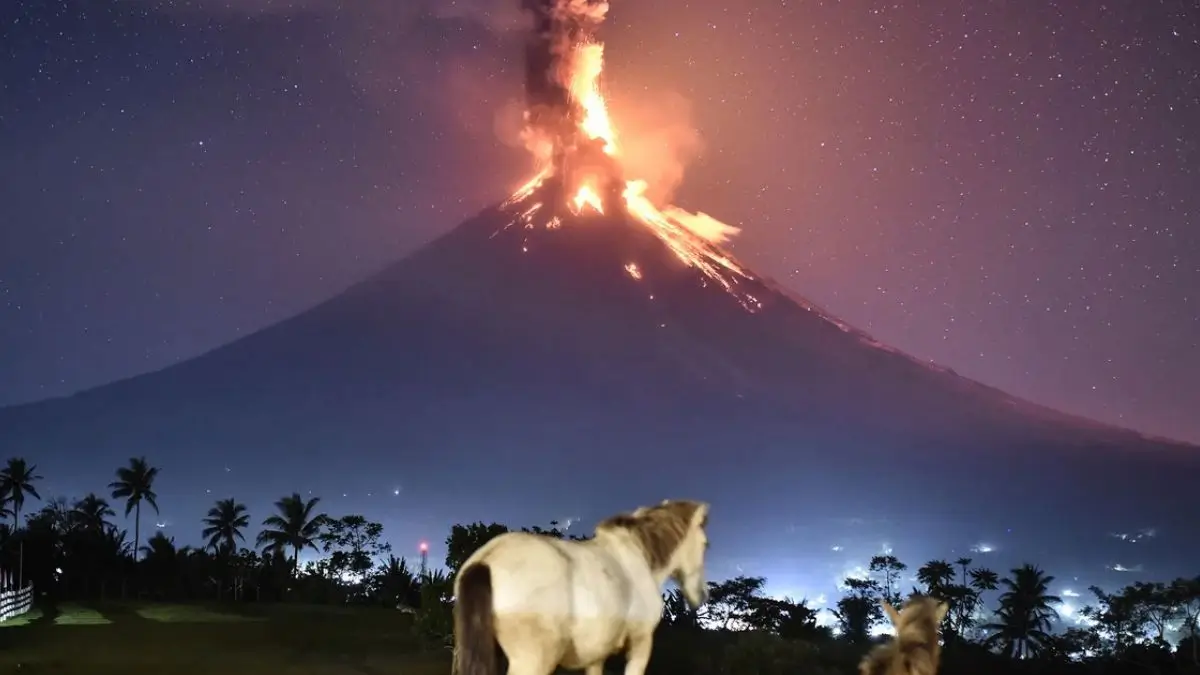
Mayon Volcano, located in Albay Province, is one of the most active volcanoes in the Philippines. It has been exhibiting signs of unrest with increased rockfall events, lava dome activity, and raised alert levels in recent weeks. These conditions have left loose pyroclastic materials on the volcano’s slopes, which can be mobilized by heavy rainfall.
🏞️ Lahar Risks: A Secondary Hazard of Volcanic Terrain
A lahar is a volcanic mudflow composed of water mixed with volcanic debris such as ash, rock fragments, and soil. Unlike normal floods, lahars can travel rapidly down river channels and drainage systems, carrying large boulders and debris that can destroy infrastructure, block roads, and bury settlements. Because Mayon has numerous channels draining its slopes, heavy rainfall from Nokaen could trigger syn-eruption lahars (linked to recent eruptive deposits) or non-eruption lahars (remobilizing older deposits).
🛑 Impact on Local Communities and Preparedness
Thousands of residents near Mayon’s slopes have already been displaced due to ongoing volcanic activity and are residing in evacuation centres. The storm’s rainfall threatens to intensify these hazards, complicating emergency response, and increasing risks in low-lying areas. Local authorities have urged communities to remain on high alert, implement evacuation plans if necessary, and heed further warnings from disaster officials.
📊 Government Warnings and Safety Measures
The Philippine Institute of Volcanology and Seismology (PHIVOLCS) and disaster agencies continue to monitor the situation closely. Precautionary measures emphasize:
- Strict observance of evacuation advisories
- Monitoring of weather and volcanic updates
- Avoidance of river channels and known lahar pathways
- Coordination with local disaster management units
These steps aim to mitigate risk to life and property, especially in the event of combined weather and volcanic hazards.

📌 Why This News is Important
📍 Implications for Disaster Management and Public Safety
This news is crucial for students preparing for government exams because it touches on disaster risk reduction, meteorological monitoring, and volcanology—topics relevant to syllabus areas such as Geography, Environment, and Current Events. Natural hazards like tropical cyclones and volcanic lahars have widespread implications for public safety, infrastructure resilience, and emergency planning, which are recurring themes in General Studies and Essay papers for UPSC, SSC, RRB, Bank PO, and Police exams.
Heavy rains from a tropical storm interacting with a volcanic edifice illustrate how multiple natural systems can combine to create complex hazards. Understanding the trigger mechanisms for lahars, their potential impact on communities, and appropriate mitigation strategies involving local government units (LGUs) is essential knowledge for aspirants in administrative services and public safety roles. Additionally, this event highlights the role of agencies like PAGASA and PHIVOLCS in issuing early warnings and coordinating disaster response—again reinforcing topics of disaster governance and institutional roles covered in syllabus frameworks.
📜 Historical Context
🌋 Mayon Volcano’s History and Lahar Events
Mayon Volcano, rising to 2,462 meters, is one of the most active volcanoes in the Pacific Ring of Fire. Its classic conical shape belies a long history of eruptions, pyroclastic activity, and lahar events. Notable historical eruptions in 1814 and more recent activities in 2018 and 2023 created significant pyroclastic deposits. These deposits often remain weathered and unconsolidated on steep slopes, heightening vulnerability to rain-triggered mudflows.
For decades, the combination of monsoon rains, tropical cyclones, and volcanic deposits has led to recurrent lahar flows that have damaged infrastructure and disrupted lives in the Albay region. These past events provide context for why tropical storms interacting with volcanic terrains are a recurring concern for Philippine disaster management. Historical understanding of how communities have been impacted by lahars helps in framing effective preparedness and mitigation strategies today.
📊 Key Takeaways from Tropical Storm Nokaen and Mayon Volcano
| S.No | Key Takeaway |
|---|---|
| 1. | Tropical Storm Nokaen (local name “Ada”) is moving toward southern Luzon with heavy rain potential. |
| 2. | Intense rainfall from the storm could trigger lahars near Mayon Volcano due to unstable volcanic deposits. |
| 3. | Lahars are dangerous volcanic mudflows capable of inundating communities and damaging infrastructure. |
| 4. | Mayon Volcano has recently shown increased activity including rockfalls and lava dome changes. |
| 5. | Disaster management agencies are issuing alerts and urging preparedness to reduce risk to lives. |
FAQs: Frequently Asked Questions
Q1: What is Tropical Storm Nokaen and where is it located?
A: Tropical Storm Nokaen, locally called “Ada,” is moving over the Philippine Sea and threatens southern Luzon with heavy rainfall, wind, and potential secondary hazards like lahars.
Q2: Why is Mayon Volcano at risk during Tropical Storm Nokaen?
A: Mayon Volcano has loose volcanic deposits from recent activity. Heavy rains from Nokaen can trigger lahars, which are fast-moving volcanic mudflows that threaten nearby communities.
Q3: What is a lahar?
A: A lahar is a volcanic mudflow composed of water mixed with volcanic debris such as ash, rock, and soil. It can travel rapidly down river channels and destroy settlements and infrastructure.
Q4: Which government agencies monitor volcanic and storm activity in the Philippines?
A: The Philippine Atmospheric, Geophysical, and Astronomical Services Administration (PAGASA) monitors storms, while the Philippine Institute of Volcanology and Seismology (PHIVOLCS) monitors volcanic activity.
Q5: What precautionary measures are recommended for residents near Mayon Volcano?
A: Residents should follow evacuation advisories, avoid river channels, monitor weather updates, and coordinate with local disaster management authorities for safety.
Q6: How can this news be useful for government exam aspirants?
A: It covers disaster management, meteorology, environmental hazards, and governance—all important for UPSC, PSC, SSC, Banking, Railways, and Police exam syllabi.
Some Important Current Affairs Links