









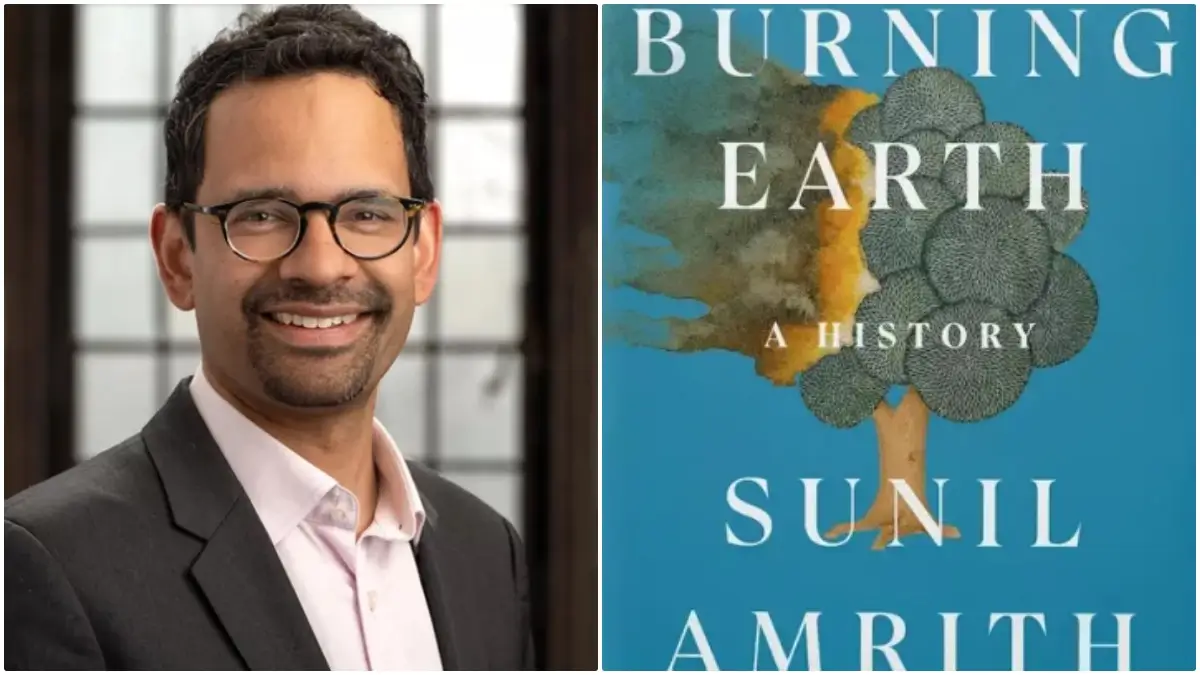
Sunil Amrith wins the 2025 British Academy Book Prize for “The Burning Earth,” highlighting the global recognition of Indian-origin scholars and the growing significance of environmental history in world research.
Indian-Origin Historian Sunil Amrith Wins the 2025 British Academy Book Prize for The Burning Earth
Award Announcement and Significance
Renowned historian Sunil Amrith, of Indian origin, has been named the winner of the 2025 British Academy Book Prize (worth £25,000) for his book The Burning Earth: An Environmental History of the Last 500 Years. The prize is awarded annually to a non-fiction book that significantly deepens understanding of global cultural identity, human experience and history.
Amrith’s win underscores his global scholarship and the growing importance of environmental history in the humanities.
About Sunil Amrith
Sunil Amrith holds the Renu and Anand Dhawan Professorship of History and teaches in the School of the Environment at Yale University. He was born in Nairobi, Kenya to Indian parents, raised in Singapore, and later studied at the University of Cambridge in England.
His research focuses on migration, empire, the environment and how human societies have shaped — and been shaped by — their surroundings. His global background gives him a distinctive vantage point on trans-regional history.
Key Themes of The Burning Earth
In The Burning Earth, Amrith traces five centuries of human-environment interaction across continents. The book explores how processes such as colonisation, industrialisation, mining, wartime mobilisation, and migration have re-shaped landscapes and societies.
It examines episodes including Portuguese silver mining in Peru, British gold extraction in South Africa, oil drilling in Central Asia, and other major historical shifts. These are used to demonstrate how the environment is deeply intertwined with human history — and not simply a backdrop.
Judges’ Evaluation
Professor Rebecca Earle, chair of the judging panel, described the book as a “magisterial account of the interconnections between human history and environmental transformation… vivid in detail and beautifully written — important reading for anyone seeking to understand the origins of today’s climate crisis.”
The judging panel emphasised that Amrith’s work exemplifies the spirit of the Prize: rigorous research, accessible to a broad audience, and deepening understanding of our world.
Broader Significance for India and Global Scholarship
Amrith’s victory is a win for Indian-origin academics in the global arena and highlights the rising importance of environmental history in contemporary scholarship. For students preparing for government exams (such as teaching, police, banking, railway, defence or civil services), the link between environment, history and human action is increasingly relevant in general studies and current affairs.
Furthermore, the award value (£25,000) signals strong international recognition for humanities scholarship that crosses national boundaries.

Why This News Is Important
Relevance to Current Affairs and Exam Themes
In competitive government examinations — whether for teaching, banking, railways, defence or civil services — questions often cover environment, history, migration, globalisation and cultural identity. The achievement of Sunil Amrith winning a major global prize spotlights the intersection of these themes: human impact on environment, historical processes of colonisation and migration, and cross-regional scholarly work.
Implications for India’s Academic Standing
This win highlights India’s presence and influence in international academia. Indian-origin researchers receiving global recognition reflect positively on Indian educational heritage and diaspora contributions. This is a useful point for civil services, teaching and other career paths where knowledge of India’s global footprint is relevant.
Broader Societal and Policy Connections
Amrith’s work deals with climate change and environmental history — areas of growing policy relevance in India (e.g., national climate goals, sustainable development) and beyond. Understanding the historical dimensions of environmental change helps policy-makers and administrators frame responses. For exam aspirants, this provides a strong example of how historical context links with current policy challenges.
Historical Context
Evolution of the British Academy Book Prize
The British Academy Book Prize (formerly the Nayef Al-Rodhan Prize for Global Cultural Understanding) was established in 2013 and renamed in 2021 It recognises outstanding non-fiction works in humanities and social sciences, written in English and published in the UK, but by authors of any nationality.
Past Recipients and Themes
Earlier winners include works on empire, revolution, languages and global cultural interactions. The evolving list of winners reflects shifting academic priorities — such as how history, environment and globalisation are seen through new lenses.
Growing Emphasis on Environmental History
In recent decades, the field of environmental history has gained ground — recognising that human societies and natural environments shape each other. Works like Amrith’s map centuries of human-environment interaction, offering insights into climate change, migration and sustainability. This represents a shift from traditional political or economic history toward diversified perspectives.
India-Diaspora Scholarly Contributions
Amrith’s background — born in Kenya, raised in Singapore, educated in Cambridge and teaching at Yale — exemplifies the global mobility of Indian-origin scholars. Such scholars often bring hybrid perspectives and strengthen academic links between India and international institutions. For exam aspirants, understanding these diaspora networks and their contributions can offer richer context for questions on India’s soft power, global education linkages and migration.
Key Takeaways from “Sunil Amrith Wins British Academy Book Prize”
| S. No | Key Takeaway |
|---|---|
| 1 | Sunil Amrith (Indian-origin historian) won the 2025 British Academy Book Prize for The Burning Earth (worth £25,000). |
| 2 | The Burning Earth: An Environmental History of the Last 500 Years traces how human ambition, empire, industry and migration have transformed the planet over five centuries. |
| 3 | The judging panel described the book as a “magisterial account” of interconnections between human history and environmental transformation. |
| 4 | Amrith’s global background (born in Kenya, raised in Singapore, educated in Cambridge, teaches at Yale) highlights diaspora scholarship and global academic linkages. |
| 5 | The British Academy Book Prize encourages works that deepen public understanding of global cultural identity, making this award relevant for students of history, environment, migration and global studies. |
FAQs: Frequently Asked Questions
1. Who is Sunil Amrith?
Sunil Amrith is an Indian-origin historian currently serving as the Renu and Anand Dhawan Professor of History at Yale University. His research explores migration, empire, environment, and the global history of South and Southeast Asia.
2. What is the British Academy Book Prize?
The British Academy Book Prize, worth £25,000, is an annual award given to an outstanding non-fiction book that enhances public understanding of global cultural identity and human experience.
3. For which book did Sunil Amrith win the prize in 2025?
He won the 2025 British Academy Book Prize for his book The Burning Earth: An Environmental History of the Last 500 Years.
4. What is the central theme of The Burning Earth?
The book explores how human ambition, industrialization, colonization, and migration have shaped and altered the Earth’s environment over the last five centuries.
5. Where is Sunil Amrith currently teaching?
He teaches at Yale University, USA, where he holds a joint appointment in the Department of History and the School of the Environment.
6. Why is this news relevant for competitive exams?
It combines topics from environment, world history, and global recognition of Indian scholars — themes often covered in UPSC, State PSC, SSC, Defence, Banking, and Teaching exams.
7. When was the British Academy Book Prize first established?
The prize was established in 2013 and was earlier known as the Nayef Al-Rodhan Prize for Global Cultural Understanding before being renamed in 2021.
8. Who chaired the judging panel for the 2025 prize?
Professor Rebecca Earle chaired the judging panel that selected Sunil Amrith as the winner for 2025.
9. What does the award signify for India?
It signifies global recognition of Indian-origin scholars contributing to environmental and historical research and enhances India’s academic image worldwide.
10. How does The Burning Earth connect with today’s issues?
The book provides a long-term historical understanding of environmental crises and climate change, offering insights that help explain current global sustainability challenges.
Some Important Current Affairs Links