








Private ISS mission NASA agreement signed with Vast Space to launch astronauts via SpaceX Dragon in 2027, advancing commercial space stations and orbital research.
Vast Space Signs Historic Agreement with NASA for Private Mission to the International Space Station
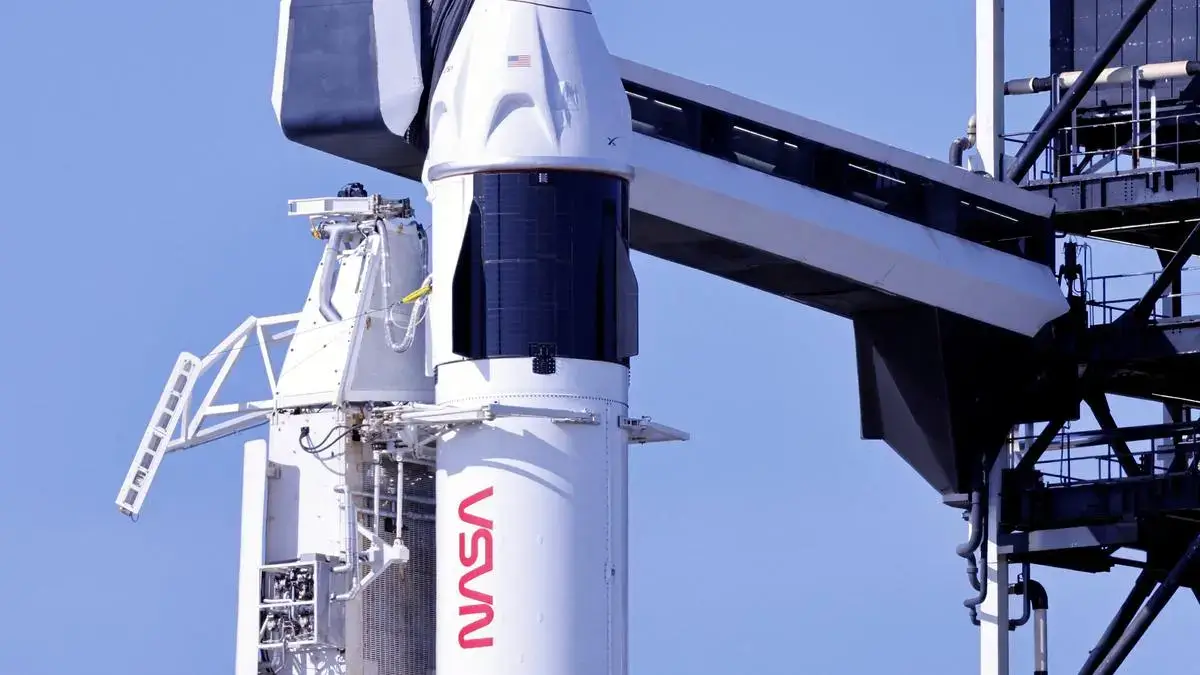
In a landmark development in space exploration and commercial aerospace, Vast Space, a California‑based private aerospace company, has signed an agreement with the National Aeronautics and Space Administration (NASA) for a private astronaut mission to the International Space Station (ISS). This mission is scheduled for launch no earlier than Summer 2027 and will be carried aboard a SpaceX Falcon 9 rocket, with the astronauts transported using SpaceX’s Dragon spacecraft.
Mission Details and Objectives
The agreement marks the first mission in partnership between NASA and Vast Space and represents the sixth private astronaut mission to the ISS. Under this agreement, a crew of private astronauts selected by Vast Space will spend up to 14 days aboard the ISS conducting scientific research and experiments. NASA will provide mission services including life support provisions, cargo delivery, storage, and assistance with scientific sample return operations.
The mission will not only support scientific endeavours in biology, biotechnology, physical sciences, and human research studies but will also enable technology demonstrations that can foster innovation in space science and commercial research.
Launch Platform and Technology Partnership
Vast Space has contracted with SpaceX for the launch and crew transport to the ISS. SpaceX’s Falcon 9 and Dragon spacecraft are widely used in NASA’s commercial crew and cargo programs, providing reliable and reusable launch services. This partnership underscores the growing role of private companies in space missions previously dominated by national space agencies.
Strategic Role in Commercial Space Economy
NASA’s decision to partner with Vast Space reflects the agency’s broader strategy to expand commercial activity in low Earth orbit (LEO). By integrating private companies into space missions, NASA is building a sustainable space economy that can continue beyond the planned retirement of the ISS around 2030. This initiative encourages innovation, reduces costs, and accelerates the development of commercial space stations and research facilities.
Vast’s Future: The Haven‑1 Space Station
As part of its long‑term vision, Vast Space is developing Haven‑1, which is set to become the world’s first commercial space station, anticipated to launch in 2027. Haven‑1 is intended to serve as a hub for scientific research, microgravity experiments, and commercial activity in orbit. This project represents a pivotal step in the transition from government‑led space operations to a mixed ecosystem of public and private space infrastructure.
Global and Market Implications
The collaboration between Vast Space and NASA has wide implications for global space exploration and the commercial aerospace market. It demonstrates how private firms can partner with national space agencies to contribute to scientific research, space tourism potential, and long‑term commercial operations in LEO. This shift is also creating opportunities for international cooperation and private involvement from other countries in future space missions.

Why This News Matters for Competitive Exams
Significance for Space Technology and Global Economy
This news is important for competitive exams because it highlights a major shift in how space exploration missions are being conducted. Previously, space missions to research stations like the ISS were largely managed by national space agencies such as NASA and Roscosmos. However, this new collaboration shows the increasing role of private aerospace companies in space exploration, marking a broader transition toward commercial space operations and the orbital economy.
Relevance to Scientific Innovation and STEM
For exams covering Science & Technology, Economy, and International Relations, this development demonstrates how innovation in space technology is no longer confined to government programmes but is being driven by private‑sector participation. This partnership drives advancements in research methodologies, international cooperation, and technological development in areas like life sciences, microgravity research, and spacecraft engineering.
Exam Perspective: UPSC, SSC, Banking & Defence
Students preparing for UPSC Civil Services, SSC CGL, Railway Exams, Bank PO and Clerk Exams, and Defence Services exams should note this event under:
- Current Affairs – Science & Technology
- International Cooperation and Agreements
- Commercial Use of Space and Space Policy
It reflects ongoing changes in global space policy and the evolving relationship between government space agencies and private industry.
Historical Context: Evolution of Commercial Space Missions
From Government‑Led Missions to Commercial Ventures
Historically, space missions, especially those involving the International Space Station (ISS), were conducted exclusively by national space agencies such as NASA (USA), Roscosmos (Russia), ESA (Europe), and others. The ISS served as a flagship symbol of global cooperation in space research since its inception in 1998.
In the last decade, NASA introduced programs like Commercial Crew Program and Commercial LEO Destinations Program, enabling private companies such as SpaceX and Boeing to develop spacecraft capable of carrying astronauts for government and private missions.
Private Astronaut Missions
Companies like Axiom Space previously secured contracts with NASA to send private astronaut crews to the ISS. Now, Vast Space becoming the next company to receive such authorization signifies an important milestone in the evolution of commercial spaceflight.
Path Toward Commercial Space Stations
With plans for Haven‑1, Haven‑2, and other commercial stations, private companies are preparing for the eventual retirement of the ISS. This progression from government‑dominated missions to privately operated orbital platforms marks a transformational phase in the history of space exploration.
Key Takeaways from Vast Space’s NASA Agreement
| S. No. | Key Takeaway |
|---|---|
| 1 | Vast Space signed an agreement with NASA for a private astronaut mission to the ISS, slated for Summer 2027. |
| 2 | The mission will use SpaceX’s Falcon 9 and Dragon spacecraft for launch and crew transport. |
| 3 | Crew members will conduct scientific research aboard the ISS for up to 14 days. |
| 4 | NASA’s support will include life support, cargo delivery, and sample return. |
| 5 | Vast is developing Haven‑1, the world’s first commercial space station, targeted for launch in 2027. |
FAQs: Frequently Asked Questions
1. What is the Vast Space NASA agreement about?
Vast Space, a private aerospace company, has signed an agreement with NASA to conduct a private astronaut mission to the International Space Station (ISS), scheduled for Summer 2027.
2. Which launch vehicle will be used for the mission?
The mission will use SpaceX’s Falcon 9 rocket and Dragon spacecraft to transport the crew to the ISS.
3. How long will the private astronauts stay on the ISS?
The crew will stay aboard the ISS for up to 14 days to conduct scientific research and technology demonstrations.
4. What kind of experiments will the astronauts conduct?
The mission will involve research in biology, biotechnology, physical sciences, human research studies, and technology demonstrations.
5. What is Haven‑1?
Haven‑1 is Vast Space’s upcoming commercial space station, intended to serve as a hub for scientific research, microgravity experiments, and commercial activities in orbit, planned to launch in 2027.
6. Why is this news important for students preparing for exams?
It highlights private sector participation in space exploration, international cooperation, commercial space policies, and technological innovation—topics frequently covered in current affairs sections of competitive exams like UPSC, SSC, Banking, Railways, Defence, and Teacher recruitment exams.
Some Important Current Affairs Links