





Michaela Benthaus first wheelchair astronaut: Learn how the German aerospace engineer made history aboard Blue Origin’s New Shepard, marking a milestone in inclusive space travel and accessibility.
.
🌌 Michaela Benthaus Makes History as the First Wheelchair User to Reach Space
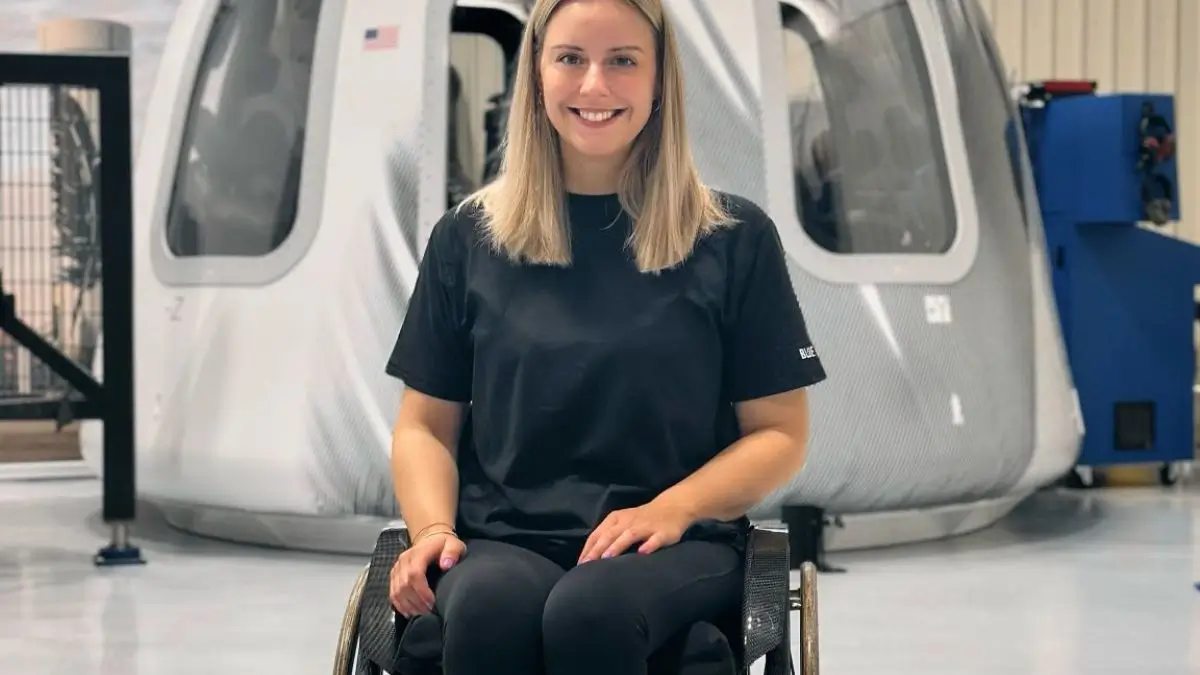
On 20 December 2025, German aerospace engineer Michaela “Michi” Benthaus etched her name in the annals of space exploration history by becoming the first person who uses a wheelchair to travel to space during a suborbital flight aboard Blue Origin’s New Shepard rocket. This groundbreaking event took place at the spaceport near West Texas, USA, marking a significant milestone in inclusive space travel.
The Blue Origin mission lasted roughly 10 minutes, during which Benthaus and five other crew members crossed the Kármán Line, internationally recognized as the boundary of space at about 62 miles (100 km) above Earth’s surface. Once aboard, the crew experienced several minutes of weightlessness and a spectacular view of Earth’s curvature before safely returning via parachutes.
Michaela Benthaus, a 33-year-old aerospace and mechatronics engineer associated with the European Space Agency (ESA), uses a wheelchair due to a spinal cord injury from a mountain biking accident in 2018. Despite facing severe physical challenges, Benthaus pursued her passion for space from a young age, went on to earn advanced engineering degrees, and continued to strive toward her dream of reaching space.
The spaceflight was facilitated by Blue Origin, a private aerospace company founded by Amazon’s Jeff Bezos, known for commercial space tourism flights. New Shepard, the vehicle used for this mission, is designed for suborbital tourist flights that allow civilians to experience microgravity and view Earth from beyond its atmosphere.
Though no major structural changes were required to accommodate Benthaus, minor adaptations—such as a patient transfer board and accessible ground facilities—were used so she could move safely between her wheelchair and the spacecraft seat.
This historic flight is part of a broader evolution in commercial space travel, where inclusivity and accessibility are becoming core priorities. Blue Origin flights have previously included participants with various physical limitations, illustrating a shift toward broader representation in space exploration.

📌 Why This News Matters for Government Exam Aspirants
This achievement is not just a scientific event—it represents progress in inclusivity, technology, and human perseverance, all of which are themes frequently tested in competitive exams.
1. Inclusive Advancement in Science
Michaela Benthaus’s journey challenges traditional barriers in astronaut selection and scientific exploration. Government exams increasingly emphasize understanding inclusive policies and scientific milestones, as these reflect changing societal and policy landscapes in science and technology sectors.
2. Global Space Sector Evolution
Space exploration is no longer the exclusive realm of national space agencies like NASA or ISRO. Private players like Blue Origin are expanding access to space, a topic relevant to economy, technology, and global collaboration sections in exams like UPSC and SSC.
3. Technological Adaptation and Accessibility
This event highlights how technology is adapted to serve a diverse human population, aligning with themes in science & technology awareness sections.
4. Inspirational Human Story
Benthaus’s drive and success emphasize resilience and determination, values reflected in many civil services interviews and essay topics.
This news is therefore vital for aspirants to understand not just as a scientific achievement, but as a symbol of societal evolution, policy emphasis on inclusivity, and humanity’s expanding frontier.
📜 Historical Context: Space Travel Becoming More Inclusive
Historically, space travel was reserved for trained astronauts from elite space agencies. Only a few decades ago, even physically able-bodied individuals faced immense challenges entering space. Early astronauts underwent rigorous physical screening, and disabilities were often considered disqualifying for spaceflight.
That began to change with the advent of commercial space tourism in the 21st century. Companies like Virgin Galactic, SpaceX, and Blue Origin began offering suborbital and orbital flights to private citizens. These missions gradually diversified participant profiles, including older adults and individuals with sensory or mobility limitations.
Michaela Benthaus’s flight in December 2025 symbolizes a continuation of this progression—moving space exploration toward greater accessibility for people of all abilities. It underscores growing global focus on diversity and inclusion in science, technology, and innovation.
🗂️ Key Takeaways from “Michaela Benthaus Makes History as First Wheelchair User in Space”
| S.No. | Key Takeaway |
|---|---|
| 1. | Michaela Benthaus became the first wheelchair user to travel to space on 20 December 2025. |
| 2. | The flight was aboard Blue Origin’s New Shepard suborbital rocket, reaching above the Kármán Line. |
| 3. | Benthaus is a German aerospace engineer with the European Space Agency. |
| 4. | Minor accommodations allowed her to enter and exit the spacecraft safely. |
| 5. | The mission marks a major step toward inclusive space travel and accessibility. |
FAQs: Frequently Asked Questions
1. Who is Michaela Benthaus?
Michaela “Michi” Benthaus is a German aerospace and mechatronics engineer who became the first wheelchair user to travel to space on 20 December 2025.
2. Which company facilitated Michaela Benthaus’s historic spaceflight?
The flight was facilitated by Blue Origin, a private aerospace company founded by Jeff Bezos.
3. What rocket was used for this historic suborbital flight?
She traveled aboard Blue Origin’s New Shepard suborbital rocket.
4. What is the Kármán Line, and why is it significant?
The Kármán Line, located at 100 km (62 miles) above Earth, is internationally recognized as the boundary of space. Michaela crossed this line during her flight.
5. What accommodations were made for Michaela Benthaus during the flight?
Minor adaptations included a patient transfer board and accessible ground facilities to safely move from her wheelchair to the spacecraft seat.
6. Why is Michaela Benthaus’s spaceflight important?
It represents a major milestone in inclusive space exploration, highlighting the possibilities for people with disabilities in commercial space tourism.
7. How long did the flight last?
The suborbital flight lasted approximately 10 minutes, including several minutes of weightlessness.
8. Which organization is Michaela Benthaus associated with?
She is associated with the European Space Agency (ESA).
Some Important Current Affairs Links