






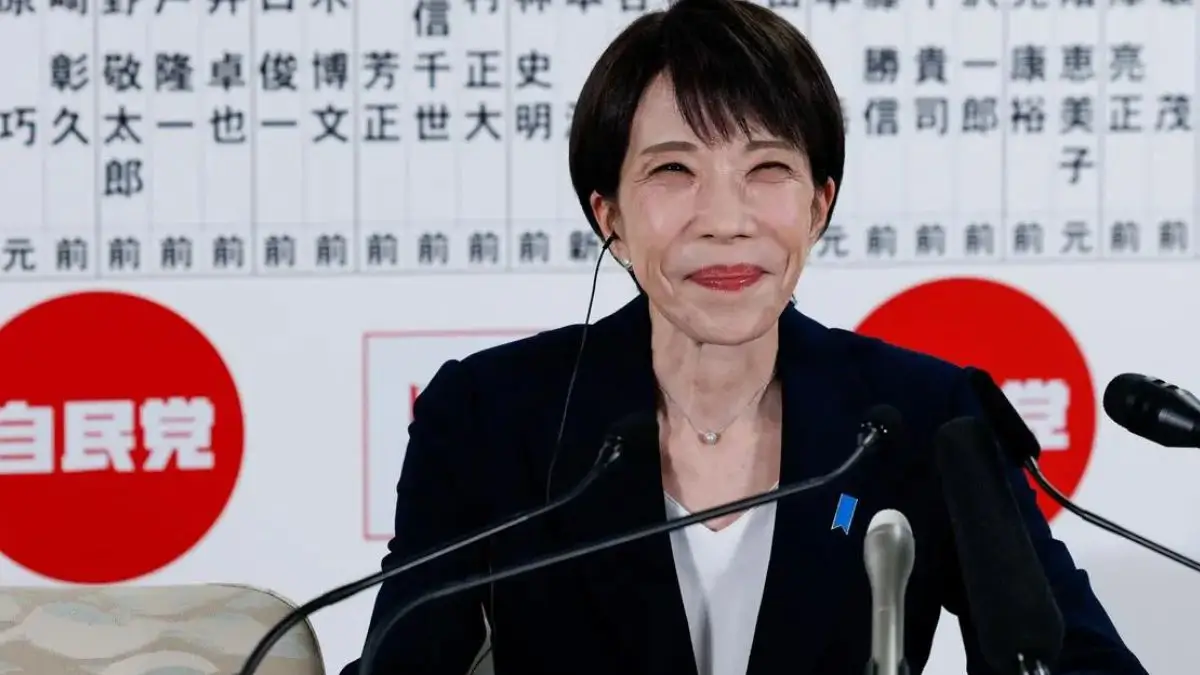
Japan 2026 general election results show PM Sanae Takaichi securing a landslide victory and LDP supermajority, impacting global politics, economy, and Indo-Pacific relations.
Japan PM Sanae Takaichi Wins Historic Landslide in 2026 General Election
On 8 February 2026, Japan witnessed a major political development as **Prime Minister Sanae Takaichi and her ruling Liberal Democratic Party (LDP) achieved a historic landslide victory in the nation’s general election. The polls were called early — just three months after Takaichi assumed office — and the results surpassed expectations, reshaping Japan’s political landscape and sending shockwaves through Asia’s geopolitical environment.
LDP Supermajority in Lower House
In the snap election for the 465-member House of Representatives (lower house), Takaichi’s LDP alone secured a commanding 316 seats, well above the majority benchmark of 233 seats. When combined with its coalition partner, the Japan Innovation Party, the ruling bloc commands a supermajority of approximately two-thirds of the chamber. This is the strongest parliamentary showing by any single party in post-World War II Japanese politics.
Strategic Victory and Political Mandate
Takaichi’s decision to call an early election was a calculated gamble designed to solidify her position and secure a fresh mandate after recent political scandals and internal party challenges. The opposition, fragmented and unable to present a unified front, failed to slow the LDP’s momentum, contributing to the dominant win.
Economic and Market Response
The election outcome was quickly reflected in financial markets. The Nikkei share average surged to record highs, while Japanese government bonds saw yields rise. Investors interpreted the LDP’s strong showing as likely to lead to decisive fiscal policies, including proposed tax cuts and stimulus measures aimed at addressing Japan’s long-standing economic issues such as slow wage growth and deflationary pressures.
Policy Implications and Governance Power
With a supermajority in the lower house, Takaichi’s government can push through key legislation more easily, even if it faces resistance in the upper house. This parliamentary strength opens the door to significant reforms in economic policy, defense strategy, and constitutional change, including efforts to reinterpret Japan’s post-war pacifist security stance.
Regional and International Impact
Internationally, the landslide victory has been interpreted as strengthening Japan’s negotiating position on matters of security and trade, particularly amid tensions with China and coordination with allies such as the United States and India. Analysts suggest that Takaichi’s assertive leadership could lead to deeper strategic partnerships and shift regional diplomatic dynamics.

Why This News Is Important for Exams
The 2026 Japanese general election outcome is highly significant for students preparing for government exams such as UPSC (IAS), PCS, banking, railways, defence, and teaching positions, as it touches on multiple key syllabus areas — including world politics, international relations, economic governance, and geopolitical strategy.
Firstly, the election underscores the functioning of parliamentary democracies and how a snap election can redefine political legitimacy and legislative authority. Understanding the structure of Japanese governance, with its lower and upper houses, and the implications of a two-thirds supermajority, is essential for general studies papers.
Secondly, this event has economic relevance: markets reacted strongly, with indices such as the Nikkei reaching record levels due to expected fiscal stimulus and potential tax reforms. This connects to macroeconomic concepts such as investor confidence, fiscal policy, and market response to political stability — topics often featured in economics and current affairs sections.
Furthermore, students should be aware of the foreign policy ramifications. Takaichi’s leadership is likely to influence Japan’s security orientation, especially regarding China and U.S. alliances. The election outcome can be linked to geopolitical strategies in the Indo-Pacific, a recurrent theme in both GS and essay papers.
Historical Context: Japanese Electoral Politics and Leadership
Japan’s political system has been dominated by the Liberal Democratic Party (LDP) since its inception in 1955, with only brief interruptions by opposition coalitions. The LDP’s dominance reflects Japan’s post-war political stability and conservative policy preferences.
Sanae Takaichi’s ascension to the premiership in October 2025 marked a milestone as she became Japan’s first female prime minister. Her leadership followed internal shifts within the party and the departure of the centrist Komeito from the ruling coalition, making her early election call both a tactical risk and an opportunity to reaffirm governance authority.
The 2026 election win, therefore, is not just a routine electoral result — it represents a reaffirmation of conservative leadership in Japan and potentially signals a policy shift toward stronger economic intervention and defense autonomy, reflecting evolving domestic priorities and international pressures in the 21st century.
Key Takeaways from Japan PM Sanae Takaichi’s Historic Election Victory
| S. No. | Key Takeaway |
|---|---|
| 1. | Sanae Takaichi’s LDP won a supermajority (two-thirds) in Japan’s lower house in 2026 elections. |
| 2. | The LDP alone secured 316 of 465 seats, surpassing the majority mark by a wide margin. |
| 3. | Markets reacted positively, with Nikkei hitting record highs post-result. |
| 4. | The supermajority enables Takaichi to pursue major policies including defense, fiscal reforms, and constitutional amendments. |
| 5. | The outcome will influence regional geopolitics, especially Japan’s relation with China and strategic collaboration with allies. |
FAQs: Frequently Asked Questions
1. Who is Sanae Takaichi?
Sanae Takaichi is the Prime Minister of Japan and a senior leader of the Liberal Democratic Party (LDP). She became Japan’s first female Prime Minister and led her party to a major victory in the 2026 general election.
2. Which party won the 2026 Japan general election?
The Liberal Democratic Party (LDP), led by Sanae Takaichi, won a landslide victory and secured a supermajority in Japan’s lower house of parliament.
3. What is a supermajority in the Japanese Parliament?
A supermajority means winning at least two-thirds of the seats in the lower house. It allows the ruling party to pass key legislation and override opposition resistance more easily.
4. How many seats are there in Japan’s lower house?
Japan’s House of Representatives (lower house) has 465 seats. A simple majority requires 233 seats.
5. Why did Japan hold a snap election in 2026?
Prime Minister Sanae Takaichi called an early election to strengthen her political mandate and stabilize leadership after internal political challenges.
6. How did financial markets react to the election results?
Japanese stock markets responded positively, with the Nikkei index reaching record highs due to investor confidence in political stability and expected economic reforms.
7. How is this election relevant to India and global politics?
Japan is a key Indo-Pacific partner of India. Political stability in Japan affects regional security, trade relations, and global diplomatic strategies.
8. Which exam topics does this news relate to?
This news is relevant to international relations, world politics, economic policy, and comparative political systems — important topics in UPSC, PSC, banking, railways, and defence exams.
Some Important Current Affairs Links