






Gita Gopinath IMF resignation 2025 confirmed: She steps down as First Deputy Managing Director to rejoin Harvard University. Learn why this matters for UPSC, banking and government exam aspirants.
Gita Gopinath Resigns as IMF Deputy Chief
Introduction
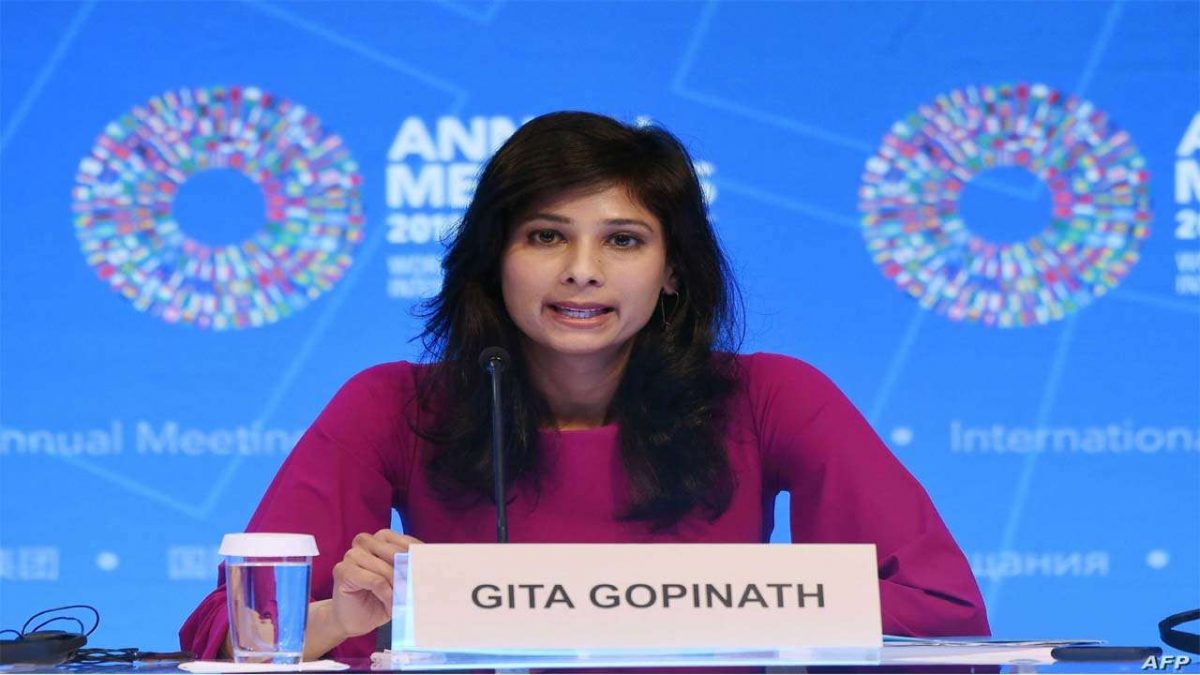
Gita Gopinath, the First Deputy Managing Director at the International Monetary Fund (IMF), has announced her resignation, effective end of August 2025. She will return to Harvard University as the inaugural Gregory and Ania Coffey Professor of Economics Gopinath had joined the IMF in 2019 as its first female Chief Economist and was promoted to the No. 2 post in January 2022
Role and Key Contributions at IMF
During her tenure, Gopinath was instrumental in shaping IMF policy responses to critical global disruptions such as the COVID‑19 pandemic and the Ukraine war. She led the formulation of the World Economic Outlook, spearheaded the Pandemic Paper, and developed the Integrated Policy Framework (IPF) to guide macroeconomic and fiscal strategies
Why She’s Leaving and What’s Next
In an IMF press release, Managing Director Kristalina Georgieva praised Gopinath as an “exceptional intellectual leader” who combined analytical rigor with compassion for staff well-being. Gopinath herself described IMF service as a “once‑in‑a‑lifetime opportunity,” expressing eagerness to return to research and mentoring young economists
Implications for IMF Leadership
Her early departure ahead of term end opens the door for the U.S. Treasury—which usually recommends candidates for her position—to propose a successor, aligning with the administration’s broader agenda to influence global economic governance
Indian Connection and Broader Significance
An Indian-born economist with citizenship in the U.S., Gopinath’s journey from Delhi School of Economics and Princeton to the IMF reinforces India’s global academic footprint. Her return to Harvard also symbolizes a full-circle moment—from academia to global leadership and back to education
Conclusion
Gopinath’s resignation marks the close of a landmark chapter in IMF leadership. Her departure at a pivotal time in global economic affairs adds urgency to the search for new leadership as the IMF confronts upcoming macroeconomic challenges.
 "Gita Gopinath IMF resignation")
B) Why This News Is Important
Significance for Government Exam Aspirants
This story is crucial for UPSC, PSC, Banking, and Civil Services exam aspirants because it pertains to the governance of key global economic institutions such as the IMF. Questions on multilateral financial organisations, leadership changes, and fiscal policy design often feature in syllabi.
Leadership and Policy Relevance
Gopinath impacted the IMF’s strategy on issues like pandemic response, debt sustainability, fiscal-monetary coordination, trade shocks, and climate-related economic risks. Understanding her role helps students connect institutional decisions with macroeconomic policy tools.
Indian Connection & Prestige
Her success underscores India’s growing role in global policymaking. Government exam questions often focus on Indian personalities in international institutions. Gopinath’s academic credentials—Delhi University, Princeton, Harvard—are relevant for “Important Personalities in Economics” topics.
Broader Governance Dynamics
Her move may allow the U.S. government to assert more influence at the IMF—a factor relevant to questions on global power shifts and Bretton Woods institutions.
C) Historical Context
Early Career and Academic Foundations
Gita Gopinath was born in Kolkata in December 1971, studied at Lady Shri Ram College and Delhi School of Economics, and later earned her Ph.D. from Princeton University under advisors including Kenneth Rogoff and Ben Bernanke
Rise at IMF
Appointed Chief Economist of the IMF in January 2019, she was the first woman to hold the position. She led high‑impact research during COVID‑19 and introduced tools like the IPF In January 2022, she became the First Deputy Managing Director, the IMF’s No. 2 role
Impactful Contributions
During her tenure, Gopinath co-authored the Pandemic Paper, helped formulate surveillance frameworks, and led flagship publications like the World Economic Outlook. Her leadership spanned critical events including the pandemic, global trade shocks, and the Ukraine conflict
Departure in Context
Stepping down in August 2025, she exits during a period when the IMF is under pressure to refocus on core mandates amid U.S. concerns about “mission creep” into areas like climate and social governance
D) Key Takeaways from Gita Gopinath’s Resignation
| Serial No. | Key Takeaway |
|---|---|
| 1 | Gita Gopinath will resign as IMF First Deputy Managing Director at the end of August 2025. |
| 2 | She originally joined the IMF in 2019 as its first female Chief Economist, later elevated in January 2022. |
| 3 | Her tenure included leadership in COVID‑19 pandemic policy, World Economic Outlook, and the Integrated Policy Framework (IPF). |
| 4 | Gopinath is returning to Harvard University as a professor, continuing her academic career. |
| 5 | Her resignation gives the U.S. Treasury the chance to propose a successor, reflecting geopolitical power in IMF appointments. |
FAQs: Frequently Asked Questions
1. Who is Gita Gopinath?
Gita Gopinath is an Indian-American economist who served as the First Deputy Managing Director of the International Monetary Fund (IMF). She was previously the Chief Economist of the IMF and is known for her work on global macroeconomic policy.
2. Why is Gita Gopinath resigning from the IMF?
She is stepping down to return to her academic role at Harvard University, where she will become the inaugural Gregory and Ania Coffey Professor of Economics.
3. What is the significance of her tenure at the IMF?
Gopinath played a vital role in the IMF’s policy response during the COVID-19 pandemic, contributed to global fiscal frameworks, and authored key reports like the World Economic Outlook and the Pandemic Paper.
4. When did Gita Gopinath join the IMF and in what role?
She joined the IMF in January 2019 as the Chief Economist and was promoted to First Deputy Managing Director in January 2022.
5. What is the Integrated Policy Framework (IPF)?
The IPF is an economic policy model developed under Gopinath’s leadership to help countries manage trade-offs between monetary, fiscal, exchange rate, and macroprudential policies.
6. Who appoints the First Deputy Managing Director of the IMF?
Traditionally, the United States nominates the candidate for this position, subject to approval by the IMF Executive Board.
7. Will Gita Gopinath continue to be involved in global economics?
Yes, she will continue to influence global policy through her academic work, research, and participation in global economic forums.
Some Important Current Affairs Links