









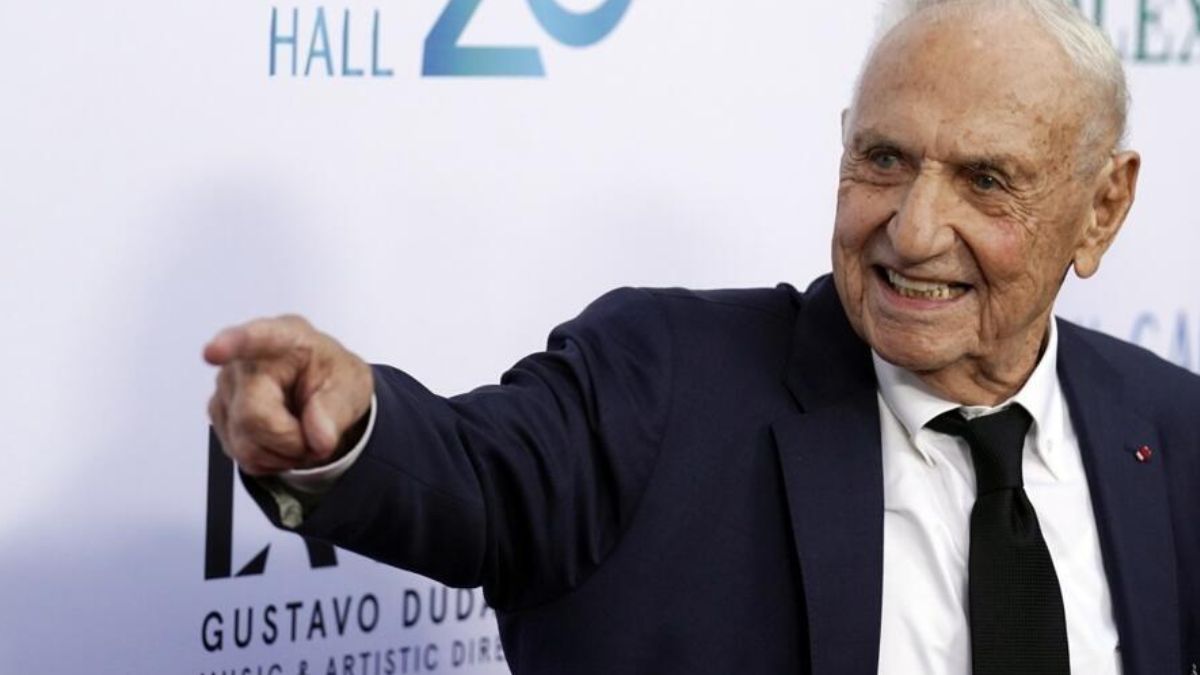
Frank Gehry architecture legacy: Renowned designer of Guggenheim Bilbao and Walt Disney Concert Hall dies at 96. Learn about his innovative designs, Bilbao Effect, and global influence.
Frank Gehry, Visionary Architect Behind Guggenheim Bilbao, Passes Away at 96
Death of a Titan
World‑renowned architect Frank O. Gehry passed away on 5 December 2025 at his home in Santa Monica, California, following a brief respiratory illness He was 96. Confirming the news, his firm’s chief of staff stated that Gehry’s legacy will live on through his groundbreaking designs.
Legacy of Form and Innovation
Gehry was celebrated worldwide for transforming architecture into sculptural art. His signature style — fluid, curving forms clad in metal or titanium — redefined the boundaries of modern architecture. Among his most iconic works are the Guggenheim Museum Bilbao (Spain) and the Walt Disney Concert Hall (Los Angeles).
A Career that Redefined Architectural Norms
Born in Toronto in 1929 as Frank Owen Goldberg, Gehry moved to Los Angeles as a teenager. He studied at the University of Southern California (architecture) and later took courses in urban planning at the Harvard Graduate School of Design.
For many years, Gehry worked on conventional projects — housing, shopping centres — and even did odd jobs to make ends meet. A turning point came when he remodeled his own modest 1920s‑era bungalow in Santa Monica, using unconventional materials like plywood, chain‑link fencing and corrugated metal — a bold aesthetic statement that previewed his later signature style.
Breakthrough: Guggenheim Bilbao and the “Bilbao Effect”
Gehry’s titanium‑clad design for Guggenheim Museum Bilbao, opened in 1997, became a global sensation and propelled him to stardom. The museum’s avant‑garde form and sculptural aesthetics challenged architectural conventions and reinvigorated Bilbao’s identity.
This project gave birth to the phenomenon known as the “Bilbao Effect” — the idea that a single iconic building can transform a city’s cultural and economic landscape.
Embracing Technology to Realize Bold Visions
Gehry was among the first architects to harness advanced 3D modelling and aerospace‑derived software (like CATIA) to translate his wild, curving designs into buildable structures. This technological adoption allowed Gehry to push architectural boundaries — turning cardboard sketches into concrete, metal, and glass masterpieces.
Enduring Influence and Recognition
Over his six‑decade career, Gehry’s bold, expressive architecture earned him almost every major award in the field, including the prestigious Pritzker Prize in 1989.
Even in his 90s, Gehry remained active, overseeing projects around the world, ensuring that each reflected his distinctive architectural vision

Why This News Is Important
Architecture Meets Cultural History
Frank Gehry’s death marks the end of an era. His buildings — especially Guggenheim Bilbao — did more than just reshape skylines; they redefined how people think about architecture itself. For students of culture, history, or art, understanding Gehry’s work offers insight into how built environments influence societies, urban regeneration, and global perceptions of modern architecture.
Lessons in Innovation and Risk-Taking
Gehry’s journey shows that true innovation often stems from daring to be different. His radical use of materials and forms — unconventional for his early career — demonstrates that success may sometimes require rejecting established norms. For aspirants in civil services or government roles related to urban planning, public works, or heritage conservation, Gehry’s approach underscores the importance of visionary thinking and embracing novel ideas.
Relevance for Exams and Awareness Section
Even though architecture might not appear directly in many competitive exams (like civil services, banking, or railways), news of Gehry’s death may be asked in “current affairs” or “arts & culture” sections. Moreover, his influence on urban rejuvenation (the “Bilbao effect”) ties into broader socio-economic themes: city redevelopment, tourism-led growth, and cultural diplomacy — all relevant for general awareness.
A Reminder of Enduring Legacy
Gehry’s legacy is not just in iconic buildings but in inspiring generations of architects, urban planners, and policymakers to think beyond function — to view buildings as living art that shape identity, history, and human experience.
Historical Context: From Modest Beginnings to Architectural Revolution
Early Life and Education
Frank Gehry was born Frank Owen Goldberg in Toronto in 1929 to a working‑class Jewish family. He moved to Los Angeles around 1947, studied ceramics initially at USC, and later switched to architecture, finally rounding his education with urban planning studies at Harvard.
Struggle Years and First Experiments
After finishing his studies, Gehry spent years designing ordinary structures — housing, shopping malls — and even worked as a delivery driver to support himself. But a pivotal moment came when he renovated his own bungalow in Santa Monica, using unconventional materials — a radical departure from traditional architectural norms. That bold remodel signaled his willingness to experiment and challenged what buildings “should” look like.
Rise of Deconstructivism and Breakthrough Projects
In the late 20th century, Gehry embraced a style now often labeled “deconstructivist” — rejecting symmetry and conventional forms in favor of fragmented, dynamic shapes.His breakthrough came when he redesigned the Guggenheim Museum Bilbao, giving rise to a wave of landmark architecture worldwide. The success of Bilbao demonstrated that architecture could be a catalyst for economic, cultural, and urban transformation — not just functional space.
Technological Innovation and Lasting Impact
Gehry’s use of aerospace-derived design software (such as CATIA) allowed him to materialize complex, curving forms that traditional drafting methods could not realize. Through this blend of artistry and technology, he created buildings that were at once structurally sound, visually stunning, and conceptually groundbreaking.
Over decades, Gehry’s projects — from museums to concert halls to residential towers — challenged global architectural norms. His influence reshaped architecture’s role in society, making buildings not just utilitarian spaces but powerful symbols of modern identity, innovation, and aesthetic daring.
Key Takeaways from Frank Gehry’s Passing
| # | Key Takeaway |
|---|---|
| 1 | Frank Gehry died on 5 December 2025 at age 96, in Santa Monica, California. |
| 2 | He was the mastermind behind iconic buildings like the Guggenheim Museum Bilbao and the Walt Disney Concert Hall. |
| 3 | Gehry pioneered a “deconstructivist” architectural style, characterized by fluid, sculptural forms — often clad in metal or titanium. |
| 4 | His design of Guggenheim Bilbao triggered the “Bilbao Effect” — demonstrating how landmark architecture can spur urban renewal and cultural tourism. |
| 5 | Even in his later years, Gehry continued to work and embraced technology (3D modeling, aerospace‑derived software) to bring complex architectural visions to life. |
FAQs: Frequently Asked Questions
Why is Frank Gehry important for competitive exam aspirants?
His contributions are significant in arts & culture, urban development, and global architecture, often appearing in current affairs, general knowledge, and awareness sections of exams like UPSC, SSC, banking, and state PSCs.
Who was Frank Gehry?
Frank Gehry was a world-renowned architect, known for his innovative and sculptural designs, including the Guggenheim Museum Bilbao and Walt Disney Concert Hall.
When did Frank Gehry pass away?
Frank Gehry passed away on 5 December 2025 at the age of 96 in Santa Monica, California.
What is the “Bilbao Effect”?
The “Bilbao Effect” refers to the transformative impact that Gehry’s Guggenheim Museum had on the city of Bilbao, Spain, boosting tourism, cultural recognition, and economic development.
What architectural style is Frank Gehry known for?
He is associated with Deconstructivism, characterized by irregular, fluid, and sculptural forms, often using unconventional materials like titanium and metal.
Where was Frank Gehry born?
He was born as Frank Owen Goldberg in Toronto, Canada, in 1929 and later moved to Los Angeles, USA.
Which awards did Frank Gehry receive?
Gehry received multiple prestigious awards, including the Pritzker Architecture Prize in 1989 and numerous international honors for his contributions to modern architecture.
What was Frank Gehry’s educational background?
Gehry studied architecture at the University of Southern California and pursued urban planning courses at the Harvard Graduate School of Design.
Name some iconic buildings designed by Frank Gehry.
Notable works include the Guggenheim Museum Bilbao (Spain), Walt Disney Concert Hall (Los Angeles), and Dancing House (Prague).
How did Gehry use technology in architecture?
He adopted 3D modeling and aerospace-derived software (CATIA) to design complex, curving structures that were difficult to build with traditional methods.
Some Important Current Affairs Links