






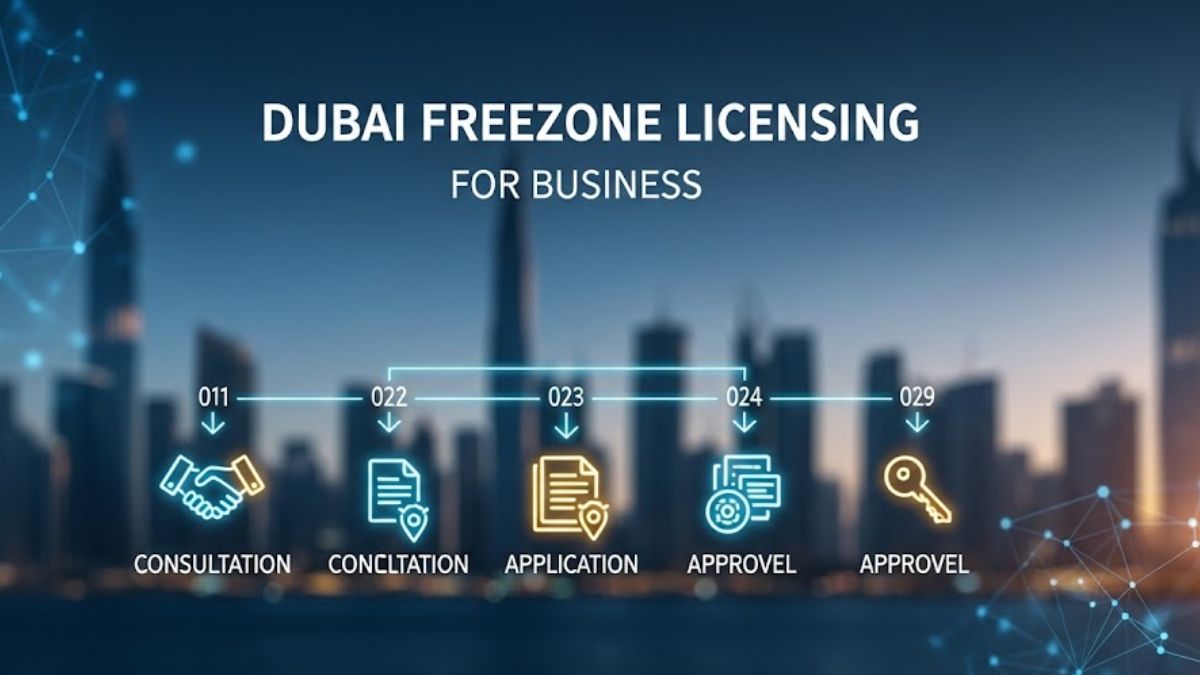
Dubai one freezone passport simplifies licensing, enabling businesses to expand across free zones under one license. Learn benefits, impact, and key facts.
Dubai’s “One Freezone Passport” Revolutionizes Business Licensing in the Emirate
Unified Licensing Across Free Zones
Dubai has unveiled the “One Freezone Passport”, a bold reform by the Dubai Free Zones Council (DFZC) that enables businesses licensed in one free zone to expand into others without securing additional licenses. This framework dramatically simplifies operations, allowing firms to leverage infrastructure across the emirate efficiently Business TodayThe Times of India.
Speedy Implementation and Global Appeal
One of the most striking features is the speed of execution. Global luxury brand Louis Vuitton became the first to benefit from this scheme, setting up its warehouse in the Jebel Ali Free Zone (Jafza) while establishing its corporate office in One Za’abeel, DWTC Free Zone, all within just five days
Streamlining Regulatory Processes
With more than 20 free zones in Dubai, each with its own licensing regime, the new passport eliminates the need for duplicate incorporation and licensing. It breaks down barriers, enabling businesses to expand smoothly across different economic areas
Economic and Tax Advantages
Free zones in the UAE already offer perks like 100% foreign ownership, tax exemptions, customs benefits, and full repatriation of profits The One Freezone Passport builds on these by potentially simplifying corporate tax registration, offering a single tax identity while operating across zones
Scope, Constraints, and Future Refinement
Despite its advantages, the scheme carries limitations: staff cannot be transferred across zones, and sectors like retail are excluded. Shared or virtual workspaces are also not permitted. Authorities have signaled further regulatory adjustments as the scheme evolves
Economic Context
The initiative ties into Dubai’s broader Economic Agenda D33, aimed at bolstering the city’s position as a leading global business hub. Dubai’s non-oil foreign trade surged 18.6% year-on-year in Q1 2025 to AED 835 billion, underlining the need for such streamlined business frameworks
B) Why This News Is Important
Enhancing Business Competitiveness and Attracting Investment
Dubai’s One Freezone Passport is transformative—it removes multiple licensing hurdles, enabling swift business expansion and reinforcing Dubai’s profile as a top-tier global investment destination
Boosting Administrative Efficiency
For government exams, understanding how regulatory reform can promote governance efficiency is vital. The initiative illustrates how digital streamlining and policy innovation can significantly cut bureaucratic red tape.
Economic Diversification Strategy
As students preparing for exams like IAS and PSC, it’s crucial to grasp how this initiative supports Dubai’s shift from oil dependency toward diversified economic growth, aligning with strategic agendas like Economic Agenda D33
Endorsed by International Firms
Louis Vuitton’s early adoption underscores the initiative’s credibility and practical benefits, giving it global legitimacy.
Precedent for Future Reforms
This model may inspire similar licensing and regulatory reform in other regions, serving as a case study in administrative innovation and public policy efficacy.
C) Historical Context
Origins of Free Zones in the UAE
Dubai’s free zones began with the pioneering Jebel Ali Free Zone (JAFZA) in 1985. The success of this model, centered around attracting investment through incentives like 100% foreign ownership, tax breaks, and streamlined customs, led to its replication across the Emirates
The Fragmentation Challenge
While free zones contributed immensely to economic development, each had separate licensing and regulatory systems, creating inefficiencies and constraints for businesses operating across multiple zones.
Economic Agenda D33
Launched to double Dubai’s economy and strengthen its global role by 2033, the Economic Agenda D33 has prioritized regulatory integration and digital transformation. The One Freezone Passport exemplifies this strategic shift
Recent Regulatory Reforms
This initiative complements other recent reforms like allowing companies in select free zones to buy property in Dubai—a move that further signals the emirate’s intent to cultivate a more integrated, business-friendly ecosystem
D) Key Takeaways from the One Freezone Passport
| S. No. | Key Takeaway |
|---|---|
| 1 | Unified Licensing: Businesses licensed in one free zone can expand into others under a single license. |
| 2 | Speed of Setup: Louis Vuitton completed expansion across zones in just five days, demonstrating operational efficiency. |
| 3 | Economic Advantages: The passport supports a seamless tax and regulatory framework, potentially reducing administrative burdens. |
| 4 | Scope & Limitations: Staff transfers across zones, retail businesses, and shared or virtual offices are not included under the scheme. |
| 5 | Strategic Alignment: The initiative supports Dubai’s Economic Agenda D33 and strengthens the emirate’s position as a premier business hub. |
FAQs – Frequently Asked Questions
Q1: What is the One Freezone Passport initiative launched by Dubai?
The One Freezone Passport is a licensing reform that allows businesses registered in one Dubai free zone to expand operations into other free zones without requiring multiple licenses.
Q2: Which company was the first to benefit from the One Freezone Passport?
Louis Vuitton became the first company to expand using the scheme, establishing operations in both Jebel Ali Free Zone and DWTC Free Zone within five days.
Q3: What are the main benefits of Dubai’s free zones for businesses?
Key benefits include 100% foreign ownership, tax exemptions, customs duty benefits, ease of repatriating profits, and now, simplified licensing through the One Freezone Passport.
Q4: Does the One Freezone Passport allow staff to transfer between different zones?
No, employees cannot be transferred between different free zones under this initiative.
Q5: Which sectors are excluded from the One Freezone Passport?
Retail businesses, shared offices, and virtual workspaces are excluded from the scheme.
Q6: How does the initiative align with Dubai’s Economic Agenda D33?
The initiative supports the agenda’s goal to double Dubai’s economy by 2033 and solidify its role as a top global business hub.
Q7: How many free zones are currently in Dubai?
Dubai has more than 20 active free zones, each previously requiring separate licenses before this initiative.
Q8: What economic impact has Dubai already seen in 2025?
Dubai’s non-oil foreign trade surged by 18.6% year-on-year in Q1 2025 to AED 835 billion.
Q9: What challenges did businesses face before this reform?
Earlier, businesses needed to go through duplicate incorporation and licensing processes in each free zone, increasing cost and administrative hurdles.
Q10: Can the One Freezone Passport model inspire similar reforms in other countries?
Yes, experts believe this regulatory innovation could serve as a model for other nations seeking to simplify business regulations and attract global investment.
Some Important Current Affairs Links