




BRICS Summit 2025 highlights PM Modi’s bold proposals on global governance reform, AI policy, terrorism, and climate finance for developing nations.
PM Modi at the 17th BRICS Summit in Brazil: Championing Global South and Multilateral Reform
Introduction
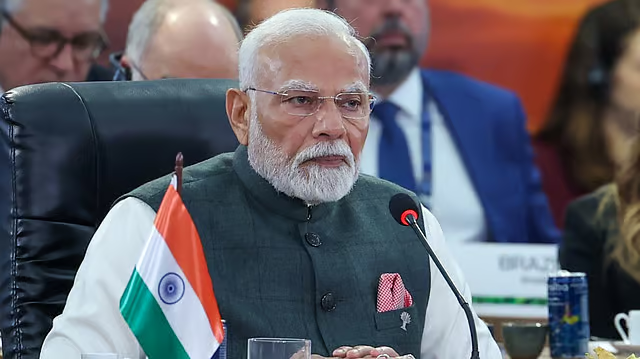
Prime Minister Narendra Modi participated in the 17th BRICS Summit held on 6–7 July 2025 in Rio de Janeiro, Brazil, hosted by President Luiz Inácio Lula da Silva Leaders from 11 member states and several partner countries engaged in extensive discussions on global governance, climate finance, terrorism, AI, and economic stability.
Empowering the Global South
During the “Reform of Global Governance and Peace & Security” session, PM Modi emphasized the need to amplify the voice of the Global South. He stressed that global governance institutions—such as the UN Security Council, IMF, World Bank, and WTO—are obsolete and must reflect the current geopolitical landscape
Terrorism: Zero Tolerance
Modi strongly condemned terrorism, referencing the Pahalgam terror attack of April 2025, calling it an assault on humanity, not just India. He urged BRICS to implement zero tolerance toward terrorism, including those who finance and harbor terrorists
Reforming Global Governance
He called for urgent reforms in global institutions to reflect multipolarity and ensure fair representation. Advocating for stronger climate finance access and tech cooperation, Modi welcomed the inclusion of firm language on UN Security Council reform in the summit declaration
Multilateralism, AI, and Financial Resilience
In the session “Strengthening Multilateralism, Economic‑Financial Affairs and Artificial Intelligence,” Modi offered four forward-looking proposals:
- Demand-driven and sustainable lending by the New Development Bank.
- Creation of a BRICS Science & Research Repository.
- Secure and resilient supply chains for critical minerals.
- Promotion of responsible AI governance alongside innovation
Climate Finance and Sustainability
BRICS leaders emphasized climate finance and demanded wealthy nations support mitigation in developing countries. They backed Brazil’s Tropical Forests Forever Facility, denounced carbon border taxes, and committed to COP33 in India (2028)

Why This News is Important
Strengthening India’s Multilateral Role
PM Modi’s active role in the BRICS Summit enhances India’s standing as a global leader advocating for equitable governance. India’s emphasis on reforming the UN, IMF, and World Bank resonates with its long-term diplomatic strategies and demonstrates its commitment to shaping a multipolar world order. This matters for civil services and foreign policy aspirants aiming to understand India’s position in international diplomacy.
Focus on Strategic Global Issues
The summit addressed critical issues—terrorism, climate finance, AI governance, and trade protectionism. For students preparing for teacher, banking, police, railways, and civil service exams like PSCS or IAS, grasping these interlinked issues is vital. These topics often form part of current affairs passages, GK sections, or policymaking essays in competitive exams.
Historical Context
Evolution of BRICS
- Origin: The BRIC concept was coined in 2001 by a Goldman Sachs economist. The first summit occurred in 2009, and South Africa joined in 2011, forming BRICS
- Expansion: In 2024, the group grew by adding Saudi Arabia, UAE, Iran, Ethiopia, and in January 2025, Indonesia, making it an 11-member bloc
Brazil’s Presidency
Brazil held the Pro Tempore Charter in 2025 and hosted the summit in Rio. The “Inclusive and Sustainable Global South” theme underscored issues like equity, AI, climate, and governance reform
Notable Absences and Global Tensions
- Chinese President Xi Jinping was absent—first since 2012; Premier Li Qiang represented China
- Russian President Putin attended virtually due to ICC arrest warrant issued by the Hague
- The summit’s discussions were also framed against US protectionism, with BRICS issuing veiled criticism of rising tariffs
Key Takeaways from PM Modi at BRICS Summit (Rio 2025)
| Sr. No. | Key Takeaway |
|---|---|
| 1 | Empowerment of Global South: Modi defended equitable representation in global institutions and pushed for reforms in UN, IMF, World Bank, WTO. |
| 2 | Zero Tolerance on Terrorism: The Pahalgam attack was discussed, with calls for collective action against terrorists and financiers. |
| 3 | Multilateral Economic Initiatives: Proposed reforms in New Development Bank, creation of a BRICS research repository. |
| 4 | Responsible AI Governance: Emphasis on AI ethics and innovation within BRICS framework. |
| 5 | Climate Finance Mobilization: BRICS demanded funds from developed nations and backed India’s bid for COP33 hosting. |
FAQs: Frequently Asked Questions
1. What is BRICS?
BRICS is an intergovernmental organization comprising emerging economies: Brazil, Russia, India, China, and South Africa. It has now expanded to include countries like Saudi Arabia, UAE, Iran, Ethiopia, and Indonesia.
2. What was the main focus of the 17th BRICS Summit held in Brazil in 2025?
The summit focused on reforming global governance, climate finance, terrorism, AI governance, economic cooperation, and supporting the Global South.
3. What proposals did PM Modi present at the summit?
PM Modi presented four key proposals:
- Sustainable lending by New Development Bank (NDB)
- Creation of a BRICS Science and Research Repository
- Supply chain resilience in critical minerals
- Responsible AI governance and innovation
4. Why is the 17th BRICS Summit important for competitive exams?
This summit highlights India’s foreign policy goals, international collaborations, climate strategy, and terrorism stance—all important areas for Civil Services, Defence, Teaching, Banking, and Railways exams.
5. Who represented China at the summit?
Premier Li Qiang represented China as President Xi Jinping was absent.
Some Important Current Affairs Links