




Introduction
In a landmark move to bolster India’s urban infrastructure, the Asian Development Bank (ADB) has unveiled a $10 billion investment plan over the next five years. This initiative aims to transform urban landscapes, focusing on metro expansions, Regional Rapid Transit System (RRTS) corridors, and comprehensive urban services. The announcement was made by ADB President Masato Kanda following discussions with Prime Minister Narendra Modi on May 31, 2025.
Key Components of the Investment Plan
Metro and RRTS Expansion
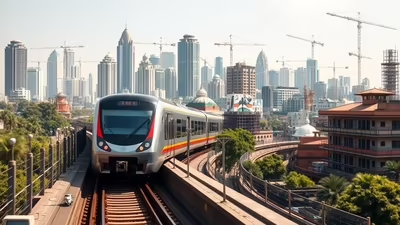
The plan emphasizes the extension of metro networks in major cities such as Mumbai, Chennai, Nagpur, and Bengaluru. Additionally, it supports the development of new RRTS corridors, including the Delhi–Meerut corridor, to enhance regional connectivity.
Urban Services Enhancement
ADB will assist in upgrading water supply, sanitation, waste management, and housing in 100 cities. This includes implementing smart solutions for urban management and promoting sustainable growth.
Private Capital Mobilization
A significant portion of the funding will be channeled through India’s Urban Challenge Fund (UCF), aimed at attracting private investments into urban infrastructure projects. This approach seeks to leverage third-party capital for sustainable urban development.
Technical Assistance and Capacity Building
ADB is committing $3 million in technical assistance to help states and urban local bodies design viable projects and strengthen their implementation capacities.

Why This News is Important
Support for ‘Viksit Bharat 2047’ Vision
This investment aligns with India’s goal to become a developed nation by 2047. By enhancing urban infrastructure, the plan supports sustainable economic growth and improved quality of life in urban areas.
Addressing Rapid Urbanization
With over 40% of India’s population expected to reside in urban areas by 2030, this initiative addresses the pressing need for modern urban infrastructure to accommodate the growing population.
Promoting Sustainable Development
The focus on green mobility, inclusive access, and private capital mobilization ensures that the urban transformation is environmentally sustainable and socially inclusive.
Historical Context
ADB’s Engagement in India
Since 1986, ADB has been actively involved in India’s development, committing nearly $59.5 billion in sovereign lending and $9.1 billion in private investments. Its active portfolio includes 81 loans totaling $16.5 billion as of April 2025.
Urban Infrastructure Initiatives
ADB has previously supported over 110 cities across 22 states in India, focusing on water supply, sanitation, housing, and solid waste management projects. The current plan builds upon these efforts to further enhance urban infrastructure.
Key Takeaways from ADB’s $10 Billion Urban Infrastructure Plan
| No. | Key Takeaway |
|---|---|
| 1 | ADB has committed $10 billion over five years to transform urban infrastructure in India. |
| 2 | The investment focuses on metro and RRTS expansions, urban services enhancement, and private capital mobilization. |
| 3 | The plan supports India’s ‘Viksit Bharat 2047’ vision, aiming for sustainable urban development. |
| 4 | ADB will provide $3 million in technical assistance to strengthen project implementation capacities. |
| 5 | The initiative addresses the challenges posed by rapid urbanization, with over 40% of the population expected to live in urban areas by 2030. |
FAQs: Frequently Asked Questions
1. What is the total amount committed by ADB for India’s urban infrastructure plan?
The Asian Development Bank (ADB) has committed $10 billion for India’s urban infrastructure development over the next five years.
2. Which urban projects will ADB’s investment focus on?
The investment focuses on metro expansions, Regional Rapid Transit System (RRTS) corridors, water supply, sanitation, waste management, housing, and smart urban services.
3. How will ADB support the mobilization of private capital?
ADB will channel a significant portion of funds through India’s Urban Challenge Fund (UCF) to attract private investments into urban infrastructure projects.
4. What technical assistance will ADB provide to states and urban local bodies?
ADB is providing $3 million for technical assistance to help design viable urban projects and strengthen implementation capacity.
5. How does this plan align with India’s national development goals?
The plan supports India’s vision of becoming a developed nation by 2047 by promoting sustainable urban growth and improving quality of life in cities.
6. Why is upgrading urban infrastructure important for India?
With rapid urbanization, over 40% of India’s population is expected to live in urban areas by 2030, necessitating improved infrastructure for sustainability and livability.
Some Important Current Affairs Links