









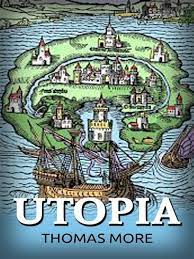
Author of the Book “Utopia”
Thomas More, an English lawyer, social philosopher, author, statesman, and noted Renaissance humanist, wrote the seminal work “Utopia.” This book, first published in 1516 in Latin, is a socio-political satire that reflects More’s vision of an ideal society. “Utopia” presents a detailed and innovative description of a fictional island society and its religious, social, and political customs.
The Concept of Utopia
The term “Utopia” itself is derived from Greek, meaning “no place” or “nowhere.” It is a pun, with ‘eu-topos’ meaning “good place” and ‘ou-topos’ meaning “no place.” This dual meaning reflects the book’s exploration of an ideal society that is both perfect and unattainable. More’s “Utopia” is divided into two books: the first discusses the issues in European society, while the second presents the detailed description of the Utopian society.
The Structure of Utopia
The structure of the book is unique and thought-provoking. It starts with a dialogue between More and his friend, Peter Giles, where they meet a traveler, Raphael Hythloday, who has visited the fictional island of Utopia. Hythloday describes Utopia’s society, which contrasts sharply with the contemporary European societies of More’s time. Utopia is characterized by communal ownership, no private property, and a welfare state that ensures the well-being of all its citizens.
Themes and Ideas
“Utopia” explores several themes and ideas, including the organization of society, the distribution of wealth, the role of education, and the relationship between the individual and the state. More’s work critiques the social, economic, and political systems of his time, proposing an alternative model where equality and justice prevail. The book delves into the concepts of governance, law, religion, and the role of labor in society.
Influence and Legacy
Thomas More’s “Utopia” has had a profound influence on literature, political theory, and social philosophy. It introduced the genre of utopian literature, inspiring countless other works that explore ideal societies. The book has sparked debates and discussions about the feasibility and desirability of utopian societies. It remains a significant work for students of political science, history, and literature.

Why This News is Important
Relevance to Current Affairs
Understanding the historical context and influence of “Utopia” is essential for students preparing for various government exams. The book’s themes of social justice, equality, and political theory are highly relevant in today’s discussions about governance and society.
Educational Value
“Utopia” provides a foundational understanding of the utopian genre in literature and its impact on subsequent works. It encourages critical thinking about societal organization and the pursuit of idealism versus practicality.
Examination Perspective
Questions related to significant literary works, their authors, and their historical context often appear in exams for positions like teachers, civil services, and other government roles. Knowledge of “Utopia” and its author can be a valuable asset for aspirants.
Broader Understanding
Learning about “Utopia” enriches one’s understanding of Renaissance literature and the intellectual currents of the period. It also provides insights into how historical texts can influence modern thought and policy-making.
Historical Context: Background of “Utopia”
Thomas More wrote “Utopia” during the Renaissance, a period marked by a resurgence of interest in classical learning and humanism. The Renaissance was characterized by significant social, political, and cultural transformations in Europe. More, a contemporary of figures like Erasmus and Machiavelli, was deeply engaged in the intellectual debates of his time. “Utopia” was a product of this vibrant intellectual milieu and reflected More’s critical engagement with the issues of his day.
Key Takeaways from “Author of the Book ‘Utopia'”
| Serial Number | Key Takeaway |
|---|---|
| 1 | Thomas More authored the book “Utopia,” published in 1516. |
| 2 | “Utopia” presents a fictional island society with communal ownership and no private property. |
| 3 | The book critiques European societies and proposes an alternative model of equality and justice. |
| 4 | “Utopia” has significantly influenced literature, political theory, and social philosophy. |
| 5 | Understanding “Utopia” is crucial for government exam aspirants due to its relevance in discussions of governance and society. |
Important FAQs for Students from this News
Q1: Who wrote the book “Utopia”?
A: Thomas More, an English lawyer, social philosopher, author, and statesman, wrote “Utopia.”
Q2: When was “Utopia” first published?
A: “Utopia” was first published in 1516.
Q3: What does the term “Utopia” mean?
A: The term “Utopia” is derived from Greek, meaning “no place” or “nowhere,” but it also plays on ‘eu-topos,’ meaning “good place.”
Q4: What are the main themes explored in “Utopia”?
A: “Utopia” explores themes such as the organization of society, the distribution of wealth, the role of education, and the relationship between the individual and the state.
Q5: Why is “Utopia” significant in literature and political theory?
A: “Utopia” introduced the genre of utopian literature and has influenced countless works exploring ideal societies. It provides a critical perspective on social, economic, and political systems.
Some Important Current Affairs Links