


Deepak Bagla Atal Innovation Mission Mission Director appointment 2025 explained for UPSC, PCS, banking, railways, and defence exams—know AIM’s mandate, ATLs, AICs, Bagla’s background, and high-yield key takeaways.
Deepak Bagla Appointed as Mission Director of Atal Innovation Mission
Introduction
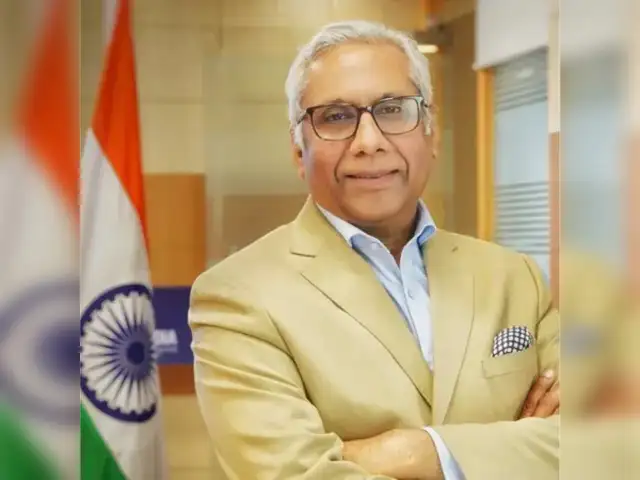
In a significant leadership shift, the Government of India has appointed Deepak Bagla as the new Mission Director of the Atal Innovation Mission (AIM)—a flagship initiative under NITI Aayog. The appointment was formalised on 21 July 2025, marking the beginning of a transformative chapter for India’s innovation ecosystem.
Professional Background of Deepak Bagla
Deepak Bagla brings an illustrious track record, including serving as Managing Director & CEO of Invest India, the national investment promotion and facilitation agency. He has also served as President of the World Association of Investment Promotion Agencies (WAIPA). His academic credentials include a Bachelor’s in Economics from St. Stephen’s College, Delhi, and Master’s degrees in International Diplomacy and International Trade and Finance from Georgetown University.
AIM’s Renewed Mandate Under New Leadership
With Bagla at the helm, AIM aims to reinforce its mission of fostering innovation and entrepreneurship across India. The renewed focus includes expanding Atal Tinkering Labs, Atal Incubation Centres, and targeted innovation challenges aligned with India’s broader development goals. Bagla’s international finance and policy experience are expected to promote strategic partnerships and measurable outcomes.
Strategic Vision and National Relevance
The appointment comes at a critical juncture as AIM 2.0 is poised for expanded scale and impact. Bagla has emphasised collaboration with government, academia, industry, and civil society to create an inclusive innovation ecosystem. He reiterated the objective of realising Prime Minister Modi’s vision of Viksit Bharat, positioning India as a global innovation hub.
Conclusion
Deepak Bagla’s leadership heralds a new era in AIM’s journey. His strong international experience, strategic insight, and outcome‑oriented approach are expected to significantly scale AIM’s initiatives and aid India’s transition into a knowledge‑driven economy.
(Word count ~320 excl. additional sections)
Why This News Is Important
Fueling Government Exam-Relevant Themes
This news is highly relevant for students preparing for examinations like UPSC, PCS, banking, railways, and defence, where understanding national innovation initiatives, governance, institutional leadership changes, and economic policy mechanisms is crucial.
Relevance to Syllabus Topics
AIM’s focus aligns with key themes like ‘Government Initiatives to Promote Innovation and Entrepreneurship’, ‘Role of NITI Aayog’, and ‘Startup India and Make in India policies’—topics frequently featured in general studies and current affairs sections.
Testable Institutional Insight
Deepak Bagla’s appointment connects to factual knowledge—such as the structure of AIM, its programs (Tinkering Labs, Incubation Centres), and AIM’s parent body, NITI Aayog. Facts like the appointment date (21 July 2025) and his background provide direct short‑answer content.
Historical Context
Formation and Evolution of AIM
Atal Innovation Mission was launched in January 2016 under NITI Aayog to foster innovation and entrepreneurship at the school, university, and enterprise levels across India. It functions as the innovation arm of the government with multi‑stakeholder programs.
Key Components of AIM
- Atal Tinkering Labs (ATLs): Introduced in schools to encourage young students (Grades 6–12) to explore tools like robotics, IoT, 3D printing, and rapid prototyping—even more than 10,000 labs operational in 2025.
- Atal Incubation Centres (AICs): Hosted across universities and institutions, incubating startups across sectors such as Fintech, Healthtech, EdTech, Space Tech, and more. As of 2025, over 72 AICs support 3,500+ startups and have created 32,000+ jobs.
Past Leadership and New Chapter
Previously led by Dr. Chintan Vaishnav, AIM has entered a new phase with expanded mandates. Bagla inherits a mission with strong foundations but now aims to scale operational outreach and deliver measurable national impact.
Key Takeaways from “Mission Director Appointment”
| S. No. | Key Takeaway |
|---|---|
| 1 | Deepak Bagla appointed Mission Director of AIM, assumed charge on 21 July 2025 |
| 2 | Bagla previously served as MD & CEO of Invest India and President of WAIPA |
| 3 | AIM (under NITI Aayog), launched in January 2016, promotes innovation via labs and incubation centres |
| 4 | AIM 2025 boasts 10,000+ Atal Tinkering Labs and 72 Atal Incubation Centres, supporting thousands of startups |
| 5 | Bagla’s global experience and policy insight are expected to drive AIM’s strategic partnerships and scale its impact |
FAQs (Exam‑oriented)
Who did Deepak Bagla succeed at AIM (immediately prior leadership)?
Earlier leadership included Dr. Chintan Vaishnav.
Who has been appointed Mission Director of the Atal Innovation Mission (AIM)?
Deepak Bagla.
Under which body does the Atal Innovation Mission function?
NITI Aayog.
When was the Atal Innovation Mission launched?
2016.
What are Atal Tinkering Labs (ATLs)?
School-level labs that nurture problem‑solving, design thinking, and STEM skills using tools like robotics, IoT, 3D printing, etc.
What are Atal Incubation Centres (AICs)?
Institution-based incubation centres that support startups with mentorship, funding access, and infrastructure.
Which major government vision does AIM align with?
Viksit Bharat (Developed India) vision.
What was Deepak Bagla’s earlier prominent role?
MD & CEO of Invest India.
What is WAIPA and what was Bagla’s role there?
World Association of Investment Promotion Agencies; he served as its President.
Why is this appointment important for competitive exams?
It links to governance, innovation policy, NITI Aayog’s role, startup ecosystem, and institutional leadership—frequent topics in GS/Current Affairs.
Name two flagship program pillars of AIM.
Atal Tinkering Labs (ATLs) and Atal Incubation Centres (AICs).
Which segments of exams should particularly track AIM updates?
UPSC/State PCS, Banking (GA/ESI), Railways, Defence exams, Teaching exams (GK/Current Affairs).
How does AIM support school students?
Through ATLs that provide hands-on exposure to emerging technologies.
How does AIM support startups?
Through AICs, accelerator programs, and national innovation challenges.
What broader policy initiatives are AIM’s objectives aligned with?
Startup India, Make in India, Digital India, and National Education Policy (experiential learning).
Some Important Current Affairs Links




