








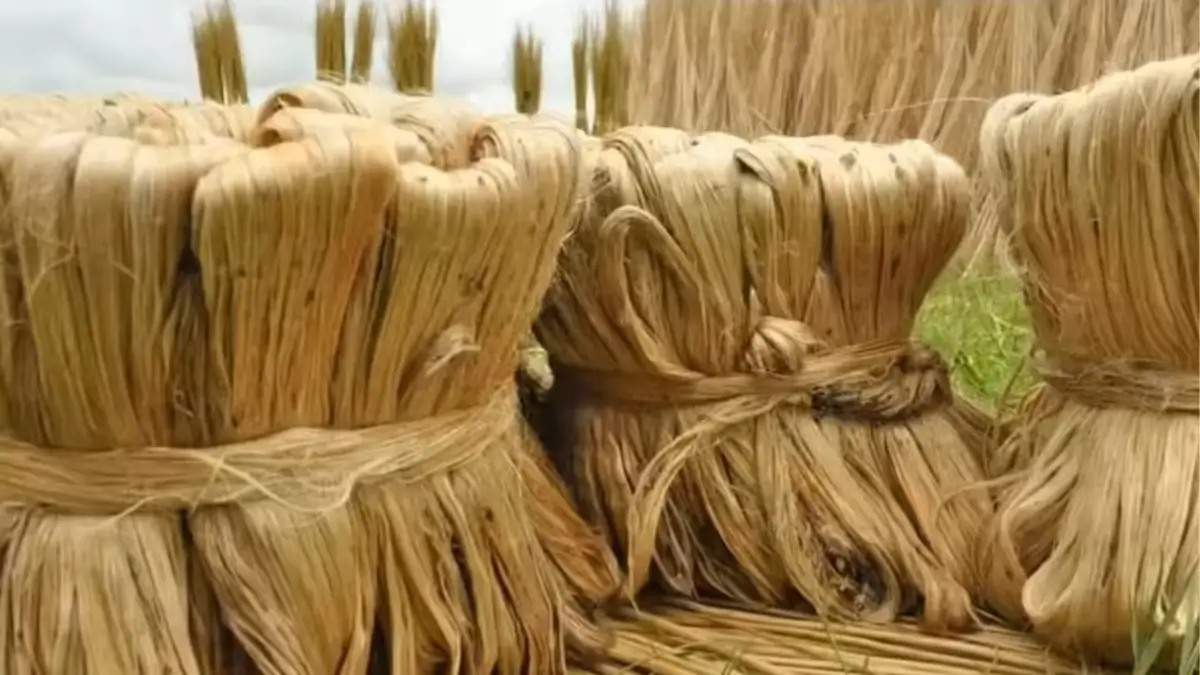
MSP for Raw Jute 2026–27 Season set at ₹5,925 per quintal by Cabinet Committee on Economic Affairs. Check full details, key highlights, exam relevance, MCQs and FAQs for UPSC, SSC, Banking and State PCS exams.
Cabinet Approves MSP for Raw Jute for 2026-27 Season – A Big Boost for Farmers
📌 Introduction: Government’s New MSP Decision for Raw Jute
In a significant policy step, the Cabinet Committee on Economic Affairs (CCEA) of India has approved the Minimum Support Price (MSP) for raw jute for the 2026-27 marketing season at ₹5,925 per quintal. This decision represents a ₹275 increase compared to the previous year and aims to offer better financial security and predictable income to jute farmers across the country.
🌾 What is MSP and Why it Matters
Minimum Support Price (MSP) is a pre-determined price at which the Government procures produce from farmers to safeguard them against market fluctuations and ensure fair returns. By setting MSP well above the cost of production, the Government supports agricultural sustainability and rural livelihoods. In this case, the MSP for raw jute now ensures a 61.8% return over the average cost of production, reinforcing the commitment to farmer welfare.
📊 Key Details of the MSP Increase for 2026-27
- Approved MSP: ₹5,925 per quintal for TD-3 grade raw jute
- Increase: ₹275 per quintal over the previous season
- Assured Return: 61.8% above all-India weighted average cost of production
- Procurement Agency: Jute Corporation of India (JCI) continues as the nodal purchasing agency
- Government Support: All procurement losses borne by the Central Government
🌍 Impact on Jute Farmers and Rural Economy
Jute is a major cash crop cultivated by millions of farmers, especially in states like West Bengal, Assam and Bihar. With the MSP hike:
- Farmers are assured fair income even if market prices fall.
- Rural economies dependent on jute cultivation receive a boost.
- Cultivation of natural fibre may increase, aligning with global trends toward eco-friendly products.
🤝 Role of the Jute Corporation of India (JCI)
The Jute Corporation of India (JCI) will carry out Price Support Operations (PSO), buying raw jute from farmers at the MSP. Any loss incurred during procurement will be reimbursed by the Central Government, ensuring operational stability and farmer confidence.
📌 Conclusion: Strengthening Farmer Income and Natural Fibre Sector
The MSP increase for raw jute reflects ongoing Government efforts to stabilize agricultural income and promote sustainable farming. With India being a leading producer of jute, this policy move positively impacts millions of farming households and helps maintain the global competitiveness of the Indian jute sector.

🧠 Why This News is Important for Exam Aspirants
🌾 Supporting Farmer Income & Rural Economy
The increase in MSP for raw jute is crucial because it directly affects the income of farmers engaged in jute cultivation. MSP decisions form a key part of India’s agricultural policy and are frequently asked in government exams (GS3, Economy & Agriculture). Understanding how MSP protects farmers from unstable market prices and guarantees minimum income prepares aspirants for both descriptive answers and objective questions.
📊 Indicator of Government’s Agricultural Priorities
This development reflects the Government’s priority toward agrarian support, especially for fibre crops like jute, which contribute to rural employment and sustainable eco-friendly industries. Competitive exams often explore policy impacts on rural livelihoods, natural fibre markets, and India’s agricultural sector, making this news relevant.
📌 Link to Economic Policies and Rural Development
MSP decisions also tie into broader topics such as economic planning, inflation control, food security, and rural development schemes. Students preparing for exams like UPSC, PCS, Banking, and SSC should note how MSP mechanisms influence commodity markets, farmer behavior, and government procurement strategies.
🕰️ Historical Context: MSP & Jute in India
📍 MSP Policy Evolution
The concept of Minimum Support Price was formalized to ensure farmers receive a fair price for their produce when private market rates fall. Over the years, MSP has become an essential tool in India’s agricultural framework, covering key crops from cereals to fibres.
🌾 Jute’s Significance in Indian Agriculture
Jute, known as the “golden fibre”, is one of India’s oldest cash crops. India ranks among the largest producers of raw jute in the world. It is widely cultivated in the eastern states, with a significant rural population dependent on its production for livelihoods. MSP increases over the years have aimed to maintain profitable cultivation and boost rural income.
📈 Trends in MSP for Raw Jute
Over the past decade, MSP for raw jute has more than doubled, showing consistent policy support for this sector. From ₹2,400 per quintal in 2014-15 to ₹5,925 per quintal in 2026-27, the Government has steadily raised MSP to ensure better farmer returns and reduce agricultural distress.
📌 Key Takeaways from “Cabinet Approves MSP for Raw Jute 2026-27 Season”
| S.No | Key Takeaway |
|---|---|
| 1 | Cabinet Committee on Economic Affairs approved MSP of ₹5,925 per quintal for raw jute for the 2026-27 marketing season. |
| 2 | The MSP has been raised by ₹275 compared to the previous season. |
| 3 | The revised MSP ensures a return of 61.8% over the average cost of production. |
| 4 | Jute Corporation of India (JCI) will undertake procurement operations and losses will be reimbursed by the Government. |
| 5 | The move aims to strengthen farmer income and encourage increased jute cultivation. |
Frequently Asked Questions (FAQs)
1. What is the MSP for raw jute for the 2026–27 season?
The MSP for TD-3 grade raw jute for the 2026–27 marketing season has been fixed at ₹5,925 per quintal by the Cabinet Committee on Economic Affairs.
2. Which body approved the MSP for raw jute?
The decision was approved by the Cabinet Committee on Economic Affairs (CCEA), chaired by the Prime Minister.
3. What is the increase in MSP compared to the previous season?
The MSP has been increased by ₹275 per quintal over the 2025–26 season.
4. What percentage return over cost of production does this MSP ensure?
The approved MSP ensures a return of approximately 61.8% over the all-India weighted average cost of production.
5. Which organization is responsible for procurement of raw jute at MSP?
The Jute Corporation of India (JCI) is the nodal agency responsible for procurement under Price Support Operations.
6. In which states is jute mainly cultivated in India?
Jute cultivation is primarily concentrated in West Bengal, Assam, Bihar, Meghalaya, and Odisha.
7. Why is jute called the “Golden Fibre”?
Jute is known as the “Golden Fibre” because of its golden color and high economic value, especially in eco-friendly packaging and textile industries.
8. Under which ministry does the Jute Corporation of India function?
The JCI functions under the Ministry of Textiles, Government of India.
9. When was the MSP system introduced in India?
The MSP system was introduced in the mid-1960s based on the recommendations of the Agricultural Prices Commission (now CACP).
10. Why is MSP important for competitive exams?
MSP-related questions are frequently asked in UPSC, State PCS, SSC, Banking, and other government exams under topics such as agriculture, economy, rural development, and government schemes.
Some Important Current Affairs Links