






India Trinidad Tobago Agreements 2025 include six new pacts on education, culture, trade, and skill development to deepen diplomatic and economic cooperation.
📌 India–Trinidad & Tobago Sign Six New Agreements to Strengthen Bilateral Ties
Context of the Signing Ceremony
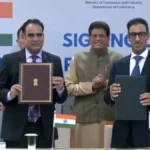
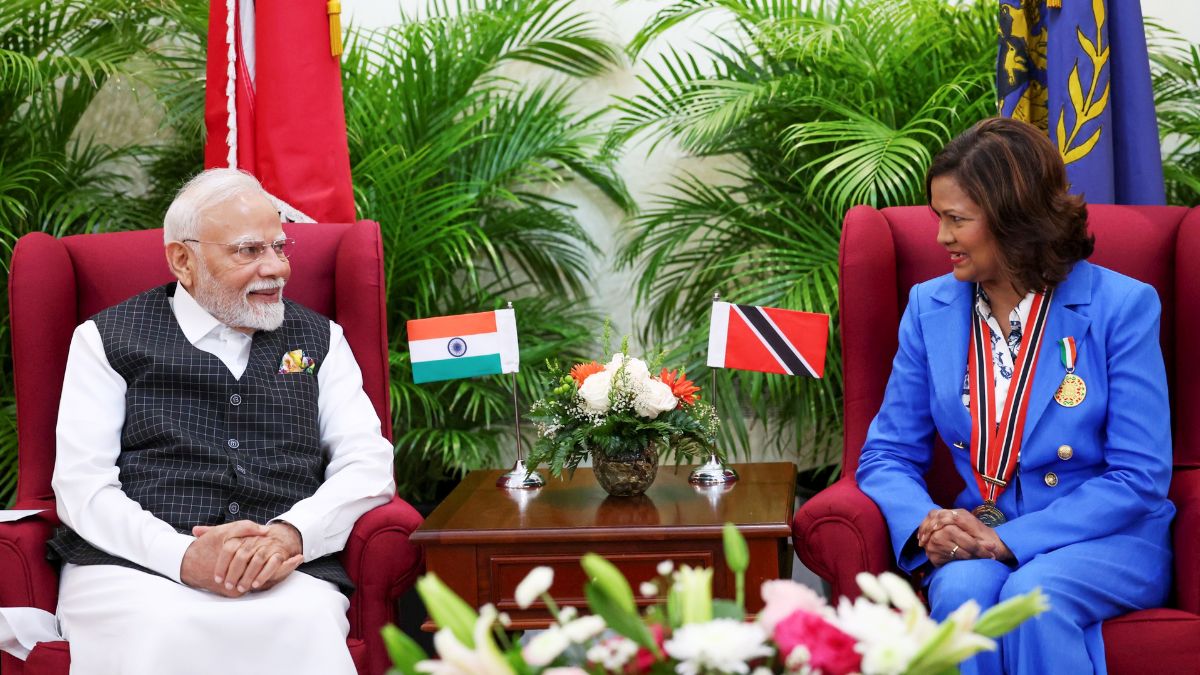
On July 4, 2025, in Port of Spain, Prime Ministers and key officials of India and Trinidad & Tobago signed six key agreements aimed at deepening cooperation in crucial areas such as education, culture, economics, energy, and skill development
Key Sectors Covered
The pacts, spanning multiple sectors, include:
- Education collaboration (student and faculty exchanges, joint research)
- Cultural cooperation
- Economic & trade enhancement
- Energy (renewables)
- Skill development & vocational training
- Consular services
These agreements signify a strategic shift toward a more engaged, multidimensional partnership—expanding beyond traditional diplomacy.
Diplomatic & Strategic Importance
This initiative reflects both countries’ mutual interest in:
- Expanding economic ties and trade
- Leveraging the large Indo‑Trinidadian community (~37.6% of population) to foster cultural affinity
- Strengthening South–South cooperation among Commonwealth and Non‑Aligned Movement members
Economic & Human Capital Impact
The agreements aim to stimulate:
- Trade and investment, through joint commissions and streamlined frameworks
- Workforce enhancement, via vocational and skill‑development programs, especially in youth and emerging sectors
- Educational integration, promoting academic partnerships and mobility
The Road Ahead
Implementation steps include:
- Joint follow‑up commissions to operationalize each pact
- Institutional mechanisms for coordination among ministries, institutions, and private stakeholders
- Regular engagements, including ministerial or official-level visits to ensure sustained progress
Why This News Matters 🎯
Boost to Government Exam Aspirants
This news is particularly relevant for UPSC, State PSCs, Banking, Railways, Defence, Teaching, and Police exam aspirants because:
- It enhances understanding of India’s foreign policy and diplomacy, a major exam topic.
- It enriches sections like international relations, trade and commerce, and cultural diplomacy.
- Shows India’s proactive role in South–South cooperation and Commonwealth collaborations, both exam-worthy areas.
Real-World Example of Bilateral Ties
- Demonstrates how India uses education and cultural agreements as soft-power tools.
- Reinforces the country’s efforts to upskill youth and strengthen labour linkages abroad.
- Enhances global standing through tangible economic and strategic partnerships.
Insight for Current Affairs
- Offers a fresh take on India’s evolving relationship with the Caribbean region, often overlooked in exam studies.
- The focus on renewables and sustainable practices aligns with trending themes in government schemes and global sustainability.
- Prepares aspirants for essay or interview contexts discussing “India’s external engagement strategy”.
Historical Context
Early Diplomatic Ties
- India and Trinidad & Tobago established diplomatic relations in 1962, the year Trinidad & Tobago gained independence c
Waves of Migration
- The first significant influx of Indian indentured labourers began in May 1845, marking a historical link that shaped today’s Indo‑Trinidadian community (~37.6%)
Previous Bilateral Frameworks
- Over the decades, India and Trinidad & Tobago formalized cooperation through:
- Science & Technology (1985)
- Cultural pact (1987)
- Double Taxation Avoidance (1999)
- Scientific/Tech/Cultural Cooperation (2003)
- Investment Protection (2007)
- These laid the groundwork for today’s multi-dimensional engagement.
Recent Momentum
- India has recently boosted cooperation across the Caribbean, including initiatives in Cyprus (UPI MoU) and Sri Lanka (Hindi teaching)
- This trajectory culminates in the six-agreement boost on July 4, 2025.
Key Takeaways from India–Trinidad & Tobago Agreements
| S. No. | Key Takeaway |
|---|---|
| 1 | India and Trinidad & Tobago signed six agreements on July 4, 2025. |
| 2 | The pacts cover education, culture, trade, energy, skill training, and consular services. |
| 3 | These agreements deepen South–South cooperation and build on strong cultural ties (Indo‑Trinidadian diaspora at 37.6%). |
| 4 | Historically, ties span from 1962 diplomatic relations and indentured migration from 1845 to key agreements in 1985, 1987, 1999, 2003, 2007. |
| 5 | For aspirants, this story reinforces learning about India’s foreign policy tools in global diplomacy and exam-relevant themes like soft power and sustainable partnerships. |
FAQs: Frequently Asked Questions
1. What are the six agreements signed between India and Trinidad & Tobago in July 2025?
The agreements include collaboration in education, cultural exchange, skill development, energy, economic partnerships, and consular services.
2. Why is Trinidad & Tobago strategically important to India?
Due to its significant Indian-origin population (~37.6%), shared Commonwealth and Non-Aligned Movement ties, and potential for expanding trade and soft-power influence.
3. What is the significance of Indo-Trinidadian relations in global diplomacy?
They demonstrate how cultural and diaspora linkages can serve as diplomatic bridges to deepen bilateral ties and promote India’s soft power globally.
4. How does this news relate to topics covered in UPSC and State PSC exams?
It’s relevant under international relations, India’s foreign policy, soft diplomacy, diaspora connections, and global economic cooperation—all key areas in prelims, mains, and interviews.
5. What sectors may benefit the most from these agreements?
Higher education, cultural industries, energy (especially renewable), trade & commerce, and youth-oriented vocational training sectors stand to gain the most.
Some Important Current Affairs Links