






India Brazil 10 agreements 2026 mark a major boost in strategic partnership, $20 billion trade target, defence cooperation and Global South diplomacy—important for UPSC, SSC and PCS exams.
India-Brazil Seal 10 Big Deals: A New Power Axis in the Global South Emerges
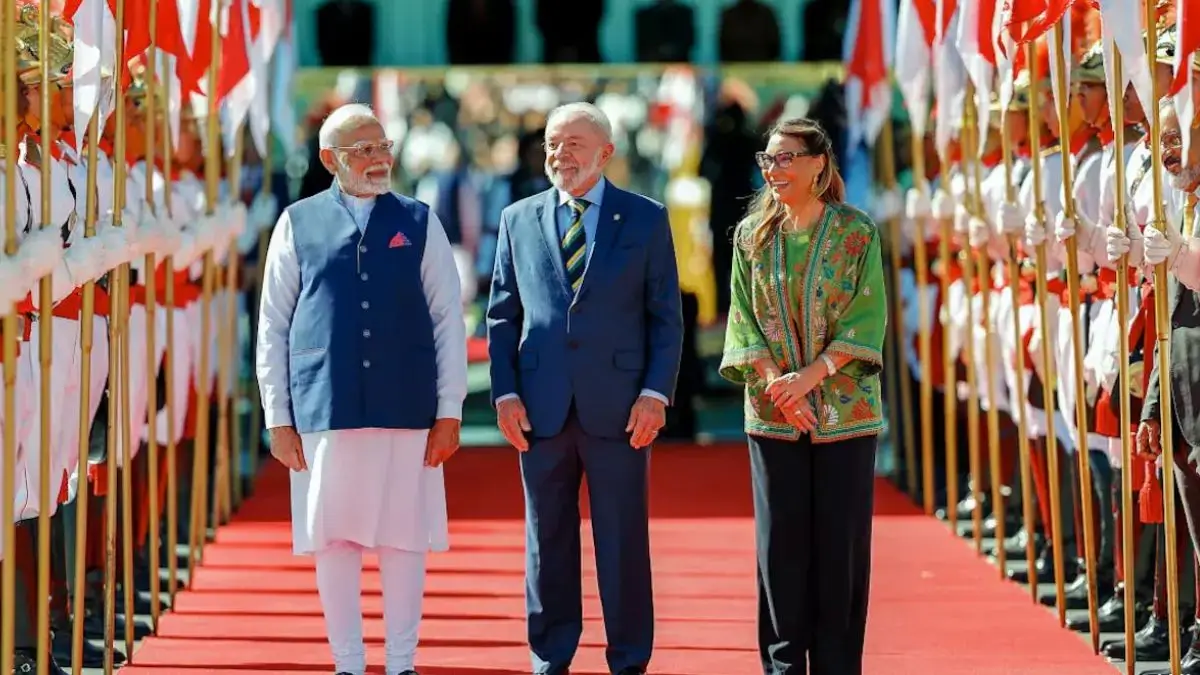
In a significant diplomatic and economic breakthrough, India and Brazil have signed ten major agreements aimed at strengthening cooperation across multiple sectors, marking an important milestone in their bilateral relationship. These agreements were formalized during Brazilian President Luiz Inácio Lula da Silva’s state visit to New Delhi, where he held in-depth talks with Prime Minister Narendra Modi at Hyderabad House. The leaders emphasized rising cooperation in trade, technology, defence, critical minerals, digital infrastructure and global governance.
Strategic Partnership at a Higher Level
India and Brazil elevated their partnership in 2006, and since then have deepened cooperation across strategic arenas. The recent signing of ten key agreements highlights both countries’ commitment to not only expanding economic ties but also strategically aligning in an evolving global order. The discussions between the two leaders focused on mutual priorities, including enhancing trade volumes, reinforcing defence cooperation, promoting digital innovation and increasing collaboration on global issues such as United Nations reforms and amplifying the voice of the Global South.
Trade and Economic Cooperation
A central element of these deals is the economic agenda. Prime Minister Modi set an ambitious target of expanding bilateral trade to more than $20 billion within the next five years. Currently, India and Brazil have robust trade links, with Brazil being India’s largest trading partner in Latin America. The focus will be on sectors like energy, agriculture, agriculture technology, critical minerals and pharmaceuticals — areas where both countries see high potential for mutual benefit and economic growth.
Critical Minerals and Technological Synergy
One of the most strategic agreements was on critical minerals and rare earths. With global supply chains facing disruptions, both India and Brazil seek to develop resilient supply lines. Brazil is rich in key minerals needed for advanced technologies, renewable energy and smart devices, making this partnership crucial for India’s industrial and technological ambitions. Additionally, collaboration in emerging technologies such as Artificial Intelligence (AI), semiconductors and digital public infrastructures will help indigenous innovation and strengthen connectivity within the Global South.
Defence Cooperation and Global Outreach
Defence cooperation also took centre stage, with both nations agreeing to further strengthen security and military ties. This cooperation spans joint exercises, knowledge sharing, defence technology exchange and potential strategic industry partnerships. The enhanced synergy reflects growing trust and shared strategic interests as both nations navigate shifting geopolitical dynamics.
Shared Vision on Global Issues
Beyond bilateral ties, India and Brazil reiterated a shared vision for a multipolar world order, calling for reforms in global governance structures such as the United Nations Security Council. Both leaders stressed the need to amplify the voice of developing countries and strengthen cooperation on sustainable development, climate action and peace initiatives. Forums such as BRICS, IBSA, G20 and WTO will serve as platforms to translate this shared vision into action.

Why This News is Important for Aspirants
Understanding the India-Brazil agreements is crucial for governance and international relations topics in competitive exams like UPSC, SSC, banking, railways and state PCS exams. This development isn’t just a bilateral event; it reflects broader geopolitical and economic shifts.
Firstly, the agreements signal India’s growing role in global diplomacy and South-South cooperation — a key trend in world affairs. The aim to expand trade to over $20 billion signals India’s strategic economic outreach beyond traditional partners, reducing dependence on major powers and diversifying trade corridors.
Secondly, focus areas like critical minerals, digital infrastructure and defence cooperation are topics linked to exam syllabi under sections like International Relations, Global Economy and Science and Technology. Rare earth minerals, for example, are essential for technologies such as semiconductors — a topic often featured in economy and tech-related current affairs questions.
Finally, the joint emphasis on UN reforms and a multipolar world order gives aspirants insight into contemporary shifts in global governance debates — especially the role of the Global South. With Brazil advocating India’s bid for a permanent seat on the UNSC, this news connects directly to questions on global institutions and diplomatic strategies.
Historical Context: India-Brazil Relations and Global South Cooperation
India and Brazil first elevated their relationship to a Strategic Partnership status in 2006, recognizing their shared democratic values, economic potential and geopolitical significance. Over the decades, this partnership expanded through dialogues in forums such as BRICS (Brazil, Russia, India, China, South Africa) and IBSA (India, Brazil, South Africa), both aimed at enhancing cooperation among major emerging economies.
These groupings also represent the idea of the Global South, a term used to describe developing nations seeking greater influence in global governance. Both India and Brazil have historically advocated reforms in global institutions like the United Nations Security Council, arguing for more equitable representation that reflects contemporary global realities.
Recent developments show a deepening of these historical ties, illustrated by major agreements that push for economic cooperation in minerals, technology and pharmaceuticals. With Brazil’s vast natural resources and India’s growing demand for raw materials and tech solutions, the partnership represents strategic convergence rooted in long-standing diplomatic engagement.
Key Takeaways from “India-Brazil Seal 10 Big Deals”
| S.No. | Key Takeaway |
|---|---|
| 1 | India and Brazil signed ten major agreements to boost cooperation in trade, defence, technology and critical minerals. |
| 2 | Both nations aim to raise bilateral trade to over $20 billion within five years. |
| 3 | Strategic cooperation includes rare earths, digital public infrastructure and emerging technologies like AI. |
| 4 | Defence ties will be strengthened through joint exercises, technology exchange and strategic partnerships. |
| 5 | Leaders reiterated the need for UN reforms and a multipolar global order reflecting Global South interests. |
FAQs: India–Brazil 10 Major Agreements and Emerging Global South Axis
1. Which countries signed the 10 major agreements recently?
The agreements were signed between India and Brazil, strengthening their strategic partnership across trade, defence, technology and global governance.
2. Who represented the two countries during the signing?
India was represented by Narendra Modi, while Brazil was represented by Luiz Inácio Lula da Silva during high-level bilateral talks in New Delhi.
3. What is the trade target set by both countries?
Both nations have set an ambitious target to increase bilateral trade to USD 20 billion within the next five years, focusing on energy, agriculture, pharmaceuticals and critical minerals.
4. Why are critical minerals important in this agreement?
Critical minerals such as lithium and rare earth elements are essential for semiconductors, electric vehicles, renewable energy technologies and defence equipment. Brazil’s mineral resources and India’s manufacturing demand create strategic complementarity.
5. Which multilateral groupings connect India and Brazil?
India and Brazil cooperate in forums such as BRICS, IBSA, G20, and the United Nations Security Council reform discussions.
6. When did India and Brazil elevate their ties to a Strategic Partnership?
The two countries elevated their relationship to a Strategic Partnership in 2006, marking deeper cooperation in political, economic and defence sectors.
7. Why is this development significant for Global South diplomacy?
It reflects growing cooperation among developing nations and strengthens South-South collaboration, promoting a multipolar world order.
8. Which exam topics can this news be linked to?
This news is relevant to:
Critical Minerals and Supply Chains
International Relations
Global Governance
Defence Cooperation
Economic Diplomacy
Some Important Current Affairs Links