


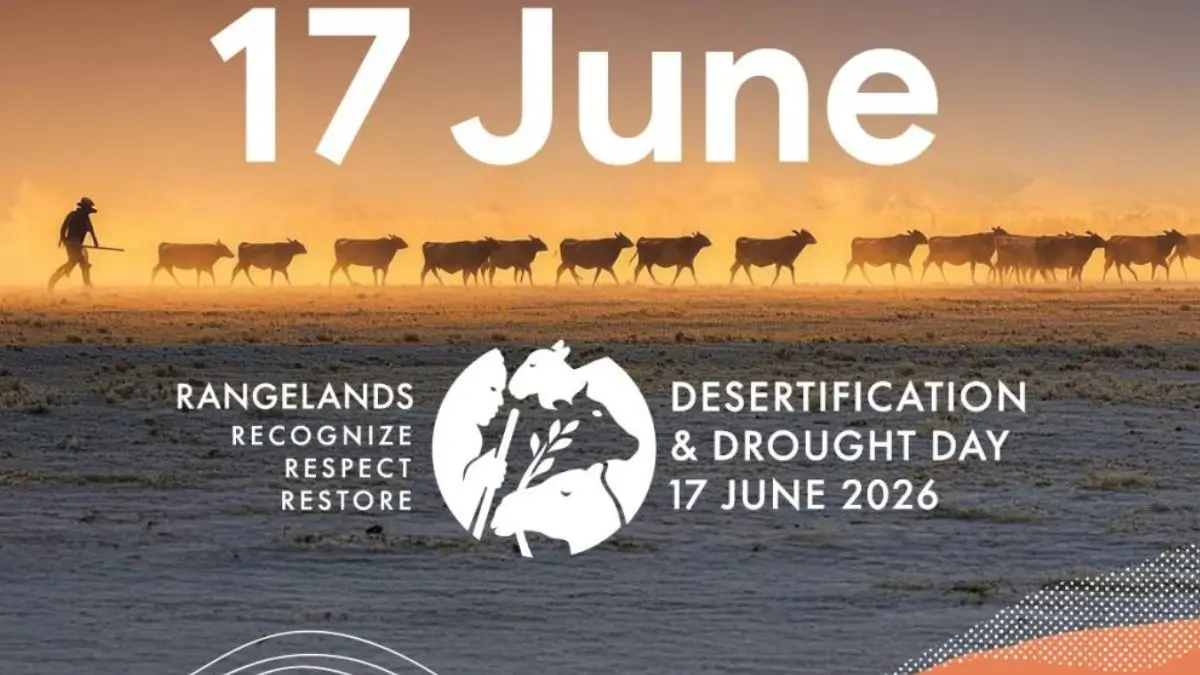
World Desertification Day 2026 theme Rangelands Recognize Respect Restore highlights the importance of combating desertification, protecting rangelands, and promoting sustainable land management. Learn key facts, history, significance, MCQs, and exam-oriented insights.
Introduction
The World Day to Combat Desertification and Drought is observed every year on June 17 to raise awareness about the growing challenges of land degradation, desertification, and drought across the globe. In 2026, the observance gained special significance as the international community focused on the conservation and restoration of rangelands under the theme “Rangelands: Recognize. Respect. Restore.” The campaign highlighted the critical role that rangelands play in ensuring food security, biodiversity conservation, climate resilience, and sustainable livelihoods for billions of people worldwide.
Understanding Desertification and Drought
Desertification refers to the degradation of land in arid, semi-arid, and dry sub-humid areas caused by climatic variations and human activities. Drought, on the other hand, is a prolonged period of abnormally low rainfall leading to water shortages. Both phenomena threaten agriculture, ecosystems, and human settlements, especially in vulnerable regions.
The United Nations has repeatedly warned that land degradation is accelerating due to unsustainable land use practices, climate change, deforestation, and overexploitation of natural resources. As productive land becomes degraded, food production declines, biodiversity suffers, and rural communities face increasing economic hardship.
Theme of 2026: “Rangelands: Recognize. Respect. Restore.”
The 2026 theme emphasizes the importance of rangelands, which include grasslands, shrublands, savannas, deserts, and tundra ecosystems. These landscapes cover more than half of the Earth’s land surface and support around two billion people globally. They provide nearly 70 percent of livestock feed worldwide and play an essential role in maintaining ecological balance.
The theme calls upon governments, policymakers, environmental organizations, and local communities to recognize the economic and ecological value of rangelands, respect the traditional knowledge of pastoralists and Indigenous communities, and restore degraded landscapes through sustainable land management practices.
Importance of Rangelands in Global Sustainability
Rangelands are among the most extensive ecosystems on the planet. They contribute significantly to carbon sequestration, water conservation, and biodiversity protection. Healthy rangelands support livestock production, which is a major source of livelihood for millions of pastoral communities.
These ecosystems also serve as habitats for numerous wildlife species and help regulate local and regional climate patterns. However, climate change, overgrazing, land conversion, and poor land management practices have resulted in widespread degradation of rangelands worldwide. According to UN estimates, up to half of the world’s rangelands are already degraded or at risk.
Kenya Hosts the Global Observance
In 2026, Kenya hosted the global observance of the World Day to Combat Desertification and Drought. The country was chosen because of its extensive rangeland ecosystems and its efforts to strengthen drought resilience and combat land degradation. Kenya’s experience demonstrates how sustainable land management and community participation can help restore degraded landscapes and improve livelihoods.
The event also coincided with the International Year of Rangelands and Pastoralists, providing a platform for discussing innovative solutions for restoring ecosystems and supporting communities dependent on rangelands.
Global Efforts to Address Land Degradation
International organizations, governments, and civil society groups are increasingly investing in land restoration projects. Strategies include afforestation, sustainable grazing practices, water conservation, climate-resilient agriculture, and community-led restoration programs. These initiatives aim to reverse environmental damage while creating economic opportunities for local populations.
The United Nations Convention to Combat Desertification (UNCCD) remains the primary international framework guiding global efforts to address desertification and drought. It promotes cooperation among nations and encourages sustainable land management policies.

Why This News is Important
Important for Environment and Ecology Sections
Questions related to environmental conservation, climate change, biodiversity, and sustainable development frequently appear in UPSC, State PSC, SSC, Railway, Banking, Defence, and Teaching examinations. The World Day to Combat Desertification and Drought is directly linked to these topics and therefore holds significant examination relevance.
Relevance to International Organizations
The observance is associated with the United Nations and the United Nations Convention to Combat Desertification (UNCCD). Aspirants are often asked about the objectives, headquarters, and activities of international organizations involved in environmental governance.
Importance of the 2026 Theme
The theme “Rangelands: Recognize. Respect. Restore.” highlights the growing concern over land degradation and the need for sustainable resource management. Questions related to annual themes of important international days are common in competitive examinations.
Connection with Climate Change
Healthy rangelands contribute to carbon storage, water conservation, and climate resilience. Understanding these connections helps aspirants prepare for questions related to climate adaptation and environmental sustainability.
Historical Context
Establishment of the Observance
The United Nations General Assembly established the World Day to Combat Desertification and Drought in December 1994 following the adoption of the United Nations Convention to Combat Desertification (UNCCD). The day has been observed annually on June 17 since then to raise awareness and promote international cooperation against land degradation and drought.
Rio Earth Summit and Global Concern
The roots of the observance can be traced to the 1992 Rio Earth Summit, where desertification, biodiversity loss, and climate change were identified as major threats to sustainable development. This led to increased global efforts to create legally binding frameworks for environmental protection.
Evolution of the Campaign
Over the years, the annual observance has focused on different themes, including land restoration, drought resilience, women’s land rights, and ecosystem conservation. The 2026 focus on rangelands reflects growing international recognition of their importance in addressing climate and food security challenges.
Key Takeaways from World Day to Combat Desertification and Drought 2026
| S. No. | Key Takeaway |
|---|---|
| 1 | World Day to Combat Desertification and Drought is observed annually on 17 June. |
| 2 | The 2026 theme is “Rangelands: Recognize. Respect. Restore.” |
| 3 | Rangelands cover more than half of the Earth’s land surface and support around 2 billion people. |
| 4 | Kenya hosted the global observance of the day in 2026. |
| 5 | The day promotes awareness and international cooperation to combat desertification, land degradation, and drought. |
FAQs: World Day to Combat Desertification and Drought 2026
Q1. When is World Day to Combat Desertification and Drought observed?
Answer: It is observed every year on 17 June to raise awareness about desertification, land degradation, and drought.
Q2. What was the theme of World Day to Combat Desertification and Drought 2026?
Answer: The theme was “Rangelands: Recognize. Respect. Restore.”
Q3. Which international organization coordinates the observance of this day?
Answer: The United Nations Convention to Combat Desertification (UNCCD) coordinates global efforts related to the observance.
Q4. What is desertification?
Answer: Desertification is the degradation of land in arid, semi-arid, and dry sub-humid regions due to climatic changes and human activities.
Q5. Which country hosted the global observance of the day in 2026?
Answer: Kenya hosted the global observance in 2026.
Q6. What are rangelands?
Answer: Rangelands are natural ecosystems such as grasslands, shrublands, savannas, deserts, and tundras used primarily for grazing livestock and supporting biodiversity.
Q7. Why are rangelands important?
Answer: They support nearly 2 billion people, provide livestock feed, conserve biodiversity, store carbon, and help maintain ecological balance.
Q8. Which Sustainable Development Goal (SDG) is most closely associated with combating desertification?
Answer: SDG 15: Life on Land.
Q9. In which year was the UN Convention to Combat Desertification (UNCCD) adopted?
Answer: The UNCCD was adopted in 1994.
Q10. Why is this topic important for competitive examinations?
Answer: Questions related to international days, environmental conventions, climate change, biodiversity, sustainable development, and UN organizations are frequently asked in UPSC, SSC, Banking, Railway, Defence, and State PSC examinations.
Some Important Current Affairs Links




