



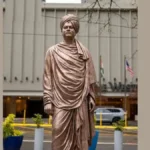

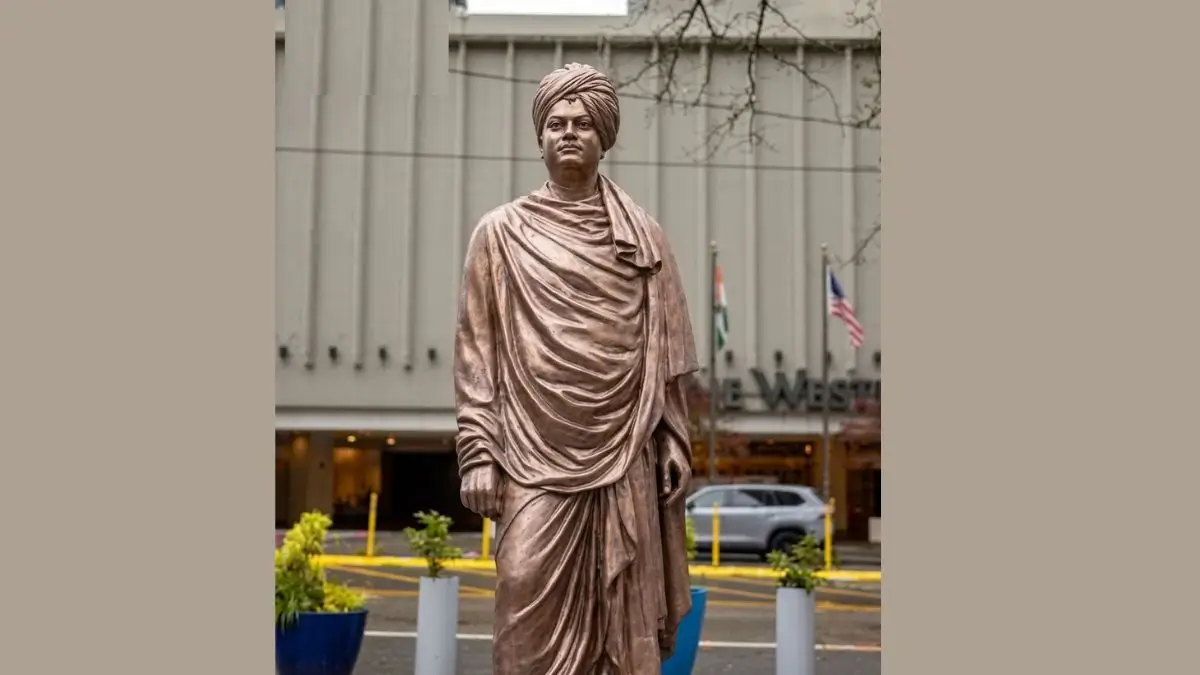
Swami Vivekananda statue Seattle USA 2026 marks the unveiling of the first life-size statue in the US, highlighting India’s cultural diplomacy and global influence.
First Life-Size Statue of Swami Vivekananda Unveiled in Seattle: A Milestone in Cultural Diplomacy
Introduction: A Historic Cultural Landmark in the United States
A historic cultural milestone was achieved on April 12, 2026, with the unveiling of the first-ever life-size statue of Swami Vivekananda in Seattle. Installed at the prominent Westlake Square, the statue symbolizes India’s rich spiritual heritage and its growing cultural influence globally. This initiative reflects the strengthening of India-US relations through cultural diplomacy and shared values.
Seattle Becomes First US City to Host Vivekananda Statue
Seattle has become the first city in the United States to host a life-size statue of Swami Vivekananda. The bronze sculpture is placed at Westlake Square, one of the busiest public locations in the city, attracting thousands of visitors daily. Its strategic placement near landmarks such as the Seattle Convention Centre and major commercial hubs ensures high visibility and global engagement.
Artistic Excellence and Cultural Representation
The statue was sculpted by renowned Indian artist Naresh Kumar Kumawat. Crafted in bronze, the sculpture represents Vivekananda’s enduring philosophy of universal brotherhood, peace, and spiritual awakening. The installation is not just an artistic achievement but also a cultural symbol bridging Indian heritage with global audiences.
Unveiling Ceremony and Dignitaries
The statue was unveiled jointly by Seattle Mayor Katie Wilson and India’s Consul General in Seattle, Prakash Gupta, in the presence of community leaders and members of the Indian diaspora. The ceremony highlighted Seattle’s multicultural identity and its openness to global cultures. Officials emphasized that such initiatives strengthen people-to-people connections between nations.
Role of ICCR in Cultural Diplomacy
The statue was gifted by the Indian Council for Cultural Relations (ICCR), an organization under the Government of India that promotes cultural exchange worldwide. The unveiling coincided with ICCR Day, reinforcing India’s efforts to enhance its soft power and cultural outreach.
Symbolism: From Chicago 1893 to Seattle 2026
The installation symbolically connects Vivekananda’s historic speech at the Parliament of Religions in Chicago in 1893 with modern global recognition. His teachings on tolerance, unity, and spirituality continue to inspire people worldwide, making the statue a tribute to his timeless relevance.

Why This News is Important for Exams
Strengthening India-US Cultural Relations
This development highlights the growing cultural ties between India and the United States. For aspirants of civil services and international relations, this is a clear example of soft diplomacy, where nations use culture and heritage to build stronger global partnerships. The installation of the statue signifies mutual respect and collaboration beyond economic or political dimensions.
Relevance in Cultural Diplomacy and Soft Power
The role of the Indian Council for Cultural Relations in gifting the statue demonstrates how India uses cultural diplomacy as a strategic tool. Questions in exams often focus on institutions like ICCR and their contributions to promoting Indian culture abroad. This event is a contemporary example of such efforts.
Importance for Modern Global Values
Swami Vivekananda’s teachings on universal brotherhood, tolerance, and interfaith harmony are increasingly relevant in today’s globalized world. Competitive exams often include questions on personalities who influenced global thought and spirituality. This event reinforces his global legacy and importance in modern discourse.
Historical Context: Background of Swami Vivekananda’s Global Influence
Chicago Parliament of Religions, 1893
Swami Vivekananda gained international fame after his speech at the Parliament of Religions in Chicago in 1893. His address introduced Indian philosophy, especially Vedanta and Yoga, to the Western world and emphasized religious tolerance and unity.
Contribution to Indian Spiritual and Social Reform
Vivekananda was the founder of the Ramakrishna Mission, which aimed at social service and spiritual development. His teachings inspired India’s freedom movement indirectly by awakening national consciousness.
Global Spread of Indian Philosophy
Over time, Vivekananda’s teachings contributed to the global acceptance of yoga, meditation, and holistic spirituality. His influence continues to shape cultural and spiritual dialogues worldwide.
Key Takeaways from This News
| S. No. | Key Takeaway |
|---|---|
| 1 | First life-size statue of Swami Vivekananda unveiled in Seattle, USA |
| 2 | Installed at Westlake Square, a major public location |
| 3 | Gifted by the Indian Council for Cultural Relations (ICCR) |
| 4 | Symbolizes India-US cultural diplomacy and soft power |
| 5 | Connects Vivekananda’s 1893 Chicago speech to modern global relevance |
Frequently Asked Questions (FAQs)
1. Where was the first life-size statue of Swami Vivekananda unveiled in the USA?
The statue was unveiled at Westlake Square in Seattle.
2. Which organization gifted the statue of Swami Vivekananda in Seattle?
The statue was gifted by the Indian Council for Cultural Relations, which promotes India’s cultural diplomacy worldwide.
3. Why is the Seattle statue of Swami Vivekananda significant?
It is the first life-size statue of Vivekananda in the United States and represents India’s growing cultural influence and soft power globally.
4. Who sculpted the statue of Swami Vivekananda?
The statue was sculpted by Indian artist Naresh Kumar Kumawat.
5. Which historic event made Swami Vivekananda globally famous?
His speech at the Parliament of Religions 1893 in Chicago made him internationally renowned.
6. What is the role of ICCR in international relations?
ICCR works to strengthen cultural ties between India and other countries through exchanges, events, and cultural gifts.
7. Why is Swami Vivekananda important for competitive exams?
He is a key figure in Indian history, spirituality, and global philosophy, frequently asked in UPSC, SSC, and other exams.
8. What values did Swami Vivekananda promote globally?
He promoted universal brotherhood, religious tolerance, spirituality, and peace.
Some Important Current Affairs Links