




Tides of Time Book by Sudha Murty explores India’s history through Parliament murals, covering ancient democracies, freedom struggle, and cultural heritage — essential for UPSC, PSC, and government exam preparation.
“Tides of Time” by Sudha Murty: A Literary Tribute to India’s History Through Parliament Murals
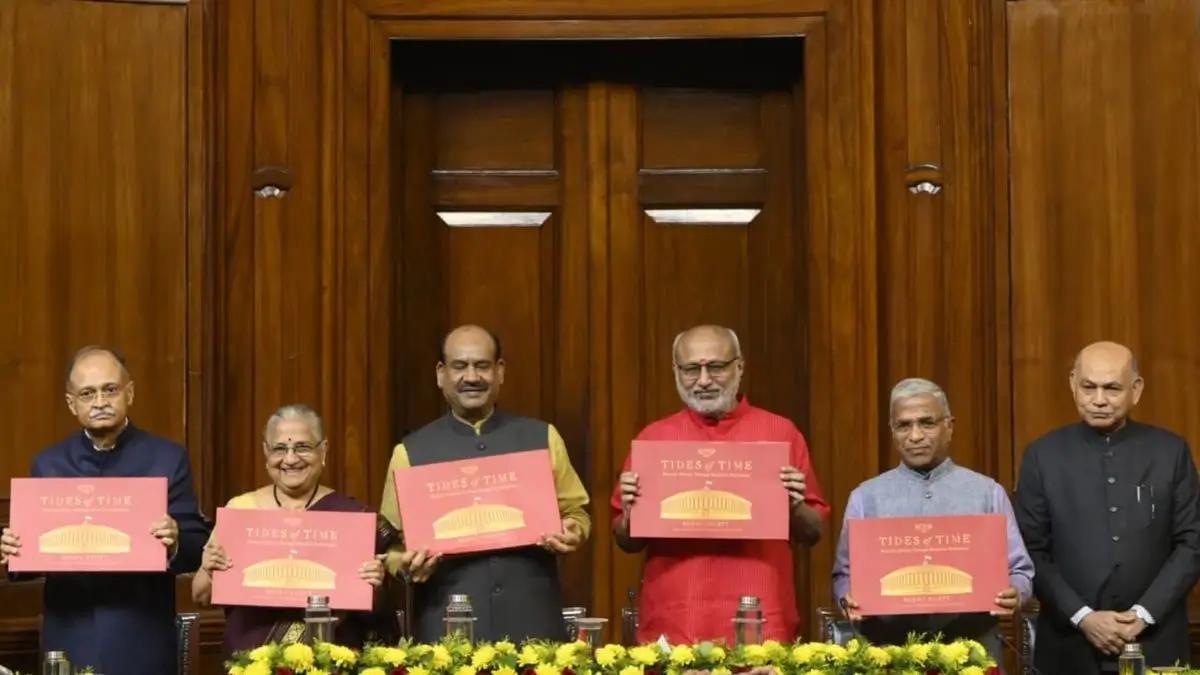
India’s cultural history and democratic heritage have received a fresh literary celebration with the recent release of the book Tides of Time: Bharat’s History through Murals in Parliament. Authored by noted writer, philanthropist, and Rajya Sabha Member Sudha Murty, the book was unveiled by the Honorable Vice‑President of India, C. P. Radhakrishnan, at Samvidhan Sadan in New Delhi.
The book offers readers a unique visual and narrative journey through India’s rich civilisational history, interpreting 124 murals displayed within the corridors of the Parliament building. These murals, crafted by eminent Indian artists, chronicle the nation’s evolution from ancient civilisations to modern democratic India.
Visual Storytelling of India’s Legacy
Tides of Time intertwines art and history, using each mural to depict significant phases and personalities from Indian history. From the early Indus Valley Civilisation to the freedom struggle led by the likes of Mahatma Gandhi, the murals vividly portray India’s cultural and ideological evolution.
The Parliament murals were originally commissioned post‑Independence to replace colonial imagery and reflect indigenous history and values. This initiative aimed to create a narrative space that resonates with the ethos of a free and democratic nation, reminding lawmakers and visitors alike of the nation’s spiritual and historical roots.
Bridging Art, Democracy, and Public Memory
Sudha Murty’s book does more than catalogue these paintings — it brings them alive with context and storytelling. Her narrative stresses that history is not just sequences of dates and events but a living continuum that shapes national identity and citizenship.
The inclusion of democratic traditions such as the Vaishali republic and Kudavolai system underscores India’s ancient roots in participatory governance, challenging the commonly held notion that democracy is solely a modern Western import.
Empowering Future Generations
Murty has expressed that this work is intended to inspire future generations by making India’s heritage accessible and engaging. By weaving art with historical narratives, Tides of Time invites readers — especially students and young citizens — to reflect on the values of freedom, resilience, and unity that form the backbone of democratic Bharat.

Why This News is Important
A Confluence of Art and Indian History
The release of Tides of Time holds immense significance for students preparing for competitive examinations such as UPSC, SSC, Banking, Railways, and State PSCs. The book provides a compelling visual account of India’s history that goes beyond conventional textbook narratives. Its focus on Parliament murals allows learners to connect with historical events through art, deepening their understanding of cultural heritage and national identity.
Enhances Understanding of Democratic Heritage
Unlike typical history publications, this book ties India’s civilisational legacy directly to democratic values and practices. For aspirants of civil services and governance‑related roles, insights into India’s ancient democratic forms — such as the Vaishali republic — and their representation in murals enrich one’s conceptual clarity about indigenous governance systems.
Useful for Exam Preparation Sections
This news is highly relevant for the Books & Authors, Art and Culture, and Modern History sections of government exam syllabi. The detailed portrayal of India’s evolution through visual art enhances retention and understanding of major historical milestones and social transformations.
Bridging Art with Civics and History
For students preparing for exams like PSCs and UPSC, the book also strengthens knowledge of Parliament as an institution — not just as a legislative body, but as a space symbolising India’s democratic journey and philosophical ethos. This blend of history, art, and democracy is invaluable for answering essay‑type questions and general studies papers.
Historical Context: India’s Heritage Through Murals
Murals as Historical Narratives
The tradition of mural painting in India has ancient roots — from the rock art of the Bhimbetka shelters to the intricate frescoes of Ajanta and Ellora. These artworks were not merely decorative; they served as visual records of cultural, spiritual, and social life in their eras.
Parliament Murals: A Post‑Independence Initiative
After India gained Independence in 1947, there was a conscious effort to replace colonial and imperial iconography with indigenous artistic expressions. Under the leadership of early parliamentary figures, including Speaker G.V. Mavalankar, India commissioned a set of murals for its Parliament corridors to narrate its civilisational journey.
These murals encompass various phases — from ancient civilisations through spiritual and intellectual movements, to medieval empires and the modern freedom struggle. Commissioned between the 1950s and 1990s, the artworks reflect a diversity of styles and regional influences, yet represent a cohesive narrative of national identity.
Role in National Consciousness
By situating historical episodes within Parliament — the heart of democratic expression — these murals symbolise the unity of India’s cultural heritage with political ethos. Murty’s book brings this lesser‑known visual archive to the forefront, making it accessible and relevant for today’s learners and citizens.
Key Takeaways from “Tides of Time”
| S. No. | Key Takeaway |
|---|---|
| 1 | Tides of Time is a book by Sudha Murty that highlights India’s history through murals in Parliament. |
| 2 | The book was released by Vice‑President C. P. Radhakrishnan at Samvidhan Sadan. |
| 3 | It features 124 mural panels depicting India’s civilisational journey. |
| 4 | The murals represent historical phases from the Indus Valley to India’s freedom struggle. |
| 5 | The book serves as a bridge between art, history, and democratic values — useful for competitive exams. |
FAQs: Frequently Asked Questions
1. Who is the author of the book Tides of Time?
The book Tides of Time: Bharat’s History through Murals in Parliament is authored by Sudha Murty, a noted philanthropist, author, and Rajya Sabha member.
2. What is the central theme of the book?
The book presents India’s civilisational and democratic history through 124 murals displayed in the Indian Parliament, connecting art, culture, and governance.
3. Who released the book and where?
The book was released by Vice-President C. P. Radhakrishnan at Samvidhan Sadan, New Delhi.
4. How do the murals depict India’s history?
The murals chronologically depict India’s journey from the Indus Valley Civilisation, ancient republics, medieval kingdoms, spiritual traditions, freedom struggle, and modern democratic India.
5. Why is this book important for competitive exam aspirants?
It is relevant for UPSC, State PSCs, SSC, Banking, Railways, and other government exams, particularly for topics like Books & Authors, Art and Culture, Modern History, and Indian Democratic Traditions.
6. What ancient democratic systems are highlighted in the book?
The book mentions the Vaishali republic and Kudavolai system, demonstrating India’s early forms of participatory governance.
7. How does the book help in understanding Indian Parliament?
It connects Parliament murals with India’s democratic journey and cultural ethos, enhancing knowledge about both historical and civic dimensions.
8. Are the murals contemporary or historical?
The murals were commissioned post-Independence, created by eminent Indian artists, and depict historical events, traditions, and cultural milestones.
Some Important Current Affairs Links