






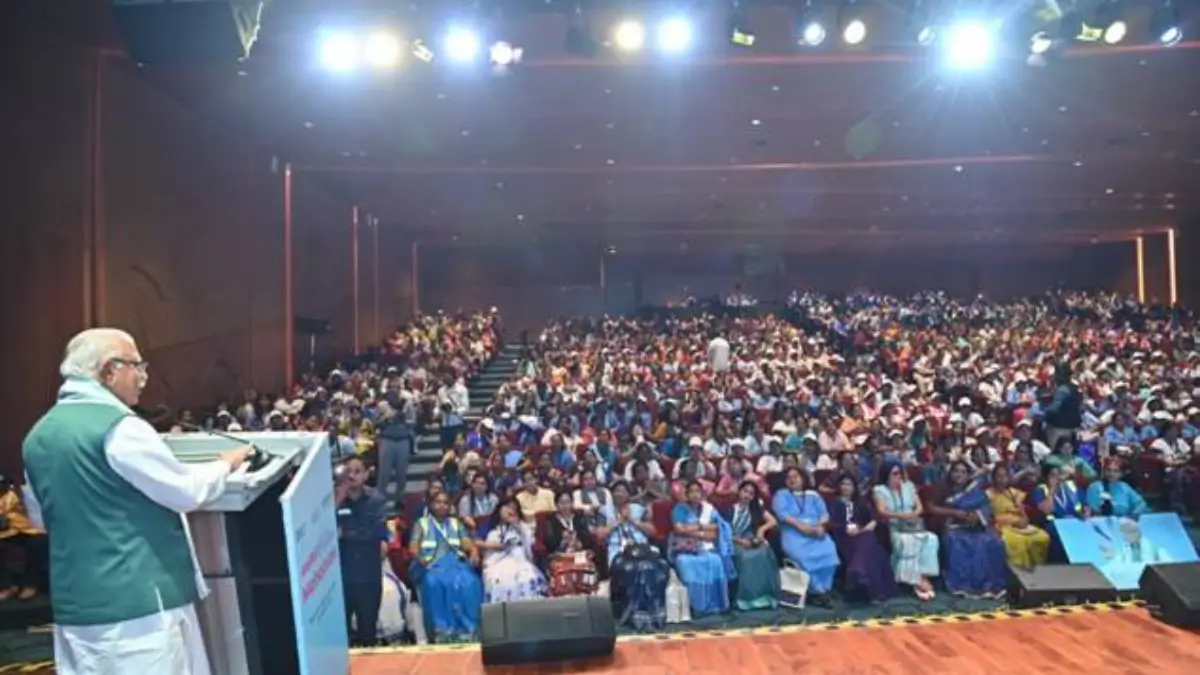
AMRUT Mitra Mahotsav 2026 highlights the role of women SHGs in urban water management under AMRUT 2.0, promoting gender-inclusive governance, community participation, and sustainable water solutions in India.
MoHUA Hosts ‘AMRUT Mitra Mahotsav’ Honouring Women SHGs Driving Urban Water Management under AMRUT 2.0
The Ministry of Housing & Urban Affairs (MoHUA) recently organised the AMRUT Mitra Mahotsav 2026 at Bharat Mandapam, New Delhi. This prestigious national‑level event celebrated the outstanding contributions of women Self‑Help Groups (SHGs) – popularly called AMRUT Mitras – who have played a pivotal role in transforming urban water management across India under the AMRUT 2.0 mission.
More than 1,000 women representatives from various SHGs participated in the event, along with around 300 officials from 30 States and Union Territories. The gathering was marked by inspiring success stories and deep discussions on scaling community‑driven water governance models.
Women Leading Change in Urban Water Services
At the event, AMRUT Mitras from states like Arunachal Pradesh, Uttar Pradesh, Maharashtra, Odisha, Tamil Nadu, Haryana, Chhattisgarh and Karnataka shared their journeys. These women have actively engaged in:
- Water quality testing at the grassroots level
- Billing and collection for urban water supply
- Community awareness campaigns on water conservation
- Operations and maintenance of water infrastructure
- Faecal sludge management (FSM) operations
Their work has not only improved water service delivery but also helped enhance community ownership and citizen participation.
Water Management as a People’s Movement
Union Minister Shri Manohar Lal emphasised that water management is not merely a technical service but a movement driven by ‘Jan Bhagidari’ (people’s participation). He highlighted that in India, women are often the primary managers of household and community water systems, making their inclusion in water governance essential.
The Minister underlined that engaging women SHGs in water governance enhances transparency, efficiency and sustainability in urban service delivery while strengthening the connection between citizens and urban local bodies.
Expanding Opportunities for SHG Women
MoHUA announced several new strategic areas where women SHGs will play a leading role, such as:
- Reuse and recycling of treated wastewater
- Smart metering and digital water management systems
- Data‑driven monitoring for efficient services
- IEC campaigns on water conservation
These initiatives aim to support a circular water economy, empowering communities to use water resources more responsibly and sustainably.
Scaling the AMRUT Mitra Model Nationwide
Currently, over 45,000 SHG members are engaged as AMRUT Mitras across 1910 cities in 34 States and UTs. The Ministry announced its ambitious plan to expand this model to 5,000 cities, which will:
- Generate more livelihood opportunities for women
- Promote wider community participation
- Strengthen women’s leadership in urban governance
Event Highlights and Celebrations
The Mahotsav featured several notable activities:
- Photo exhibitions showcasing state‑level SHG innovations
- Panel discussions on women‑led resilience in water and sanitation
- Testimonial sessions where AMRUT Mitras shared their inspiring stories
- Launch of the AMRUT Mitra Best Practices Compendium by the Union Minister

Why This News is Important
Empowering Women in Public Service Delivery
The AMRUT Mitra Mahotsav underscores the Government of India’s growing focus on inclusive and gender‑sensitive urban governance. By elevating the role of women in managing water services, the initiative promotes gender equality, community leadership, and socioeconomic upliftment — key themes in public policy relevant for competitive exams like UPSC, SSC, RRB, and state PCS exams.
Link with Urban Development and Water Security Goals
Water security and sustainable urban infrastructure are vital for India’s future. The AMRUT 2.0 mission is central to this shift, aiming to ensure cities become water‑secure while fostering citizen participation and technological modernisation. The inclusion of women SHGs aligns with national priorities like AatmaNirbhar Bharat and the Smart Cities Mission.
Exam Relevance and Policy Application
For aspirants preparing for government exams, understanding such schemes is critical because:
- Questions on government missions and schemes often appear in GS Paper‑II (Polity & Governance) and General Awareness sections.
- Topics like urban water management, gender inclusion in governance, and community mobilisation are directly linked to syllabus segments on social justice and public policy.
- Recognising real‑world applications of policies like AMRUT highlights the practical impact of governance reforms, which is essential for essay writing and interview rounds.
This event demonstrates how women’s empowerment intersects with sustainable development goals, making it a fundamental current affairs topic.
Historical Context
The Atal Mission for Rejuvenation and Urban Transformation (AMRUT) was launched by the Government of India in June 2015 with a vision to provide urban infrastructure, including water supply, sewerage, and sanitation services. It aimed to improve quality of life across urban India by enabling basic civic services in cities and towns.
Building on the original mission, AMRUT 2.0 was introduced to expand coverage and respond to emerging urban challenges. Its new framework places greater emphasis on water security, sustainable resource management, and community participation, particularly involving women-led Self‑Help Groups in water governance.
Women’s inclusion in water operations reflects broader policy shifts towards gender inclusivity in governance. Government documents on Gender Responsive Guidelines for AMRUT 2.0 have outlined the role of women in water demand management, quality testing, and infrastructure operations, recognising their critical position in both household and community water roles.
This evolution represents a modern approach in public administration where people’s participation, especially through grassroots organisations, is seen as a key driver of sustainable development and efficient service delivery.
Key Takeaways from AMRUT Mitra Mahotsav Event
| S. No. | Key Takeaway |
|---|---|
| 1 | AMRUT Mitra Mahotsav 2026 celebrated women SHG leadership in urban water management. |
| 2 | Over 1,000 women representatives from SHGs participated along with officials from 30 States and UTs. |
| 3 | Women SHGs contribute to water quality testing, billing, awareness, and FSM operations. |
| 4 | The initiative promotes women’s empowerment and community ownership in urban governance. |
| 5 | MoHUA plans to expand the AMRUT Mitra model to 5,000 cities to deepen water security and participation. |
FAQs – AMRUT Mitra Mahotsav 2026
Q1: What is the AMRUT Mitra Mahotsav?
A1: AMRUT Mitra Mahotsav is a national-level event organized by the Ministry of Housing & Urban Affairs (MoHUA) to honour women Self-Help Groups (SHGs), known as AMRUT Mitras, for their contributions to urban water management under the AMRUT 2.0 mission.
Q2: Who can be called an AMRUT Mitra?
A2: Women members of Self-Help Groups (SHGs) engaged in water supply operations, faecal sludge management, community awareness, and urban water governance under the AMRUT 2.0 initiative are designated as AMRUT Mitras.
Q3: Which states participated in the AMRUT Mitra Mahotsav 2026?
A3: Representatives from states such as Arunachal Pradesh, Uttar Pradesh, Maharashtra, Odisha, Tamil Nadu, Haryana, Chhattisgarh, and Karnataka participated, along with officials from 30 States and Union Territories.
Q4: What are the key roles of AMRUT Mitras in urban water management?
A4: Their responsibilities include water quality testing, billing and collection, awareness campaigns, faecal sludge management, operations and maintenance of water infrastructure, and supporting digital water management initiatives.
Q5: Why is the inclusion of women SHGs in water governance important?
A5: Women are primary managers of household and community water. Including them ensures better community ownership, transparency, efficiency, sustainability, and strengthens citizen participation in urban governance.
Q6: How many SHG members are currently engaged as AMRUT Mitras?
A6: Over 45,000 SHG members are engaged as AMRUT Mitras across 1910 cities in 34 States and Union Territories.
Q7: What are the future plans for expanding AMRUT Mitras?
A7: The Ministry plans to expand the model to 5,000 cities, providing more livelihood opportunities for women, increasing citizen participation, and promoting sustainable water resource management.
Some Important Current Affairs Links