






Bharat Ranbhoomi Darshan Expedition flagged off by Army Chief at National War Memorial covering 3,400 km across Gujarat and Rajasthan. Read complete details, exam relevance, key facts and MCQs for UPSC, SSC, CDS and defence exams.
Army Chief General Upendra Dwivedi Flags Off Bharat Ranbhoomi Darshan at National War Memorial
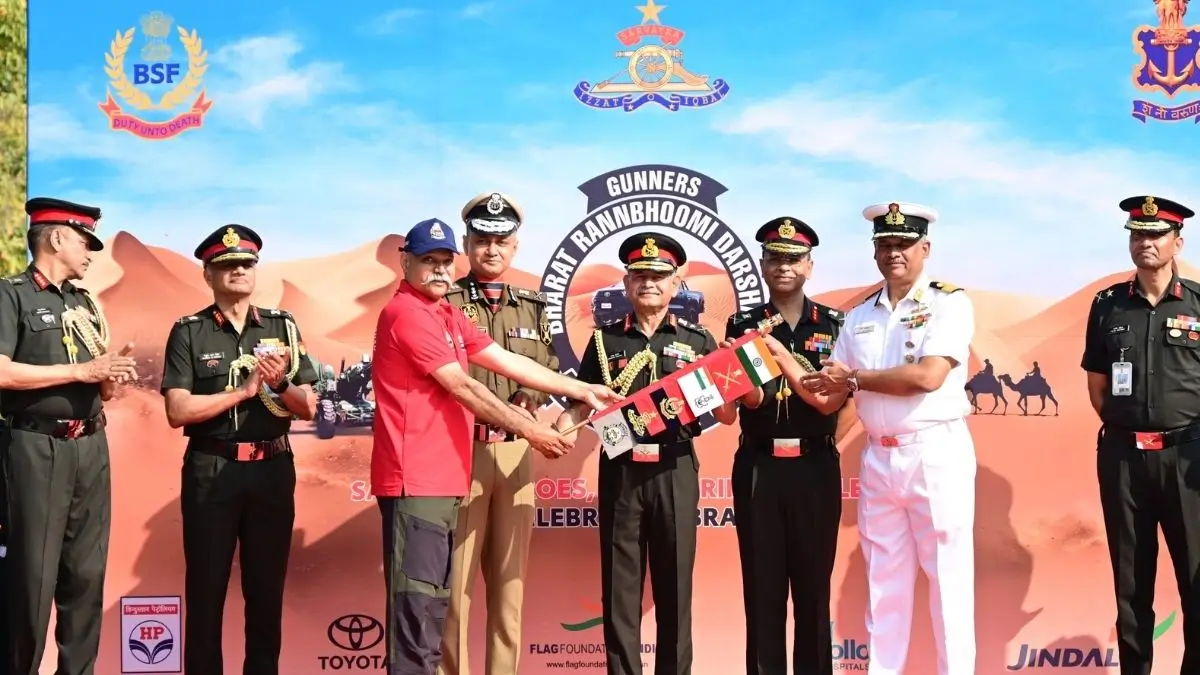
On 25 February 2026, Chief of the Army Staff General Upendra Dwivedi formally flagged off the Bharat Ranbhoomi Darshan Expedition at the National War Memorial in New Delhi. This initiative concluded a trailblazing 3,400-kilometre expedition undertaken by the Indian Army’s Regiment of Artillery along with personnel from the Indian Navy and the Border Security Force (BSF).
The expedition began on 3 February 2026 from Dwarka in Gujarat and traversed key battlefront and border regions of Gujarat and Rajasthan, including significant locales such as Bhuj, the Rann of Kutch, Munabao, Gadra, Longewala, Jaisalmer, Bikaner and Ambala.
The event brought together a 35-member team of serving soldiers and veterans who paid homage to India’s war heroes and interacted with veterans, Veer Naris, Border residents, NCC cadets, and students along the route. The campaign reinforced the military’s bond with civil society and celebrated the historic valor of Indian armed forces.
Highlights of the Expedition and the Ceremony
The Bharat Ranbhoomi Darshan was more than a ceremonial march. It was an expedition meant to:
- Honour the sacrifice of Indian soldiers and war heroes.
- Promote awareness of key battlefield sites along India’s Western borders.
- Strengthen national integration through community engagement.
- Showcase enhanced border infrastructure and connectivity.
At the National War Memorial event, senior defence officials, representatives from the Navy and BSF, and local community leaders witnessed the flagging-in ceremony. The Army Chief praised the dedication of the team and emphasized the importance of remembering India’s military heritage.
Strategic and Cultural Significance
The Bharat Ranbhoomi Darshan initiative aligns with broader government efforts to promote battlefield tourism and make key historic sites more accessible to civilians and students. Through coordinated support from the Ministry of Defence, Indian Army, and Tourism Ministry, this expedition enabled deeper public engagement with India’s military history, highlighting iconic sites from conflicts such as the 1971 war and other key operations.
The campaign also served to foster national pride, honour the courage of the armed forces, and inspire future generations of citizens and aspirants preparing for careers in defence, civil services, and public administration.

Why This News is Important
Defence Awareness and National Integration
This news is exceptionally important for students preparing for government exams such as SSC, UPSC (IAS/IPS), Bank PO, Railways, Defence Services, and Teacher Eligibility Tests, as it reflects India’s efforts to promote national pride, military heritage, and strategic outreach. The Bharat Ranbhoomi Darshan Expedition not only commemorates India’s historical battlefields but also strengthens civil–military linkages.
For defence and general studies sections, understanding such government initiatives helps aspirants frame answers about national security strategies, border infrastructure enhancement, and cultural integration programs. It also underlines how the armed forces engage with local communities and reinforce unity across diverse regions.
Moreover, this news emphasizes the Indian government’s commitment to making strategically sensitive regions accessible, fostering responsible tourism, and preserving military legacy, which are relevant for questions in polity, governance, contemporary events, and Indian heritage.
Historical Context
The Bharat Ranbhoomi Darshan Concept
The Bharat Ranbhoomi Darshan initiative was launched as part of a national endeavour to honour India’s military history and connect civilians with the valorous heritage of the armed forces. The campaign is deeply linked to the Indian government’s focus on battlefield tourism, which was officially conceptualized during the 77th Army Day celebrations on 15 January 2025.
Under this initiative, 77 Shaurya Gantavya (valor destinations) were identified across various border regions, including sites from historic conflicts like the 1962 border war, 1971 Indo-Pakistan war, and the 1999 Kargil conflict.
The aim was to transform former battlegrounds into educational and commemorative hubs that offer civilians, students, veterans, and tourists a deeper understanding of India’s military struggles and the sacrifices made by soldiers.
Efforts have also been made to enhance tourism infrastructure, digital experience through dedicated mobile apps and websites, and cultural programmes across these sites, making battlefield visits not only educational but also accessible to a broader audience.
Key Takeaways from “Bharat Ranbhoomi Darshan Expedition”
| S. No. | Key Takeaway |
|---|---|
| 1 | The Bharat Ranbhoomi Darshan Expedition was flagged off by Army Chief General Upendra Dwivedi at the National War Memorial on 25 Feb 2026. |
| 2 | The 3,400-km expedition began from Dwarka (Gujarat) and passed through key battlefronts in Gujarat and Rajasthan. |
| 3 | A 35-member team from Army, Navy, and BSF paid tribute to war heroes and engaged with border communities. |
| 4 | The initiative promotes battlefield tourism and national integration by linking historic military sites. |
| 5 | The expedition reflects India’s focus on enhancing border connectivity and preserving military heritage for future generations. |
Frequently Asked Questions (FAQs)
1. Who flagged off the Bharat Ranbhoomi Darshan Expedition?
The expedition was flagged off by General Upendra Dwivedi, the Chief of the Army Staff of India.
2. Where was the expedition flagged off?
It was flagged off at the National War Memorial, located in New Delhi.
3. What is the objective of the Bharat Ranbhoomi Darshan initiative?
The main objective is to promote battlefield tourism, honour India’s war heroes, strengthen civil–military relations, and create awareness among citizens about India’s military heritage.
4. From where did the expedition begin?
The expedition began from Dwarka and covered major battlefield locations across Gujarat and Rajasthan.
5. What was the total distance covered during the expedition?
The team covered approximately 3,400 kilometres across key historical and border regions.
6. Which forces participated in the expedition?
Personnel from the Indian Army (Regiment of Artillery), Indian Navy, and the Border Security Force participated in the expedition.
7. What is battlefield tourism?
Battlefield tourism refers to promoting historical war sites as educational and commemorative destinations for citizens, students, and tourists.
8. Why is this news important for competitive exams?
This initiative is important for UPSC, State PSC, SSC, CDS, CAPF, Banking, Railways, and other government exams as it relates to defence awareness, national integration, and government initiatives promoting heritage tourism.
9. Which war is commonly associated with the Longewala region?
The Longewala region is associated with the Indo-Pakistani War of 1971, a major event in India’s military history.
10. How does this initiative support national integration?
By engaging with border communities, NCC cadets, veterans, and students, the initiative strengthens unity and awareness about India’s defence legacy.
Some Important Current Affairs Links