







India cheetah population 2026 update – Three cubs born to Gamini at Kuno National Park raise the count to 38. Read detailed current affairs analysis, MCQs, FAQs, and key facts for UPSC, SSC, Banking, Railways and other government exams.
India’s Cheetah Population Rises to 38 as Gamini Gives Birth to Three Cubs at Kuno National Park
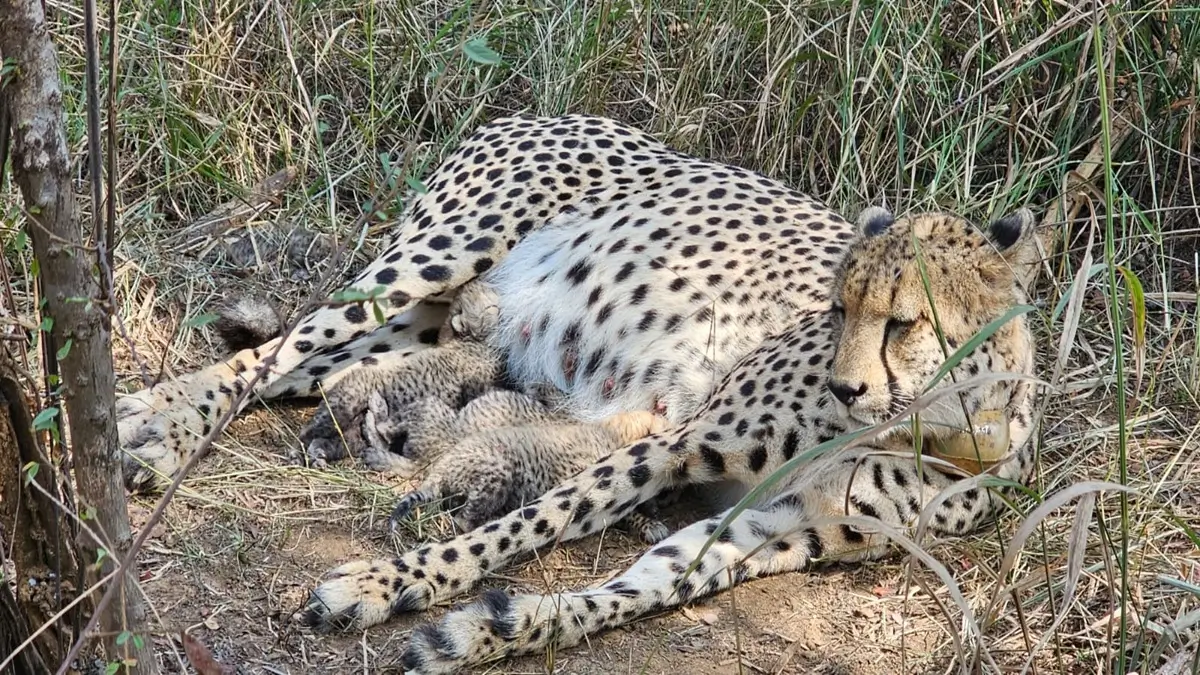
India’s wildlife conservation story has taken an inspiring turn with the recent birth of three cheetah cubs at Kuno National Park in Madhya Pradesh. A South African cheetah named Gamini delivered three healthy cubs, boosting India’s total cheetah population to 38 — a significant milestone under the ambitious Project Cheetah.
The announcement was made by Union Environment, Forest and Climate Change Minister Bhupender Yadav, who highlighted that this increase in numbers includes a growing number of cubs born on Indian soil — a crucial indicator of success for the translocation and conservation efforts.
🐾 Second Litter for Gamini Marks Conservation Success
Gamini’s recent litter is her second since her arrival in India, signaling the cheetah’s successful adaptation to the environment at Kuno. The birth also coincides with the third anniversary of the arrival of African cheetahs as part of the nation’s first inter-continental wildlife translocation project, started in September 2022.
Project Cheetah originally brought 20 cheetahs — from Namibia and South Africa — to India’s grasslands, after the species had been declared extinct in India in 1952 due to overhunting and habitat loss.
Wildlife experts believe that the ability of the translocated cheetahs to breed successfully in a foreign habitat is a big step toward establishing a self-sustaining cheetah population in India. The growing population at Kuno also reflects diligent habitat management and scientific monitoring by environmental authorities.
🌿 Project Cheetah: Boosting Biodiversity and Ecosystem Health
Beyond just increasing numbers, Project Cheetah aims to reintroduce the species into India’s grassland ecosystems, enhancing biodiversity and strengthening ecological balance. The cheetah’s role as a top predator supports healthier prey populations and contributes to the natural regulation of grassland habitats, benefiting the wider environment.
As India continues this transcontinental conservation initiative, every successful birth — like that of Gamini’s cubs — brings the country a step closer to realizing a long-cherished wildlife restoration goal.

🧠 Why This News is Important
🌍 A Milestone in India’s Wildlife Conservation
The birth of three cheetah cubs at Kuno National Park marks more than just an increase in numbers — it represents a major ecological achievement for India. Extinct in the country since 1952, the cheetah’s return is one of the most ambitious wildlife restoration initiatives attempted globally.
This development demonstrates that India’s scientific approach to habitat management, veterinary care, and species adaptation — under Project Cheetah — is yielding positive outcomes. The survival and health of the cubs reflect well-planned conservation strategies, essential for sustaining a species that once faced complete local extinction.
🧬 Boost to Long-Term Biodiversity and Ecosystem Restoration
For students preparing for competitive exams, this news highlights the importance of biodiversity conservation, species reintroduction, and ecological restoration — key concepts in environmental science and ecology sections of UPSC, SSC, Banking and other government exams. A thriving cheetah population can improve grassland health, regulate prey species, and support broader ecosystem stability.
Furthermore, the successful breeding in Indian conditions sets a precedent for future translocation projects of endangered species, aligning with global environmental commitments and sustainable development goals.
📜 Historical Context of Cheetahs in India
Cheetahs were once part of India’s natural landscape, historically found across grasslands, scrub forests and open terrains. However, due to overhunting, habitat degradation, and declining prey, the last Asiatic cheetah in India was reported in 1952, leading to the species’ local extinction.
In response to this loss, the Indian government launched Project Cheetah as a pioneering conservation programme. Beginning in September 2022, cheetahs were brought from Africa — first from Namibia and then South Africa — with the aim of re-establishing populations in protected habitats like Kuno National Park in Madhya Pradesh.
This undertaking is globally significant because it represents the world’s first inter-continental large carnivore translocation project, reflecting international cooperation and advanced wildlife management strategies. The recent success of births at Kuno adds a promising chapter to this historical conservation effort.
📊 Key Takeaways from India’s Cheetah Count Rises to 38
| S.NO | Key Takeaway |
|---|---|
| 1 | Three cheetah cubs born at Kuno National Park to South African cheetah Gamini raised India’s cheetah count to 38. |
| 2 | Gamini has delivered her second litter, showing successful adaptation in India. |
| 3 | Project Cheetah is the world’s first inter-continental big cat translocation project. |
| 4 | Cheetahs were declared extinct in India in 1952 due to hunting and habitat loss. |
| 5 | The successful births show progress toward establishing a self-sustaining population in India. |
FAQs Related to Cheetah Birth at Kuno National Park
1. What is Project Cheetah?
Project Cheetah is India’s ambitious wildlife conservation initiative launched in 2022 to reintroduce cheetahs into Indian grasslands after their extinction in 1952. It is the world’s first intercontinental translocation of a large carnivore species.
2. Where were the cheetahs brought from under Project Cheetah?
The cheetahs were translocated from Namibia and South Africa to India.
3. In which national park were the cheetahs released?
They were released in Kuno National Park, located in Madhya Pradesh.
4. When were cheetahs declared extinct in India?
Cheetahs were officially declared extinct in India in 1952 due to excessive hunting and habitat destruction.
5. What is India’s current cheetah population after the birth of Gamini’s cubs?
With the birth of three cubs by the South African cheetah Gamini, India’s cheetah population has risen to 38.
6. Who announced the increase in cheetah population?
The announcement was made by Union Environment Minister Bhupender Yadav.
7. Why is the successful breeding of cheetahs important?
Successful breeding indicates adaptation to Indian climatic and ecological conditions, which is crucial for establishing a self-sustaining population.
8. What type of ecosystem do cheetahs primarily support?
Cheetahs primarily support grassland ecosystems, helping maintain ecological balance by regulating prey species.
9. Why is Project Cheetah significant globally?
It is the first-ever intercontinental relocation project of a large carnivore, making it a landmark in global conservation history.
10. For which competitive exams is this topic important?
This topic is important for UPSC (Prelims & Mains – Environment & Ecology), SSC, State PSC, Banking exams, Railways, Defence exams, and other government recruitment tests.
Some Important Current Affairs Links