






INS Anjadip commissioned 2026 strengthens Indian Navy anti-submarine warfare capabilities under the ASW-SWC project. Learn key facts, exam relevance, MCQs, and strategic importance for UPSC, PSC, CDS, NDA, SSC, and other government exams.
Indian Navy Commissions INS Anjadip: A Strategic Boost to Maritime Security
The Indian Navy officially commissioned INS Anjadip on 27 February 2026 at Chennai Port, marking a significant milestone in the nation’s maritime defence preparedness. The ceremony was presided over by Admiral Dinesh K Tripathi, Chief of the Naval Staff, along with senior naval officials and dignitaries. The inclusion of INS Anjadip into the Indian naval fleet greatly strengthens India’s capabilities in Anti-Submarine Warfare (ASW) — one of the most crucial facets of contemporary naval operations.
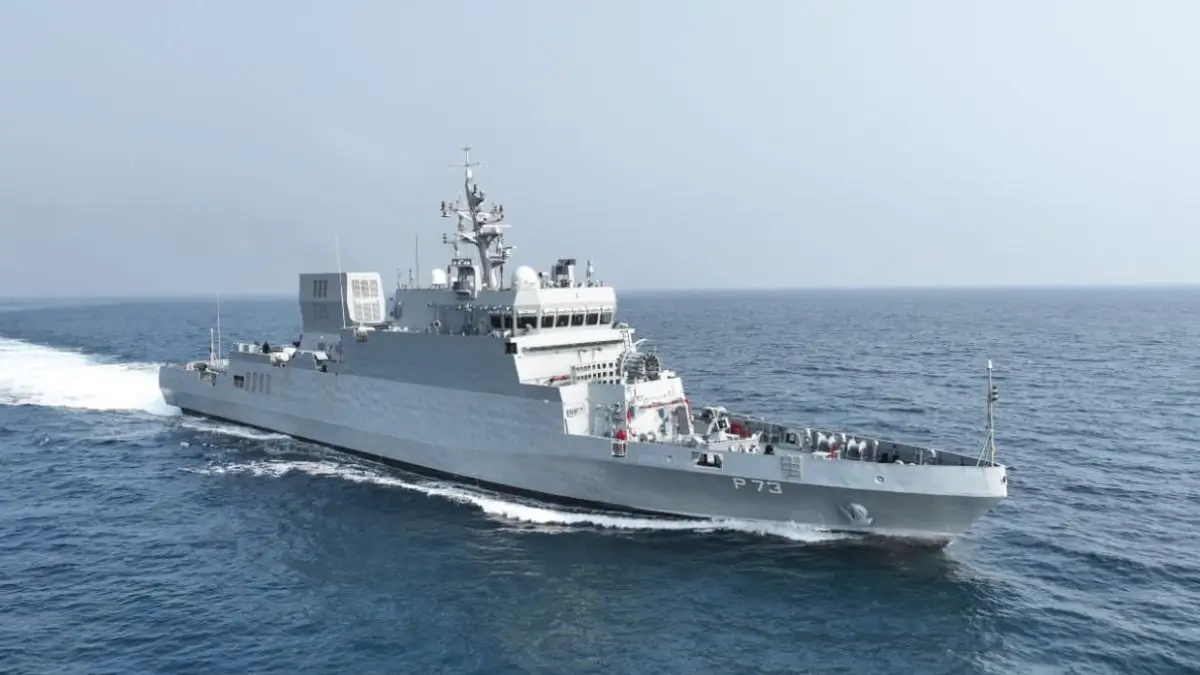
INS Anjadip belongs to the Anti-Submarine Warfare Shallow Water Craft (ASW-SWC) project — a fleet of specialised warships designed to detect, track and engage hostile submarines especially in littoral or coastal waters where threats are complex and harder to monitor effectively. The 77-metre vessel has been engineered as a “Dolphin Hunter”, outfitted with cutting-edge indigenous technology, including advanced sonar systems, lightweight torpedoes, and ASW rockets that enhance both detection and combat responses in underwater theatres.
Features and Capabilities of INS Anjadip
INS Anjadip has been built indigenously by Garden Reach Shipbuilders & Engineers (GRSE) with a high-speed water-jet propulsion system, enabling it to attain speeds of up to 25 knots for rapid operations. The vessel is equipped with the hull-mounted sonar Abhay — a highly sensitive system capable of discerning submarine movements in complex maritime environments. Beyond its primary ASW role, INS Anjadip can also perform other essential duties such as coastal surveillance, low-intensity maritime operations, and search and rescue missions — reflecting its versatile design tailored to modern naval needs.
Strengthening Coastal and Strategic Security
India’s geographic position — flanked by vast coastal regions and strategic sea lanes — demands a robust naval capability to deter underwater threats. The commissioning of INS Anjadip underscores India’s commitment to maintaining secure maritime borders, safeguarding trade routes, and ensuring regional stability. With evolving geopolitical challenges in the Indo-Pacific theatre, anti-submarine readiness has become a priority. The induction of locally built warships also aligns with India’s Aatmanirbhar Bharat initiative, contributing to self-reliance in defence manufacturing.
The ASW-SWC vessels replace retired legacy platforms and significantly augment the Indian Navy’s ability to protect coastal waters, especially along the Eastern and Western seaboards. This development forms a part of the broader naval expansion strategy that aims for a 200+ ship fleet by 2035, enhancing multi-domain warfare preparedness against emerging undersea threats.

Why This News Is Important for Government Exam Aspirants
Strategic Defence Dimension
The commissioning of INS Anjadip is a key development in India’s defence landscape. Anti-Submarine Warfare (ASW) capabilities are important in securing maritime boundaries, protecting naval assets, and deterring submarine incursions by adversarial nations. With India situated in the Indian Ocean Region — a hub of major shipping lanes and geopolitical interests — ASW readiness is critical for national security. This news directly ties into topics like national defence strategy, maritime security, foreign policy, and maritime doctrine — areas frequently covered in UPSC (IAS), PCS, SSC CGL, CDS, and other competitive exams.
Indigenisation and Defence Manufacturing
India’s focus on building advanced warships domestically highlights the success of initiatives like Make in India and Aatmanirbhar Bharat. The indigenous production of sophisticated naval assets such as INS Anjadip reflects growing self-reliance in defence technologies. This trend also resonates with public administration and economic sectors of exam syllabi — emphasizing the integration of industrial policy with national security imperatives.
Exam Relevance
Exam questions often test:
- Indian Ocean geopolitical importance
- Modernisation of Indian Armed Forces
- Self-reliance in defence production
- India’s military strategy in contested maritime regions
- Role of Navy in national security
Understanding developments like INS Anjadip equips candidates to answer questions across General Studies Paper-I & II, defence and security sections, and essay components.
Historical Context: India’s ASW Capability Evolution
India’s journey in anti-submarine warfare began during the Cold War era when submarines emerged as strategic underwater threats. Over decades, the Indian Navy has systematically expanded its ASW assets — starting with dedicated corvettes in the 1980s followed by modern frigates and submarines. The Abhay-class corvettes, operating for decades, were among the first ASW platforms deployed along India’s coast, but with advancing technology, newer shallow-water ASW vessels were conceptualised.
The ASW-SWC project is part of this evolution, representing a shift to specialised shallow-water vessels equipped with advanced sonar, lightweight weapons, and manoeuvrable platforms designed for littoral warfare. The first ships — INS Arnala and INS Androth — were commissioned in 2025, setting the stage for INS Anjadip and subsequent vessels. The project underscores India’s intent to build a layered ASW architecture, crucial for confronting modern threats in coastal and near-shore waters.
Key Takeaways from Indian Navy’s Commissioning of INS Anjadip
| S. No. | Key Takeaway |
|---|---|
| 1 | INS Anjadip was officially commissioned into the Indian Navy on 27 February 2026 at Chennai Port. |
| 2 | The ship is part of the Anti-Submarine Warfare Shallow Water Craft (ASW-SWC) project designed for littoral combat. |
| 3 | INS Anjadip is equipped with advanced ASW systems including sonar, lightweight torpedoes, and ASW rockets. |
| 4 | The vessel enhances India’s maritime security and is built indigenously under Aatmanirbhar Bharat initiative. |
| 5 | The induction aligns with the Indian Navy’s strategy to expand to a 200+ ship force by 2035. |
Frequently Asked Questions (FAQs) – INS Anjadip Commissioning
1. What is INS Anjadip?
INS Anjadip is an Anti-Submarine Warfare Shallow Water Craft (ASW-SWC) commissioned into the Indian Navy to strengthen coastal defence and underwater threat detection capabilities.
2. When was INS Anjadip commissioned?
INS Anjadip was commissioned on 27 February 2026, marking a major step in enhancing India’s maritime security infrastructure.
3. What is the primary role of INS Anjadip?
The primary role of INS Anjadip is Anti-Submarine Warfare (ASW), especially in shallow coastal waters where submarine detection is more complex and strategically significant.
4. Under which project was INS Anjadip built?
The vessel is part of the Anti-Submarine Warfare Shallow Water Craft (ASW-SWC) Project, aimed at replacing older ASW corvettes and strengthening India’s littoral combat capability.
5. Which shipyard built INS Anjadip?
INS Anjadip was constructed by Garden Reach Shipbuilders & Engineers (GRSE), a leading Indian defence shipbuilding company.
6. What advanced systems are installed on INS Anjadip?
The ship is equipped with hull-mounted sonar systems, lightweight torpedoes, ASW rockets, and modern communication and surveillance equipment.
7. Why is Anti-Submarine Warfare important for India?
India has a long coastline of over 7,500 km and strategic maritime interests in the Indian Ocean Region. ASW capabilities are crucial for protecting sea lanes, ports, and naval assets from underwater threats.
8. How does this development align with national policy?
The commissioning supports the Government of India’s self-reliance initiative under Aatmanirbhar Bharat by promoting indigenous defence manufacturing.
9. What is the strategic importance of shallow water craft?
Shallow water crafts are essential for coastal defence because submarines can exploit shallow waters to evade detection. These vessels are specially designed for such operational environments.
10. For which exams is this topic important?
This news is important for UPSC (IAS/IPS), State PSC, CDS, NDA, CAPF, SSC, Railways, Banking (General Awareness), Police recruitment, and teaching eligibility exams.
Some Important Current Affairs Links