










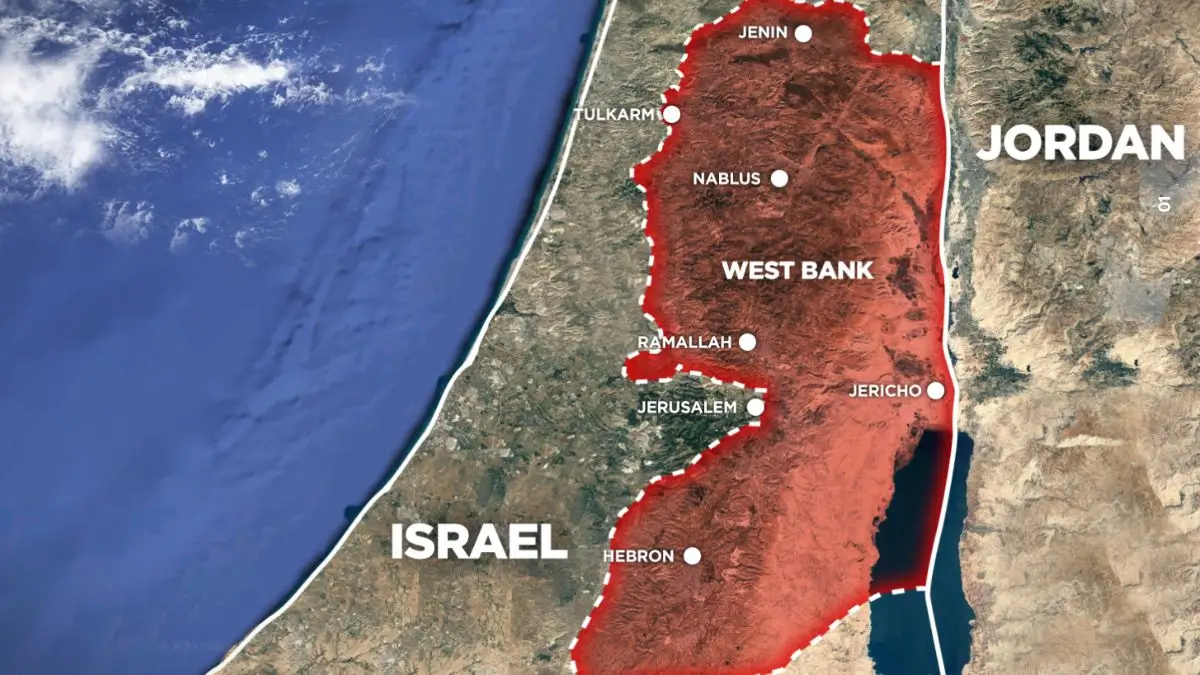
India joins over 100 nations in condemning Israel’s West Bank actions, reinforcing support for the two-state solution. Read the UN statement, historical context, and key takeaways.
India Joins Over 100 Nations in Strong Stand Against Israel’s West Bank Actions
In a major diplomatic development on the international stage, India has joined more than 100 countries and global organisations in condemning Israel’s unilateral actions in the occupied West Bank. The joint statement was released at the United Nations and opposes recent decisions and policies that many nations believe are contrary to international law and jeopardise long‑term peace efforts in the Middle East.
The statement, issued on behalf of the participating nations, categorically “strongly condemns unilateral Israeli decisions and measures aimed at expanding Israel’s unlawful presence in the West Bank” and calls for these actions to be reversed immediately. Nations participating in the statement argue that such steps undermine ongoing peace initiatives and the internationally recognised framework for a peaceful resolution between Israelis and Palestinians.
India was among the countries that joined the joint UN statement late, after an initial group of 85 nations had issued a repudiation earlier. This broad coalition includes countries from every region — Europe, Asia, Africa, the Middle East, and the Americas — along with international blocs like the European Union.
The statement not only rejects annexation or demographic changes in the West Bank but also reaffirms the importance of a two‑state solution — envisaging an independent State of Palestine living peacefully alongside Israel with secure and recognised borders. This approach aligns with India’s longstanding diplomatic policy on the Israel–Palestine conflict.
India has historically supported Palestinian self‑determination and was the first non‑Arab country to recognise the State of Palestine in 1988, emphasising peaceful resolutions through dialogue and respect for international law.
This diplomatic alignment comes at a geopolitically sensitive time, just days before India’s Prime Minister’s scheduled visit to Israel, highlighting India’s careful balancing of its strategic relations with both Israel and the broader Middle East region.

Why This News Is Important for Students
India’s Foreign Policy and Diplomatic Balance
This news is crucial for exam aspirants because it highlights India’s evolving foreign policy in one of the most long‑standing global conflicts — the Israel–Palestine issue. India’s decision to join over 100 nations in opposing Israel’s actions in the West Bank demonstrates a calibrated diplomatic strategy that balances historical support for Palestinian rights with contemporary strategic interests involving Israel.
Understanding this development helps students grasp how international law, multilateralism, and geopolitical interests influence India’s diplomatic commitments. In competitive exams like UPSC Civil Services and SSC exams, questions often revolve around the United Nations’ role, international law principles, peace processes, and India’s stance in global affairs.
The news also sheds light on the two‑state solution — a key concept in world politics — which remains central to discussions on peace in the Middle East. In questions related to foreign policy, students are expected to connect India’s actions to ongoing global efforts for peace, adherence to international frameworks, and support for peaceful negotiation processes.
Overall, this development reinforces India’s commitment to multilateral diplomacy, shows how nations form coalitions on global issues, and highlights the importance of legal and ethical considerations in international relations.
Historical Context: India, Israel, and the Palestine Issue
Roots of the Israel–Palestine Dispute
The West Bank has been a central focus of the Israel–Palestine conflict since the Six‑Day War in 1967, when Israel occupied this territory along with East Jerusalem. Palestinian aspirations for an independent state have been at the heart of decades of negotiations, wars, and diplomatic efforts. The United Nations and key international players have repeatedly urged a two‑state solution as the most viable outcome.
India’s Position Over the Years
India recognised the State of Palestine in 1988, becoming the first major non‑Arab country to do so. For decades, India maintained strong support for Palestinian self‑determination while balancing diplomatic engagement with Israel. India and Israel established full diplomatic relations in 1992, and over the years, cooperation has deepened in areas like defence, agriculture, and technology.
Recent Shifts and Diplomatic Tightrope
In recent years, India’s foreign policy has aimed to maintain a balanced approach: reaffirming support for Palestinian statehood while strengthening ties with Israel — especially in defence and security cooperation. The latest joint UN statement comes amid heightened global attention on settlement expansion and demographic changes in the West Bank, challenging long‑standing peace efforts.
Key Takeaways from India’s Diplomatic Stand Against West Bank Actions
| S.No. | Key Takeaway |
|---|---|
| 1 | India joined more than 100 nations and global organisations in condemning Israel’s unilateral actions in the West Bank. |
| 2 | The joint statement at the United Nations calls for reversing actions that alter the demographic and legal status of the occupied territory. |
| 3 | The coalition supports upholding international law and advocates for a two‑state solution to the Israel–Palestine conflict. |
| 4 | India was not part of the initial group of 85 signatories but later added its name, marking a significant diplomatic move. |
| 5 | This diplomatic development occurred just before India’s scheduled high‑level visit to Israel, reflecting complex foreign policy balancing. |
FAQs: Frequently Asked Questions
1. What recent action did India take regarding Israel’s activities in the West Bank?
India joined more than 100 nations and international organisations in condemning Israel’s unilateral actions in the West Bank through a joint statement at the United Nations.
2. What is the significance of the West Bank in international politics?
The West Bank is a disputed territory at the center of the Israel–Palestine conflict. Its status and settlements are a major focus of global peace efforts, with the two‑state solution being the internationally endorsed framework.
3. What does the two‑state solution mean?
It refers to the proposal for the creation of an independent Palestinian state alongside Israel, with both states coexisting peacefully within recognized borders.
4. When did India recognize Palestine, and what has been its stance historically?
India recognized the State of Palestine in 1988 and has historically supported Palestinian self‑determination, while maintaining diplomatic relations and strategic partnerships with Israel since 1992.
5. Why is India’s joining of the UN statement important for its foreign policy?
It reflects India’s careful diplomatic balancing between supporting Palestinian rights and maintaining strong bilateral ties with Israel, highlighting India’s commitment to multilateralism and international law.
6. Which international bodies and countries were involved in the joint statement?
The statement included over 100 countries from all continents and international blocs such as the European Union, forming a broad coalition condemning settlement expansion in the West Bank.
7. How does this news relate to India’s scheduled visit to Israel?
The timing underscores India’s diplomatic strategy of balancing international law and peace advocacy while continuing strategic cooperation with Israel, including defence and technology partnerships.
Some Important Current Affairs Links




