









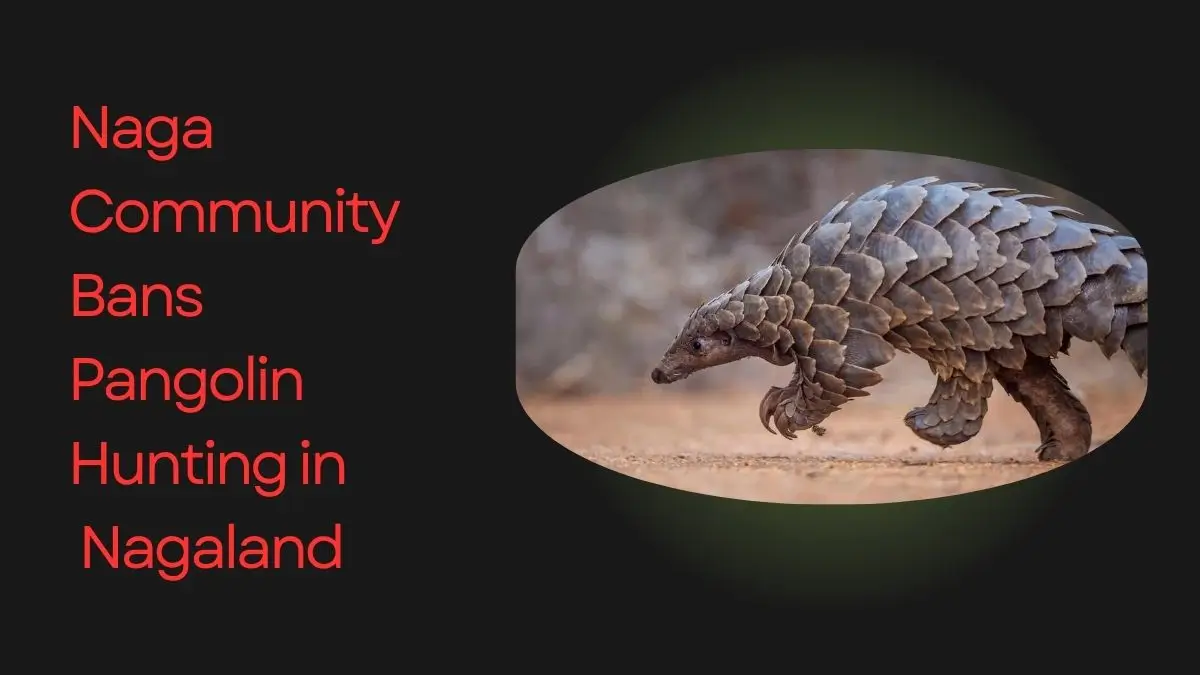
Pangolin Protection Nagaland news: United Sangtam Likhum Pumji bans hunting and trade of pangolins, strengthening community-led wildlife conservation in Northeast India.
Naga Community Bans Pangolin Hunting in Nagaland – A Strong Boost to Wildlife Conservation
In a major wildlife protection move, the United Sangtam Likhum Pumji (USLP) — the apex tribal body of the Sangtam Naga community in Nagaland — has passed a resolution banning the hunting and trade of pangolins within its areas of jurisdiction. This decisive resolution marks a crucial milestone in community‑led wildlife conservation in India’s Northeast region, renowned for its rich biodiversity and ecological significance.
The resolution focuses on the plight of pangolins — elusive, nocturnal mammals often dubbed the world’s most trafficked animal due to high demand for their scales and meat in illegal markets. Despite being protected under national wildlife laws, pangolins continue to face severe threats from poaching and illicit trade, particularly along the porous India–Myanmar border.
Leading this initiative, the USLP has utilised its strong traditional governance structures to foster conservation awareness and community accountability. By formally prohibiting pangolin hunting and related activities, the tribal body not only reinforces legal protection but also empowers local communities as custodians of their natural heritage.
This movement is closely tied to the Countering Pangolin Trafficking Project, spearheaded by the Wildlife Trust of India (WTI) with support from the Wildlife Conservation Network’s Pangolin Crisis Fund. The project aims to curb illegal wildlife trade practices through community engagement, strengthened enforcement and monitoring of trafficking networks.
Nagaland’s Sangtam region — particularly in Kiphire and Tuensang districts — forms part of the Indo‑Myanmar biodiversity hotspot, which is globally recognised for its unique ecosystem and species diversity. The inclusion of tribal institutions in conservation efforts is proving transformative, as traditional governance complements formal wildlife laws, leading to sustainable outcomes on the ground.
Community leaders emphasise that this step enhances not only environmental protection but also cultural preservation, as the pangolin is part of local ecosystems and folklore. Their resolution sets a precedent for other indigenous communities across the Northeast to take ownership of wildlife conservation in their homelands.

🧠 Why This News is Important for Government Exam Aspirants
📌 Important Wildlife Conservation Update
This news holds high significance for students preparing for competitive government exams — especially in sections like Environment & Ecology, Static GK, and Current Affairs. The community‑led ban on pangolin hunting in Nagaland reflects India’s grassroots efforts in protecting endangered species, aligning with national and global biodiversity commitments.
📌 Community‑Driven Conservation Model
Unlike top‑down government policies, this resolution showcases how indigenous governance structures can effectively enforce conservation measures. This is a key example of decentralised environmental protection that is increasingly recognised in UPSC, SSC, Banking, and State Service exam syllabi.
📌 Relevance to Environmental Laws
Pangolins are protected under the Wildlife Protection Act, 1972 and listed in CITES Appendix I, highlighting international and national legal frameworks against wildlife trafficking. Understanding this can directly aid aspirants in environment law questions.
📌 Link to India–Myanmar Border Issues
The news also brings focus to the India–Myanmar border as a critical corridor for wildlife trafficking. This overlaps with topics such as border security, transnational crime and ecological hotspots — relevant to civil services and defence exams.
📌 Models of Sustainable Development
This move represents an intersection of culture, ecology, and governance — a recurring theme in questions about sustainable development goals, community participation and conservation strategies.
📜 Historical Context
🌱 Background on Pangolins and Legal Protection
Pangolins — also called scaly anteaters — are unique mammals known for their protective keratin scales. Due to heavy demand in illegal wildlife markets (especially for scales believed to have medicinal value), pangolins have become critically endangered. Internationally, all pangolin species are listed under Appendix I of CITES (Convention on International Trade in Endangered Species), meaning commercial trade is banned globally. In India, pangolins enjoy highest protection under the Wildlife (Protection) Act, 1972.
🪶 Community Conservation in Northeast India
Indigenous tribal councils in Nagaland and neighbouring Manipur have long managed forest resources through customary laws. In recent years, groups such as Pujenvong Council in Kiphire and Tangkhul Naga bodies in Manipur have passed similar bans on pangolin hunting, signalling a broader movement of community‑based wildlife protection.
🌐 Link to Anti‑Trafficking Projects
Organisations like the Wildlife Trust of India and Wildlife Conservation Network have guided community awareness campaigns and enforcement efforts along India’s northeastern borders, historically hotspots for wildlife trafficking routes. These efforts build on sustained conservation strategies aimed at countering illegal wildlife trade.
📊 Key Takeaways from “Naga Community Bans Pangolin Hunting in Nagaland”
| Sr. No. | Key Takeaway |
|---|---|
| 1 | The United Sangtam Likhum Pumji (USLP) has banned pangolin hunting and trade in Nagaland. |
| 2 | Pangolins are among the most trafficked mammals globally, targeted for scales and meat. |
| 3 | The move is part of the Countering Pangolin Trafficking Project led by Wildlife Trust of India. |
| 4 | Nagaland’s tribal governance structures are key to enforcing local conservation laws. |
| 5 | This community‑led initiative strengthens India’s wildlife protection efforts under national and global frameworks. |
FAQs: Frequently Asked Questions
1. What is the recent decision taken by the Naga community regarding pangolins?
The United Sangtam Likhum Pumji (USLP) has banned hunting and trade of pangolins in its areas, making it a major step for wildlife conservation in Nagaland.
2. Why are pangolins considered endangered?
Pangolins are heavily poached for their scales and meat, which are in demand in illegal wildlife markets. They are among the world’s most trafficked mammals.
3. Under which laws are pangolins protected in India?
Pangolins are protected under the Wildlife Protection Act, 1972 and are listed in CITES Appendix I, banning commercial trade internationally.
4. How does community governance help in conservation?
Tribal councils like USLP enforce traditional laws and involve local communities in monitoring and protecting wildlife, complementing government policies.
5. Which districts in Nagaland are part of this initiative?
The Kiphire and Tuensang districts in Nagaland’s Sangtam region are key areas where pangolin protection efforts are being implemented.
6. Which organizations support anti-pangolin trafficking initiatives?
The Wildlife Trust of India (WTI) and Wildlife Conservation Network’s Pangolin Crisis Fund provide funding, awareness, and monitoring support to curb illegal trade.
7. How does this news relate to exams like UPSC and SSC?
Questions may appear under Environment & Ecology, Biodiversity, Wildlife Protection Laws, and Community-based Conservation Models, which are part of the syllabus for civil services, police, banking, and teaching exams.
Some Important Current Affairs Links