







Kyasanur Forest Disease vaccine development update explains ICMR’s new indigenous vaccine progress, clinical trials, and its importance for UPSC and other government exams.
ICMR Advances Development of Improved Kyasanur Forest Disease Vaccine: A Major Breakthrough in Public Health
The Indian Council of Medical Research (ICMR) has announced significant advancements in the development of an improved vaccine for Kyasanur Forest Disease (KFD), a serious viral infection endemic to parts of India’s Western Ghats region. This initiative marks a crucial milestone in India’s efforts to combat a neglected but recurrent public health threat.
What Is Kyasanur Forest Disease?
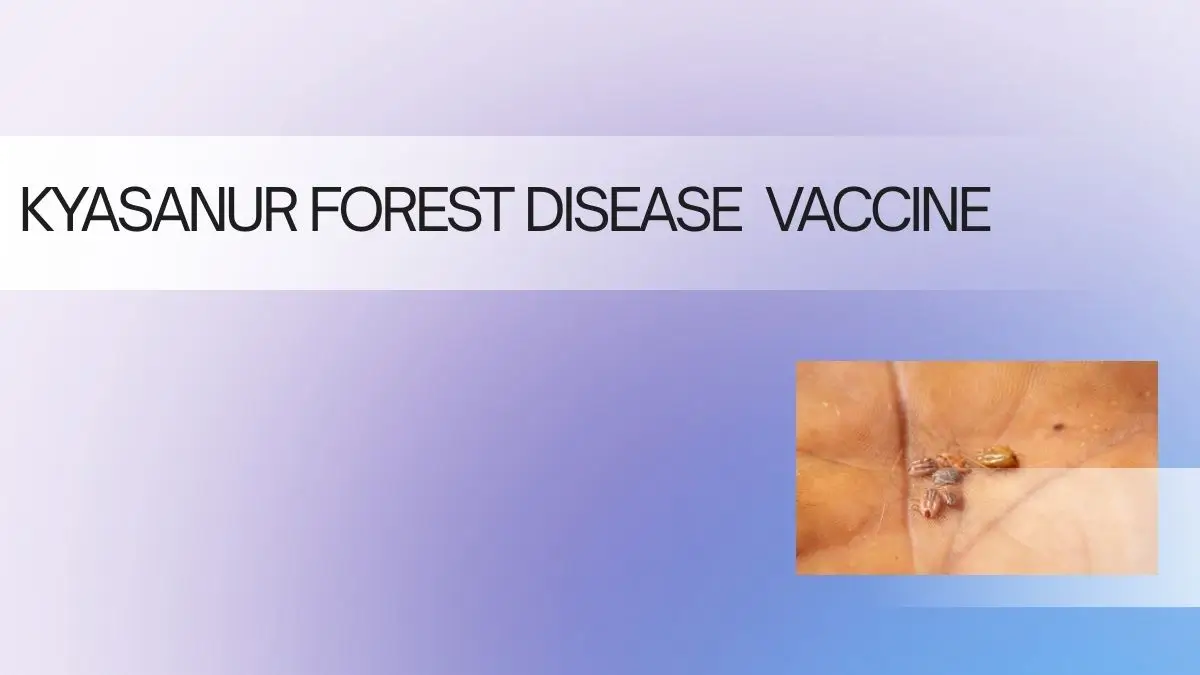
Kyasanur Forest Disease, commonly known as “monkey fever,” is a tick-borne viral haemorrhagic fever first identified in the Kyasanur Forest of Karnataka in 1957. The disease is transmitted through the bite of infected Haemaphysalis ticks and affects both humans and animals. Symptoms range from high fever, chills, and headache to haemorrhagic manifestations and neurological complications.
ICMR’s Collaborative Vaccine Development
The vaccine development programme is a collaborative effort between ICMR, the National Institute of Virology (NIV), and Indian Immunologicals Limited (IIL). The goal is to produce a fully indigenous, two-dose, adjuvanted inactivated vaccine, which will be administered 28 days apart.
According to health authorities, preclinical milestones — including animal challenge studies and toxicity evaluations — have been successfully completed. Following regulatory approval by the Central Drugs Standard Control Organization (CDSCO), Phase I human clinical trials have now begun to evaluate safety and immune response in volunteers.
A Shift from Research to Clinical Testing
The initiation of human clinical trials is a crucial step towards regulatory approval and eventual mass use. If the vaccine demonstrates a strong safety profile and robust immune response, subsequent trial phases will follow before widespread deployment.
Strategic Public Health Importance
This advancement underscores India’s growing capability in indigenous vaccine research and development, reducing dependency on external sources. The effort also reflects the government’s commitment to strengthening public health security, particularly in forest-dependent rural communities that are most vulnerable to KFD outbreaks.
Looking Ahead
With the vaccine progressing through trials, health officials remain cautiously optimistic that it will soon be available for broader clinical use. Effective immunization could significantly reduce the burden of KFD, especially during peak transmission seasons in endemic regions.

Why This News Is Important
Strengthening Public Health Preparedness
The development of an improved Kyasanur Forest Disease vaccine is a major public health advancement for India, especially for government exams syllabus areas like Science & Technology, Health Policies, and National Health Initiatives. It demonstrates the country’s focus on tackling endemic diseases through indigenous scientific innovation and clinical research capabilities. This progress highlights how national research institutions like ICMR are addressing neglected tropical diseases, which often affect rural and forest fringe populations.
Implications for Rural and At-Risk Communities
KFD primarily affects states in the Western Ghats — Karnataka, Kerala, Tamil Nadu, Maharashtra, and Goa — where health infrastructure may be limited. A safer and more effective vaccine will improve disease control and prevention strategies, reducing illnesses and deaths among forest workers, farmers, and tribal communities. It also underscores the importance of government-led health initiatives in safeguarding citizens in remote geographies.
Relevance to Government Exam Aspirants
For students preparing for competitive exams — be it UPSC Civil Services (IAS/PCS), banking, railways, or defence services — this news is significant as it links to public health policy, biomedical research, national infrastructure, and rural healthcare management. Questions on vaccine development, endemic diseases, health research institutions, and government health responses are commonly featured in General Studies papers. Hence, understanding this development will help aspirants in both prelims and mains examinations.
Historical Context: Kyasanur Forest Disease and Vaccine Challenges
Origin and Spread of KFD
Kyasanur Forest Disease was first identified in 1957 in the dense forests of Shivamogga district, Karnataka. Over time, it has become a seasonal endemic disease in the Western Ghats, causing periodic outbreaks with noticeable mortality among humans and monkeys.
The First Vaccine and Its Limitations
Earlier efforts led to the development of a formalin-inactivated KFD vaccine, but it had limitations in immunogenicity and required frequent booster doses for continued protection. Due to these issues, its long-term effectiveness was questioned, highlighting the need for an improved vaccine candidate.
Renewed Vaccine Efforts
In recent years, with rising incidence and public health focus, ICMR and partners renewed efforts to develop a modern and more effective vaccine. With enhanced preclinical results and human trials underway, India is now on the cusp of a significant health innovation milestone.
Key Takeaways from the ICMR Kyasanur Forest Disease Vaccine Development
| S. No. | Key Takeaway |
|---|---|
| 1 | ICMR has advanced development of an improved indigenous vaccine for Kyasanur Forest Disease (KFD). |
| 2 | The vaccine is a two-dose, adjuvanted inactivated vaccine schedule. |
| 3 | Animal challenge and toxicity studies have been successfully completed. |
| 4 | Phase I human clinical trials have begun after CDSCO approval. |
| 5 | The development strengthens India’s indigenous vaccine research and public health preparedness. |
FAQs: Frequently Asked Questions
1. What is Kyasanur Forest Disease (KFD)?
Kyasanur Forest Disease is a tick-borne viral hemorrhagic fever caused by the KFD virus, mainly found in the Western Ghats region of India. It spreads through infected ticks and affects both humans and monkeys.
2. Which organization is leading the development of the improved KFD vaccine?
The improved vaccine is being developed under the leadership of the Indian Council of Medical Research (ICMR) in collaboration with the National Institute of Virology (NIV) and Indian Immunologicals Limited (IIL).
3. Why is the new KFD vaccine important?
The new vaccine aims to overcome the limitations of the earlier vaccine by improving safety and effectiveness. It is expected to provide better protection to people living in endemic forest regions.
4. Which regions in India are most affected by KFD?
KFD is mainly reported in Karnataka, Kerala, Tamil Nadu, Maharashtra, and Goa, especially in forest and rural areas of the Western Ghats.
5. How is Kyasanur Forest Disease transmitted?
It is transmitted through the bite of infected Haemaphysalis ticks. Humans may also get infected through contact with infected animals.
6. What are the major symptoms of KFD?
Symptoms include high fever, headache, muscle pain, vomiting, bleeding complications, and in severe cases, neurological issues.
7. At what stage is the new vaccine currently?
The vaccine has completed preclinical testing and has entered Phase I human clinical trials after approval from the CDSCO.
8. Which government body regulates vaccine approval in India?
The Central Drugs Standard Control Organization (CDSCO) is the national regulatory authority for vaccine approval.
9. Why is this topic important for competitive exams?
It is relevant to Science & Technology, Health, and Government Initiatives sections in exams like UPSC, State PSCs, SSC, Railways, and Banking.
10. What is the nickname of Kyasanur Forest Disease?
KFD is popularly known as “Monkey Fever.”
Some Important Current Affairs Links