







Nationwide Pulses Revolution in India launched from Madhya Pradesh aims at self-reliance in pulses production, boosting farmers’ income and food security — key current affairs for competitive exams.
India Launches Nationwide Pulses Revolution From Amlaha, Madhya Pradesh
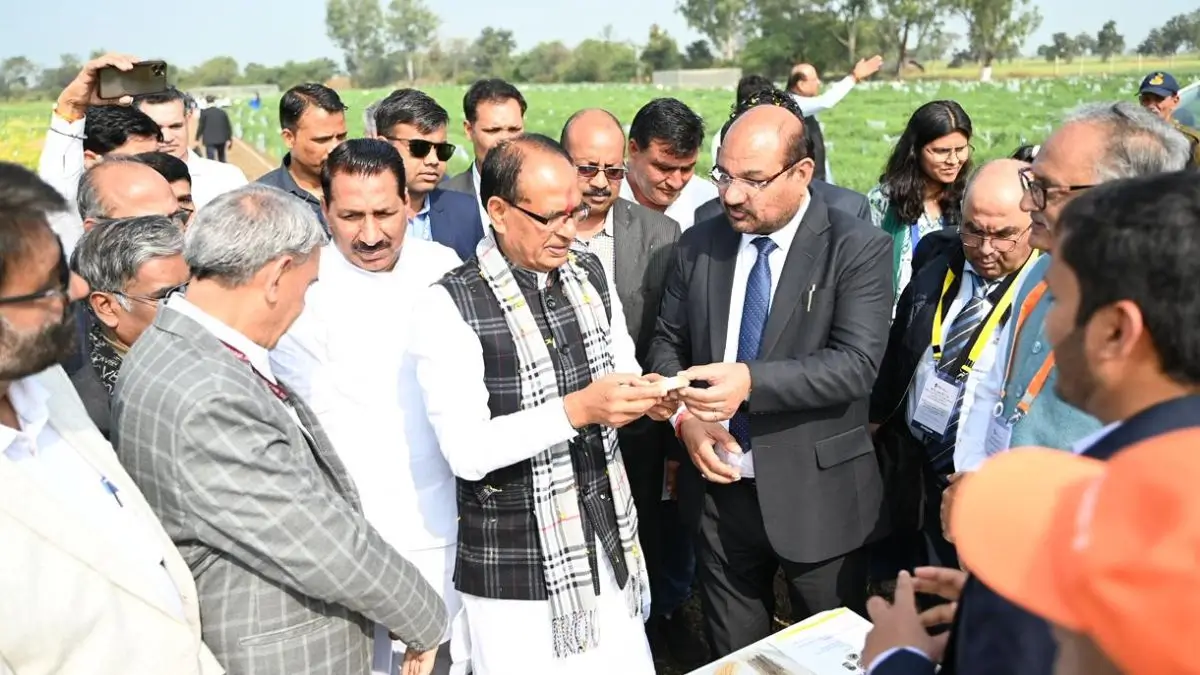
On February 7, 2026, India initiated a landmark agricultural initiative — a Nationwide Pulses Revolution — aimed at transforming the country’s pulses sector. The event was launched at the Food Legumes Research Centre (FLRP) in Amlaha, Sehore district of Madhya Pradesh, under the chairmanship of Union Minister of Agriculture & Farmers’ Welfare, Shri Shivraj Singh Chouhan. This major step marks India’s commitment to achieving self-reliance in pulses production, strengthening food security and increasing farmer income.
Pulses Revolution: What It Means
The Pulses Revolution is not merely a scheme but a comprehensive, long-term mission known as the Self-Reliance in Pulses Mission. It focuses on enhancing cultivation, productivity, processing, and market linkages for pulses — the protein-rich staple food for millions of Indians. The initiative aims to move India away from import dependence and position it as a global exporter of pulses. Farmers are placed at the centre of policymaking to ensure field-driven implementation and tangible benefits.
Farmer-Centric Policy Dialogue & Cluster Approach
A key highlight of the launch was the National Pulses Consultation, which brought together Union and state agriculture ministers, scientists, farmer producer organizations (FPOs), seed companies, millers, and progressive farmers. The dialogues were designed to be field-driven rather than file-driven, enabling real issues faced by pulses growers to shape policy decisions. A cluster-based model will be emphasized, where pulses are processed and marketed locally, creating rural employment and reducing post-harvest losses.
Seed-to-Market Value Chain Strengthening
One of the core strategies under this mission is strengthening the seed-to-market value chain. The government plans to ensure that quality seeds reach farmers at the right time, enhance scientific farming practices, and improve processing infrastructure. High-yielding and region-specific seed varieties will be promoted through state-level seed systems and supportive financial incentives.
Boosting Rural Economy and Food Security
The launch of 1,000 pulse mills across India, backed by government subsidies of up to ₹25 lakh per unit, will add value to pulse produce and elevate farmers’ earnings. This infrastructure push, coupled with assured markets and integrated supply chains, seeks to boost rural livelihoods, strengthen food security, and enhance national nutrition outcomes — crucial for a country where pulses are a primary source of protein.

Why This News Is Important
Significance for India’s Agriculture and Self-Reliance
This initiative represents a strategic shift in India’s agricultural policy toward self-reliance (Atmanirbharta) in pulses, a major food category. Despite being one of the largest producers and consumers of pulses, India has historically relied on imports due to production shortfalls. The mission aims to bridge this gap and reduce dependency on other countries for essential food grains. It will also reduce foreign exchange outflows linked to imports, improve food security, and stabilize domestic market prices.
Boosting Farmers’ Income and Rural Economy
By focusing on quality seeds, scientific farming, assured markets, and post-harvest value addition, the pulses revolution will directly benefit millions of farmers, enhancing their income prospects. The inclusion of farmers in policy dialogues ensures that policies are practical, attuned to field realities, and capable of delivering lasting benefits to rural communities.
Relevance for Competitive Exams
For students preparing for government exams like UPSC, SSC, Banking, Railways, and State PCS, this news intersects with topics such as agriculture policy, food security, rural development, self-reliance (Atmanirbharta India), Minimum Support Price (MSP) strategies, and public sector missions and schemes. Understanding this initiative enriches knowledge for GS-II (Polity & Governance) and GS-III (Economy & Agriculture) sections across various exams.
Historical Context: Background to India’s Pulses Mission
Importance of Pulses in Indian Diet and Agriculture
Pulses (such as tur, urad, moong, and masoor) are a primary source of plant-based protein for a predominantly vegetarian population in India. They also play an essential role in soil health, as legumes help in nitrogen fixation, reducing the need for chemical fertilizers. Historically, pulses have been integral to Indian farming systems and nutrition.
Past Production Challenges and Import Dependence
Despite being a major producer, India has faced a persistent production deficit, leading to pulse imports worth millions of dollars annually. Fluctuating yields, inadequate processing infrastructure, and fragmented supply chains have contributed to supply inefficiencies, compelling the government to intervene.
Approval of National/Atmanirbharta Pulses Mission
In October 2025, the Union Cabinet approved the Mission for Aatmanirbharta in Pulses with an allocation of ₹11,440 crore for implementation from 2025-26 to 2030-31. The mission aims to significantly increase production, expand cultivation areas, enhance yield, and build robust procurement and processing mechanisms.
Link to Broader Government Policies
This mission aligns with multiple ongoing government strategies such as PM-AASHA (Price Support Scheme), MSP reforms, and integrated rural development plans that aim to stabilize farmers’ incomes, promote crop diversification, and ensure sustainable agricultural growth.
Key Takeaways from India Launches Nationwide Pulses Revolution
| S. No. | Key Takeaway |
|---|---|
| 1 | Nationwide Pulses Revolution launched at Amlaha, Sehore in Madhya Pradesh on February 7, 2026. |
| 2 | The mission focuses on self-reliance in pulses and aims to reduce import dependency. |
| 3 | It adopts a field-driven and farmer-centric policy, involving stakeholders in decision-making. |
| 4 | Government will strengthen the seed-to-market value chain and establish 1,000 pulse mills across India. |
| 5 | The mission underpins food security, rural income growth, and export potential of Indian pulses. |
FAQs: Frequently Asked Questions
1. What is the Nationwide Pulses Revolution launched by India?
The Nationwide Pulses Revolution is a government initiative aimed at achieving self-reliance in pulses production by improving cultivation, processing, and market infrastructure. It focuses on increasing farmers’ income and reducing India’s dependence on imported pulses.
2. Where was the Pulses Revolution officially launched?
The initiative was launched at the Food Legumes Research Centre in Amlaha, Sehore district of Madhya Pradesh, marking the beginning of a nationwide agricultural campaign.
3. Who launched the Nationwide Pulses Revolution?
The program was launched under the leadership of the Union Minister of Agriculture and Farmers’ Welfare, highlighting the government’s commitment to strengthening India’s pulses sector.
4. What is the main objective of the Pulses Mission?
The primary objective is to achieve self-sufficiency in pulses, stabilize domestic prices, improve nutrition security, and promote sustainable farming practices.
5. How will the initiative benefit Indian farmers?
Farmers will benefit through access to high-quality seeds, improved processing facilities, government subsidies, and better market linkages, which will increase their productivity and income.
6. Why are pulses important in India’s agriculture?
Pulses are a major source of protein in the Indian diet and help improve soil fertility through nitrogen fixation, making them essential for sustainable agriculture.
7. How is this news relevant for competitive exams?
This topic is important for exams as it relates to agriculture policy, food security, rural development, and government schemes, which are frequently asked in UPSC, SSC, Banking, and State PSC exams.
8. What infrastructure development is planned under this mission?
The government plans to establish pulse processing units and strengthen the seed-to-market supply chain to reduce wastage and improve value addition.
Some Important Current Affairs Links