






Bharat Taxi cooperative platform launch marks India’s first driver-owned ride-hailing service introduced by Amit Shah, boosting cooperative movement and driver welfare for exam current affairs.
Amit Shah Launches Bharat Taxi: India’s First Cooperative Ride-Hailing Platform
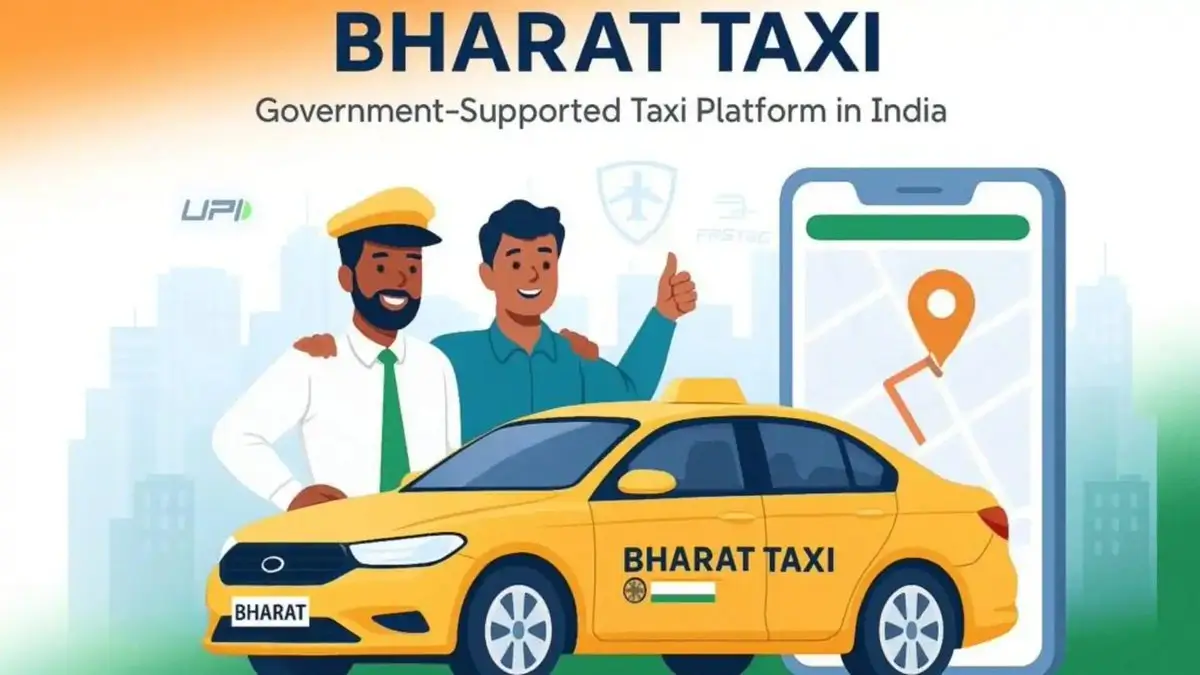
On 5 February 2026, Union Home and Cooperation Minister Amit Shah officially launched Bharat Taxi, a landmark initiative that marks India’s first cooperative-based ride-hailing platform. The launch took place at Vigyan Bhavan in New Delhi, signalling a major step towards empowering taxi drivers and reshaping the country’s urban mobility landscape.
What is Bharat Taxi? A New Mobility Revolution
Bharat Taxi is a driver-owned ride-hailing app registered under the Multi-State Cooperative Societies Act, 2002, and was originally established on 6 June 2025. Unlike traditional app-based mobility platforms like Ola and Uber that follow a commission-based model, Bharat Taxi operates on a zero-commission, surge-free model. This means drivers — referred to as Sarathis — do not pay any commission on trips and receive the full fare earnings directly.
The core philosophy of the platform is “Sarathi Hi Malik,” meaning the driver is the owner. Through this innovative cooperative structure, drivers become stakeholders in the business rather than mere gig workers. This shift is aimed at ensuring fair income distribution, social security benefits, and collective ownership across the mobility ecosystem.
Key Features and Benefits of Bharat Taxi
Zero-Commission and Surge-Free Pricing
Bharat Taxi’s cooperative model eliminates the typical platform charges, commissions, and surge pricing that most private ride-hailing services impose. This approach yields more affordable ride fares for passengers and higher net earnings for drivers.
Social Security for Drivers
To support driver welfare, Bharat Taxi includes several social security measures:
- Accident insurance
- Health insurance
- Retirement savings support
- Dedicated driver support and emergency assistance centers in key locations like Delhi.
Inclusive and Innovative Initiatives
The platform has also launched initiatives for women driver empowerment, including the “Bike Didi” program, which has already attracted more than 150 women drivers. Drivers are also free to operate on other ride-hailing networks, as there are no exclusivity clauses in the cooperative framework.
Impact and Nationwide Expansion Plans
Since its inception, Bharat Taxi has rapidly grown into the world’s largest cooperative-based mobility platform. With over 4 lakh drivers onboarded and more than 10 lakh registered users, the platform has completed thousands of daily rides. Approximately ₹10 crore has been directly distributed to drivers to date, showcasing its impact on driver income.
Union Minister Amit Shah stated that Bharat Taxi will be rolled out across all Indian states and Union Territories within the next two to three years, extending its reach from Kashmir to Kanniyakumari and from Dwarka to Kamakhya.
A Cooperative Alternative in Urban Mobility
Bharat Taxi represents a shift in India’s urban transport ecosystem, offering a government-backed, equitable alternative to dominant private players. By strengthening the cooperative sector, it aims to create opportunities for fair income, improved working conditions, and enhanced mobility solutions for commuters and drivers alike.

Why This News is Important for Government Exam Aspirants
Relevance in Current Affairs and Policy Understanding
The launch of Bharat Taxi is a significant development in India’s socio-economic and transport policy landscape. For students preparing for competitive exams like SSC, UPSC, Banking, Railways, Defence, Teaching, and Police Services, understanding this initiative provides valuable insights into:
- Government intervention in gig economy reforms – Bharat Taxi reflects the government’s strategy to protect workers in the ride-hailing sector by creating a cooperative alternative to private aggregator platforms like Ola and Uber.
- Promotion of cooperative sector – The initiative highlights the role of cooperative institutions in India’s economic development under the Ministry of Cooperation, aligning with national priorities to enhance grassroots economic participation.
- Employment and driver welfare – By eliminating commission and sharing profits with drivers, the platform addresses long-standing issues related to fair wages and social security benefits for taxi drivers.
- Policy implications for future mobility solutions – Bharat Taxi sets the stage for future policies on digital public infrastructure, affordable transport, and cooperative models in technology-driven sectors.
For exam aspirants, this news is a potential question area under topics like government schemes, cooperative movement, labour reforms, and digital governance.
Historical Context: Background of Ride-Hailing and Cooperative Movement in India
The ride-hailing industry in India emerged rapidly after private players such as Ola, Uber, and Rapido entered the market in the early 2010s. These platforms transformed urban mobility but also drew criticism over high commissions, surge pricing, and inconsistent earnings for drivers. Cooperative movements, deeply rooted in India’s economic history, have long advocated for collective ownership, equitable profit distribution, and community-centric business models.
Recognizing the need to balance technological innovation with socio-economic justice, the Indian government, through the Ministry of Cooperation, conceptualised Bharat Taxi. Registered in June 2025 under the Multi-State Cooperative Societies Act, 2002, this platform blends modern technology with traditional cooperative principles to create a driver-centric ecosystem.
The cooperative movement itself has historical roots in India dating back to the early 20th century, aiming to empower farmers, artisans, and small businesses through collective ownership and mutual support systems. Bharat Taxi represents a 21st-century extension of this legacy into the digital economy, reinforcing the role of cooperatives in inclusive growth and fair work practices.
Key Takeaways from “Bharat Taxi Launch: Cooperative Ride-Hailing in India”
| S.No | Key Takeaway |
|---|---|
| 1. | Bharat Taxi is India’s first cooperative ride-hailing platform launched by Union Minister Amit Shah. |
| 2. | The platform operates on a zero-commission and surge-free model, ensuring full fare goes to drivers. |
| 3. | Drivers are owners under the “Sarathi Hi Malik” cooperative philosophy. |
| 4. | Social security benefits like health and accident insurance are included for driver welfare. |
| 5. | Nationwide expansion plan set for the next 2–3 years across Indian states and UTs. |
FAQs: Frequently Asked Questions
1. What is Bharat Taxi?
Bharat Taxi is India’s first cooperative-based ride-hailing platform launched by Union Home and Cooperation Minister Amit Shah. It operates on a driver-owned model where taxi drivers are stakeholders and receive full fare earnings without commission deductions.
2. Under which Act is Bharat Taxi registered?
Bharat Taxi is registered under the Multi-State Cooperative Societies Act, 2002, which governs cooperative institutions operating across multiple states in India.
3. What is the main objective of launching Bharat Taxi?
The main objective is to empower taxi drivers through cooperative ownership, eliminate high commission charges, provide social security benefits, and offer affordable transport services to passengers.
4. What does the slogan “Sarathi Hi Malik” mean?
“Sarathi Hi Malik” means the driver is the owner. It reflects the cooperative philosophy where drivers are not employees but co-owners of the platform.
5. How is Bharat Taxi different from private ride-hailing apps?
Unlike private apps such as Ola and Uber that charge commissions and surge pricing, Bharat Taxi follows a zero-commission and surge-free model, ensuring fair earnings for drivers.
6. Which ministry is associated with the Bharat Taxi initiative?
The initiative is associated with the Ministry of Cooperation, Government of India.
7. What benefits does Bharat Taxi provide to drivers?
Drivers receive benefits such as accident insurance, health insurance, social security support, and direct income without commission cuts.
8. Why is Bharat Taxi important for competitive exams?
It is important because it relates to government schemes, cooperative movement, labour welfare reforms, and digital governance — common topics in UPSC, SSC, Banking, Railways, and State PSC exams.
Some Important Current Affairs Links