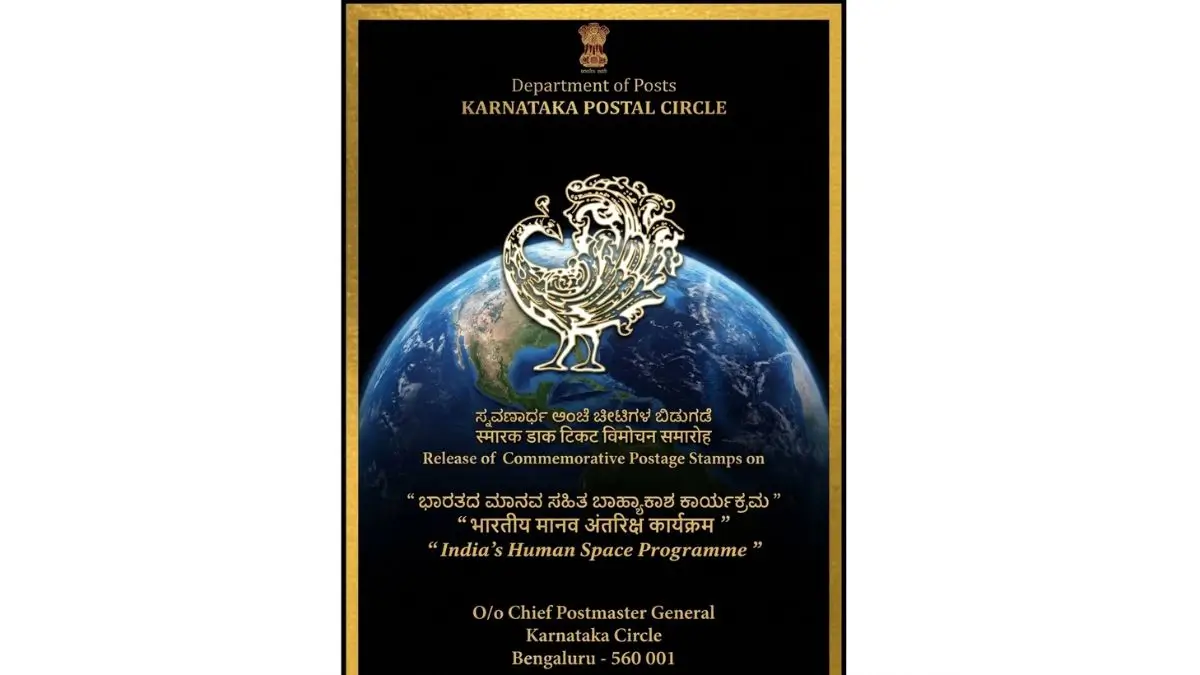









Gaganyaan mission 2025–26 by ISRO aims to send Indian astronauts into space. Explore launch timeline, crew details, objectives, and key facts for competitive exams.
ISRO Confirms Gaganyaan Mission Timeline for Launch
Introduction to the Gaganyaan Mission
India’s space ambitions have taken a giant leap forward with the Indian Space Research Organisation (ISRO) confirming the timeline for its first human spaceflight mission — Gaganyaan. This historic mission, which will see Indian astronauts travel to outer space and return safely, is part of India’s long-term vision to establish itself as a major spacefaring nation.
Gaganyaan is designed to carry Indian astronauts, also called Gaganyatris, into Low Earth Orbit (LEO) and back. The mission represents a complex integration of advanced technologies including life support, crew modules, launch vehicles, and re-entry systems.
Mission Timeline and Current Status
ISRO Chairman V. Narayanan has officially confirmed that the crewed Gaganyaan mission is now planned for 2027, marking a shift from earlier timelines but ensuring thorough testing and safety protocols. Before the human flight, ISRO will conduct three uncrewed test missions starting with G1, scheduled to launch in March 2026. These tests will rigorously evaluate structural integrity, avionics, propulsion systems, life support modules, and re-entry procedures.
The first uncrewed mission, G1, will feature Vyommitra, a humanoid robot developed by ISRO. Its role will be to simulate the human presence aboard the spacecraft, enabling engineers to analyze environmental conditions and responses during the flight phases.
Focus on Astronaut Safety
ISRO has highlighted astronaut safety as the highest priority for Gaganyaan. Training of the identified crew — including Shubhanshu Shukla, Prasanth Balakrishnan Nair, Ajit Krishnan, and Angad Pratap — is underway alongside extensive ground tests. Not only are the rocket systems and crew modules being tested, but abort systems and emergency escape mechanisms are also being validated to ensure maximum protection for astronauts in unforeseen scenarios.
Launch Vehicle and Mission Profile
The astronauts will be launched aboard a human-rated LVM3 rocket, capable of placing the spacecraft into a 400 km low Earth orbit. The mission is expected to last roughly three days before re-entry, atmospheric descent, and safe splashdown near the Indian Ocean with the aid of parachutes and recovery teams.
Gaganyaan’s Global and National Significance
If successful, Gaganyaan will make India the fourth nation in the world — after the United States, Russia, and China — to independently launch astronauts into space. This milestone strengthens India’s position in global space exploration while showcasing its technological depth and scientific capability.

Why This News Is Important
Enhancing India’s Strategic Space Capabilities
The confirmation of the Gaganyaan mission timeline is a pivotal moment for India’s space programme. Human spaceflight requires a far more advanced level of technology, precision engineering, and coordinated systems than satellite launches or robotic missions. Successfully executing this mission will signal India’s readiness to compete and collaborate in global space exploration.
Boosting Scientific and Technological Growth
Gaganyaan’s preparatory missions — especially the uncrewed tests — are instrumental in validating complex systems like life-support environments, emergency protocols, and environmental monitoring equipment. This progress not only benefits India’s own space goals but also fosters innovation that could spill over into other high-technology sectors like aerospace engineering, environmental systems, and defence technologies.
Additionally, the mission has national pride and educational impact, inspiring future scientists and engineers, and aligning with India’s broader aim of becoming a global hub for science and technology excellence. Success in human spaceflight could pave the way for future collaborations on international missions, space stations, and deep-space exploration.
Historical Context: India’s Journey Toward Human Spaceflight
Origins and Early Plans
Gaganyaan was first announced in 2018 by Prime Minister Narendra Modi, with the ambitious goal of celebrating India’s 75th year of independence by launching humans into space. Originally slated for an earlier launch, the programme faced delays due to technological complexity and global disruptions like the COVID-19 pandemic.
Development and Advancements
Over the years, ISRO has progressed through rigorous phases of testing, including engine qualifications, escape system demonstrations, and parachute validations. The development of Vyommitra — an AI-assisted humanoid robot — marks a major milestone in testing real-world conditions that astronauts may face.
Recent uncrewed milestones like the Integrated Air Drop Test of the parachute system have further ensured that safety mechanisms are reliable. Gaganyaan has evolved from a theoretical plan to a concrete, test-driven project nearing realisation with launch windows set for 2026-27 following a strategic roadmap.
Key Takeaways from Gaganyaan Mission Timeline Confirmation
| S.No | Key Takeaway |
|---|---|
| 1 | Gaganyaan is India’s first human spaceflight mission confirmed for 2027. |
| 2 | Three uncrewed missions (starting with G1) are planned to test safety systems before human launch. |
| 3 | Vyommitra, a humanoid robot, will be onboard the uncrewed G1 mission to simulate human conditions. |
| 4 | The mission will use a human-rated LVM3 rocket to place astronauts into a 400 km orbit. |
| 5 | Successful execution will make India the fourth country to independently conduct a crewed spaceflight. |
Frequently Asked Questions (FAQs) — Gaganyaan Mission
What safety measures are being emphasised?
ISRO is placing high priority on astronaut safety, with rigorous tests and validations of crew escape systems and life support.
What is the Gaganyaan mission?
The Gaganyaan mission is India’s first human spaceflight programme led by the Indian Space Research Organisation (ISRO), aimed at sending Indian astronauts (Gaganyatris) to Low Earth Orbit (LEO) and returning them safely.
When is the Gaganyaan mission scheduled for launch?
ISRO has confirmed the crewed Gaganyaan mission is planned for 2027, with preparatory uncrewed test flights beginning earlier.
What are uncrewed Gaganyaan missions?
Before the human flight, ISRO will conduct three uncrewed missions to test safety systems, life-support modules, and mission software. The first of these — G1 — is planned for March 2026.
Who are Vyommitra and what is her role?
Vyommitra is ISRO’s humanoid robot that will fly aboard the uncrewed G1 mission to simulate human presence, helping validate life-support, environmental systems, and re-entry procedures.
What rocket will carry the Gaganyaan spacecraft?
The mission will use a human-rated LVM3 rocket to place the crew module into a 400 km low Earth orbit.
How long will the crewed mission last?
The human flight is expected to last about three days before the crew module returns to Earth with parachute-assisted landing.
Why is Gaganyaan significant for India?
It will make India the fourth nation to independently launch humans into space after Russia, the USA, and China.
Some Important Current Affairs Links