








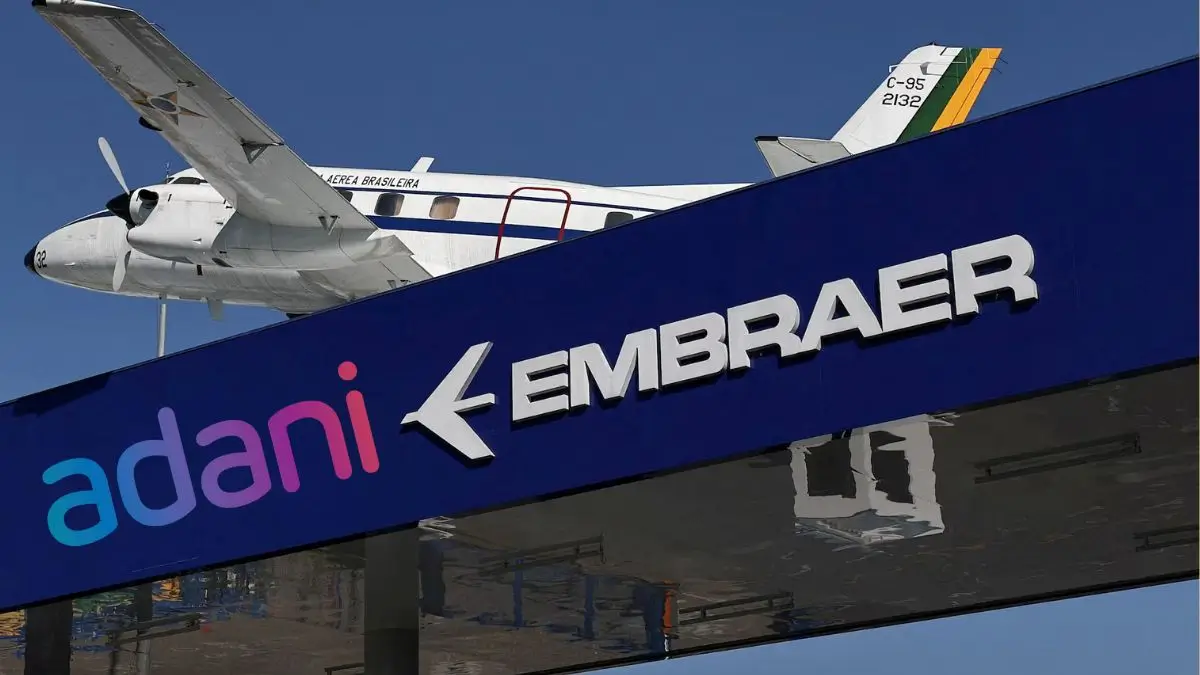
Adani Embraer pact to manufacture regional jets in India strengthens Make in India and boosts regional connectivity. Learn about aircraft assembly, supply chain, and pilot training initiatives.
Adani-Embraer Pact to Manufacture Aircraft in India: A Strategic Milestone
Introduction: India’s Leap in Civil Aviation Manufacturing
In a historic development for the Indian aviation sector, the Adani Group and Brazil’s Embraer SA signed a strategic pact to explore aircraft manufacturing in India. This Memorandum of Understanding (MoU) aims to establish a regional aircraft manufacturing ecosystem within the country—a move that enhances domestic aerospace capabilities, aligns with national initiatives like Make in India and Aatmanirbhar Bharat, and supports regional connectivity goals.
Details of the Adani-Embraer Agreement
The agreement outlines cooperation in several key areas of the aerospace value chain:
- Aircraft assembly and manufacturing: Plans to set up a final assembly line for regional jets in India.
- Supply chain development: Building an indigenous supplier base for critical components rather than relying heavily on imports.
- Aftermarket services: Maintenance, repair, and operational support structures to serve aircraft over their lifecycle.
- Pilot training and skill development: Enhancing local training infrastructure to support pilots and technical personnel.
Although the exact financial details and facility location have not been disclosed, this pact underlines a long-term partnership between Adani and Embraer to contribute to India’s aviation growth story.
Who Is Embraer and Why It Matters
Embraer is one of the world’s largest aircraft manufacturers, known primarily for producing regional jets that carry between 70 and 140 passengers. These jets are ideal for short- and medium-haul routes in domestic and international markets.
For India, which is among the fastest-growing aviation markets globally, partnering with a world leader like Embraer offers access to advanced aerospace engineering, global market reach, and expertise in efficient aircraft production.
Strategic Benefits for India’s Aviation Sector
Boost to Regional Connectivity
India’s regional air transport is expanding rapidly under schemes like UDAN (Ude Desh ka Aam Nagrik)—aimed at linking Tier-2 and Tier-3 cities. The availability of domestically assembled regional jets can help reduce costs and enhance accessibility for airlines, supporting faster growth in regional connectivity.
Strengthening Aerospace Manufacturing
This pact supports the government’s vision of increasing India’s share in the global aircraft manufacturing ecosystem. By advancing from being a buyer of aircraft to a manufacturer and assembler, India can create jobs, develop technical skills, and foster innovation in the aerospace sector.
Complementing National Objectives
The partnership aligns with Make in India, which encourages foreign investments with technology transfer and expands domestic manufacturing capabilities. Additionally, it supports Aatmanirbhar Bharat (self-reliance), reducing dependence on imported aircraft and aviation components.

Why This News Is Important for Government Exam Aspirants
Significance in Strategic and Economic Context
The Adani-Embraer pact represents a major development in India’s economic and strategic landscape. For exams like UPSC, SSC, Banking, Railway, and Defence, understanding this agreement helps aspirants link real-world policy moves with national goals such as Make in India and self-reliant industrial growth. It also reflects India’s push to build a strong manufacturing ecosystem in high-value sectors like aerospace, which plays a vital role in national infrastructure and connectivity.
Relevance to Government Policies and Initiatives
This news is directly connected to several ongoing government initiatives:
- Make in India: Promotes India as a global manufacturing hub
- Aatmanirbhar Bharat: Reduces import dependence and amplifies local industry
- UDAN Scheme: Encourages regional air connectivity across the country
Understanding how a private-public partnership like Adani-Embraer supports these goals provides aspirants with insights into India’s developmental strategy and policy implementation in crucial sectors.
Implications for Infrastructure and Skill Development
The pact is also significant because it involves pilot training, supply chain expansion, and aftermarket services—all contributing to domestic skill development and employment opportunities. For aspirants preparing for job roles in administrative services or technical cadres, this highlights how strategic collaborations can drive socioeconomic growth.
Historical Context: India’s Aviation Manufacturing Journey
Early Reliance on Imports
Historically, India has been a net importer of commercial aircraft, with major purchases from global OEMs (Original Equipment Manufacturers) like Airbus and Boeing. Despite having a growing airline industry, aircraft manufacturing and final assembly largely remained foreign-dominated.
Past Initiatives in Aerospace Manufacturing
India’s indigenous aerospace efforts began with projects like:
- Hindustan Aeronautics Limited (HAL) producing trainer aircraft and light combat aircraft
- Defense collaborations for specific military platforms
- Partnerships for maintenance and overhaul services
However, large-scale civil aircraft manufacturing had remained limited. ■
Shift Toward Domestic Capabilities
In recent years, India has accelerated moves toward domestic aerospace production:
- Emphasis on Make in India and self-reliance
- Partnerships with global players in defence and civil segments
- Policy support for final assembly lines and local value chains
The Adani-Embraer pact marks a significant turning point in this journey, potentially paving the way for a more comprehensive aviation manufacturing ecosystem in India.
Key Takeaways from Adani-Embraer Aircraft Pact
| S.No. | Key Takeaway |
|---|---|
| 1. | India’s Adani Group and Brazil’s Embraer signed an MoU to explore aircraft manufacturing in India. |
| 2. | The partnership focuses on aircraft assembly, supply chain development, MRO services, and pilot training. |
| 3. | This pact supports national initiatives such as Make in India and Aatmanirbhar Bharat. |
| 4. | Establishing a regional jet manufacturing ecosystem will boost India’s regional connectivity and aviation growth. |
| 5. | The development enhances India’s aerospace capabilities and reduces dependence on imported aircraft components. |
FAQs: Frequently Asked Questions
1. What is the Adani‑Embraer pact about?
The Adani Group and Brazil’s Embraer signed an MoU to explore aircraft manufacturing in India, focusing on regional jet assembly, supply chain development, and pilot training to strengthen India’s aviation ecosystem.
2. Which type of aircraft will be manufactured under this pact?
The pact primarily focuses on regional jets that can carry 70–140 passengers, suitable for short- and medium-haul domestic and international routes.
3. How does this pact align with the Make in India initiative?
By setting up domestic assembly lines, supply chains, and maintenance facilities, the pact promotes local manufacturing, reduces import dependence, and enhances India’s aerospace capabilities.
4. What is the significance of this pact for regional connectivity in India?
The availability of domestically assembled regional jets will boost regional connectivity, especially under schemes like UDAN, making air travel accessible to smaller cities and towns.
5. Who is Embraer and why is it important for India?
Embraer is a leading global aircraft manufacturer from Brazil, known for its regional jets. Its expertise brings advanced technology, global best practices, and technical know-how to India’s aerospace sector.
6. Will this pact create job opportunities in India?
Yes, the pact will generate employment across pilot training, technical services, manufacturing, and maintenance, contributing to skill development in the aerospace sector.
7. Where will the aircraft be assembled in India?
The exact location of the final assembly line has not been disclosed, but the project will focus on building local aerospace infrastructure.
8. How does this pact support Aatmanirbhar Bharat?
It promotes self-reliance in aircraft manufacturing, reduces dependency on imports, and strengthens domestic technological and industrial capabilities.
9. Is this pact limited to civil aviation?
While primarily for civil aviation, the skills, supply chains, and infrastructure developed can also benefit defence and strategic sectors in the future.
10. What are the long-term benefits of this partnership for India?
The pact will improve aircraft manufacturing expertise, regional connectivity, job creation, and domestic aerospace supply chains, positioning India as a key player in global aviation.
Some Important Current Affairs Links