









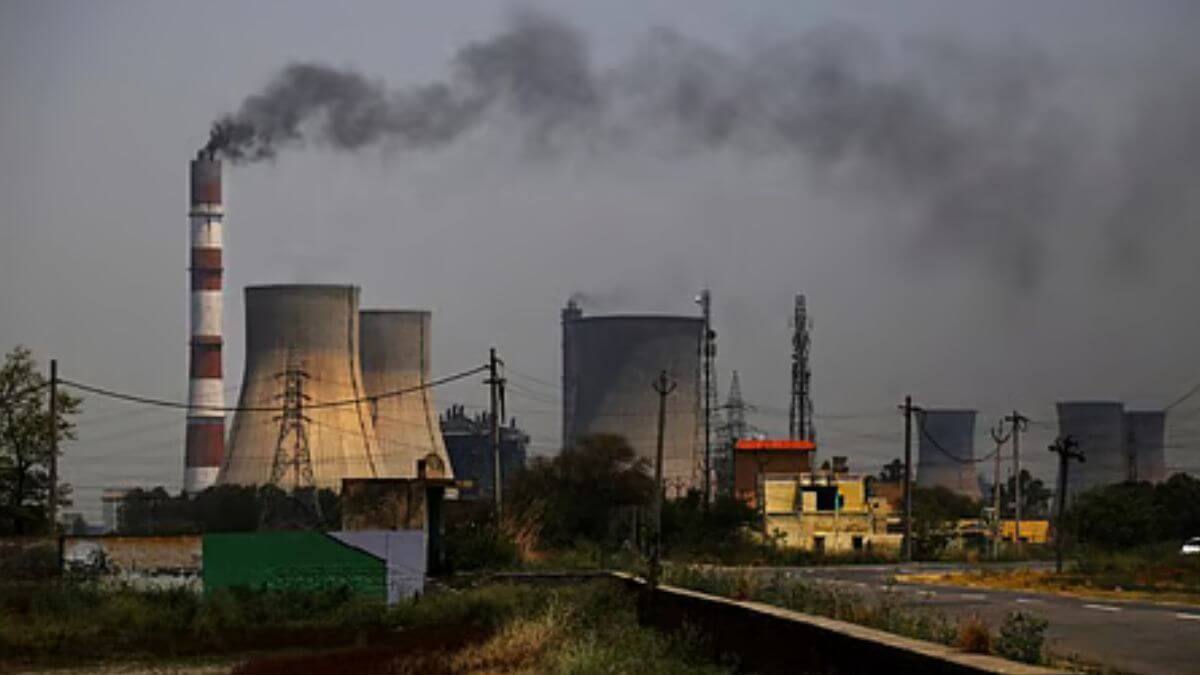
India carbon credit scheme 2026 expands GEI targets to 208 industries including petrochemicals and textiles. Learn about carbon trading, emission intensity regulations, and compliance mechanisms.
Government Expands Carbon Credit Trading Scheme with New GEI Targets
India’s Climate Policy Takes a Big Leap Forward
In January 2026, the Government of India notified expanded Greenhouse Gas Emission Intensity (GEI) targets under the Carbon Credit Trading Scheme (CCTS) — a strategic climate policy framework aimed at reducing industrial greenhouse gas emissions. This move brings 208 additional carbon-intensive entities under the regulatory compliance mechanism of the Indian Carbon Market (ICM), increasing the total number of obligated entities to 490.
The expansion formally integrates sectors such as petroleum refineries, petrochemicals, textiles, and secondary aluminium, which are among the most energy-intensive industries in India. By mandating GEI limits for these industries, the government encourages cleaner production methods and supports India’s broader environmental goals.
Understanding GEI and Its Importance
Greenhouse Gas Emission Intensity (GEI) refers to the amount of greenhouse gas emitted per unit of output produced — a metric that helps measure industrial efficiency rather than just total emissions. Under the CCTS, obligated entities must either meet their GEI targets or purchase tradable carbon credits from the market if they fall short.
This system creates a market-driven incentive for companies to adopt cleaner technologies, improve energy efficiency, and innovate sustainably. Successful entities that reduce emissions beyond their targets can sell surplus carbon credits, creating economic benefits alongside environmental gains.
Role of Regulatory Bodies and Implementation
The expansion was formalised through notification by the Ministry of Environment, Forest and Climate Change (MoEFCC). Regulatory oversight, compliance monitoring, and implementation support are provided by agencies such as the Bureau of Energy Efficiency (BEE) and the Central Pollution Control Board (CPCB).
Under the CCTS framework:
- Firms exceeding their GEI targets must purchase carbon credits or face environmental compensation penalties.
- Entities performing better than required accumulate carbon credit certificates, which are tradable and can be banked.
Economic and Industrial Impact
For industries, this expanded scheme means re-evaluating energy practices, investing in cleaner technologies, and integrating sustainability into long-term strategies. While some sectors may perceive increased compliance costs initially, the benefits include enhanced global competitiveness and access to carbon finance opportunities.
Further, as global markets tighten emissions norms, Indian industries that adapt early to carbon compliance will be better positioned competitively in international trade and investment.

Why This News is Important for Government Exam Aspirants
Climate Policy & National Strategy Relevance
The expansion of the Carbon Credit Trading Scheme is a significant policy development in India’s climate governance architecture. It reflects India’s commitment to its Nationally Determined Contributions (NDCs) under the Paris Agreement and its broader climate objectives. Understanding this initiative helps students in subjects like Environment, Ecology, Economy, and Governance — especially for UPSC, PSC, SSC, and Banking exams where climate policy questions are frequent.
Interlinkage With Key Syllabus Areas
This news connects multiple core syllabus areas:
- Economic Policy: Market-based mechanisms for pollution control.
- Environment & Ecology: Greenhouse gas emissions and sustainability.
- Industrial Regulation: Role of compliance frameworks and regulatory bodies.
- International Agreements: Commitments under global climate frameworks such as the UNFCCC.
Understanding GEI targets and carbon markets equips aspirants with knowledge of innovative environmental governance, which is increasingly becoming relevant in competitive exams’ current affairs sections.
Historical Context: India’s Carbon Market and Emission Intensity Regulation
India’s journey toward a domestic carbon market began with the introduction of the Carbon Credit Trading Scheme (CCTS) in 2023. The CCTS was established to create a market-driven model for greenhouse gas emission reductions, enabling industries to trade carbon credits — tradable units representing quantified emission reductions.
In 2025, India notified mandatory GEI targets for the first batch of energy-intensive sectors — including aluminium, cement, chlor-alkali, and pulp and paper industries — covering approximately 282 obligated entities. These targets were structured for the 2025-26 and 2026-27 compliance periods and introduced market mechanisms that allow firms to earn, sell, or buy carbon credits based on performance.
The 2026 expansion builds on this foundation by bringing additional industries such as textiles and petrochemicals into the compliance fold, signaling a scaling up of carbon compliance mechanisms. This step reflects evolving global climate expectations and India’s aspiration to balance industrial growth with environmental sustainability.
Key Takeaways from “Government Expands Carbon Credit Trading Scheme with New GEI Targets”
| S.No. | Key Takeaway |
|---|---|
| 1 | The Government of India expanded GEI targets under the Carbon Credit Trading Scheme (CCTS). |
| 2 | 208 additional carbon-intensive entities have been brought under compliance, increasing total obligated entities to 490. |
| 3 | GEI targets measure emissions per unit of industry output, focusing on emission intensity. |
| 4 | Industries meeting targets can sell carbon credits; those lagging must buy credits or pay penalties. |
| 5 | The expansion encourages adoption of cleaner technologies and supports India’s climate goals. |
FAQs on Government Expands Carbon Credit Trading Scheme with New GEI Targets
1. What is the Carbon Credit Trading Scheme (CCTS) in India?
The CCTS is a market-based mechanism where industries with high greenhouse gas emissions can trade carbon credits. Companies meeting their emission targets can sell surplus credits, while those exceeding targets must buy credits or pay penalties. It aims to reduce India’s industrial carbon footprint.
2. What are Greenhouse Gas Emission Intensity (GEI) targets?
GEI targets measure the amount of greenhouse gas emitted per unit of production. Industries must comply with these targets, either by reducing emissions or buying carbon credits, to ensure sustainable industrial growth.
3. How many industries were added in the 2026 expansion?
The government added 208 additional carbon-intensive industries, increasing total obligated entities to 490, including sectors like petroleum refineries, petrochemicals, textiles, and secondary aluminium.
4. Which government bodies oversee the CCTS implementation?
The Ministry of Environment, Forest and Climate Change (MoEFCC) notifies GEI targets, while agencies like the Bureau of Energy Efficiency (BEE) and Central Pollution Control Board (CPCB) monitor compliance.
5. How can industries benefit from exceeding GEI targets?
Industries that reduce emissions beyond their GEI targets earn tradable carbon credits. These can be sold to other companies, generating additional revenue while promoting clean production technologies.
6. Why was the 2026 expansion significant?
It covers previously unregulated industries like textiles and petrochemicals, signaling India’s commitment to scalable climate compliance and enhancing alignment with international climate commitments under the Paris Agreement.
7. How does CCTS impact India’s climate strategy?
By expanding emission regulations to more industries, CCTS helps India achieve its Nationally Determined Contributions (NDCs), reduce industrial emissions, and promote sustainable industrial development.
8. What is the difference between total emissions and emission intensity?
Total emissions measure the overall greenhouse gases released. Emission intensity (GEI) measures emissions per unit of output, promoting efficiency even if production scales up.
9. Can carbon credits be used internationally?
Currently, India’s carbon credit market is domestic, but credits may indirectly improve global trade competitiveness as industries comply with global emission norms.
10. Which industries are most affected by the new GEI targets?
Industries like petroleum refineries, petrochemicals, textiles, secondary aluminium, cement, pulp and paper, and other energy-intensive sectors are most impacted.
Some Important Current Affairs Links