








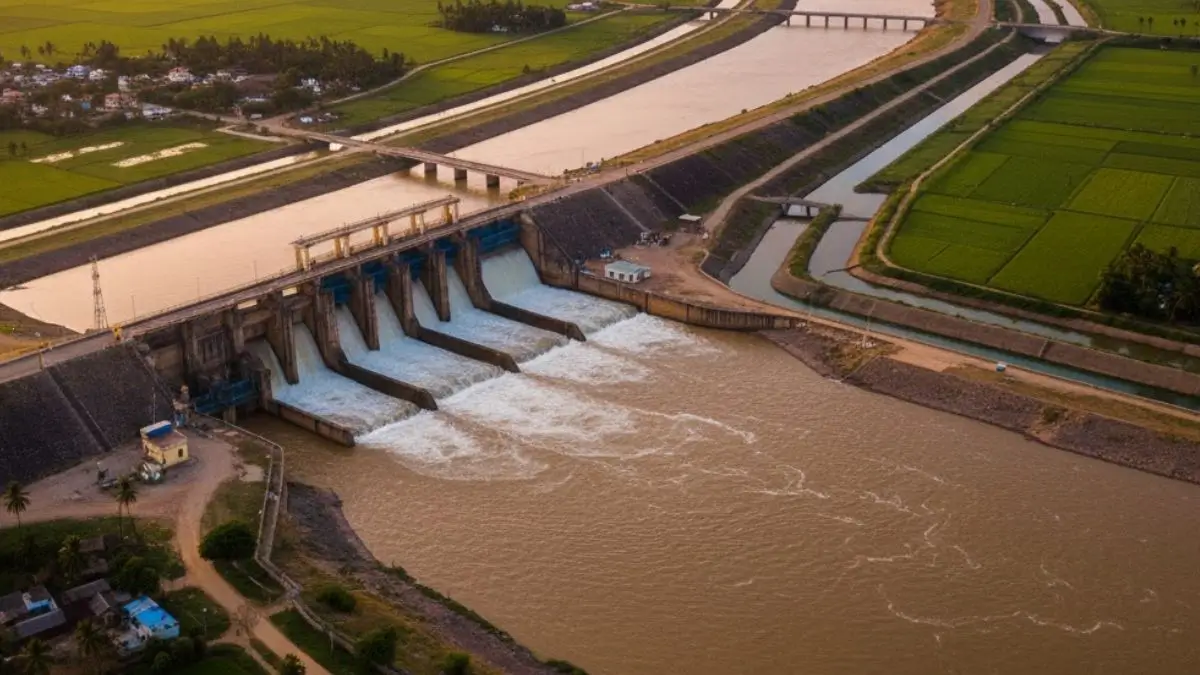
Bembla River irrigation project approved in Maharashtra with ₹4,775 crore budget, boosting agriculture, water supply, and rural livelihoods under PMKSY.
Maharashtra Cabinet Approves ₹4,775 Crore Bembla River Irrigation Project
Major Policy Decision by Maharashtra Government
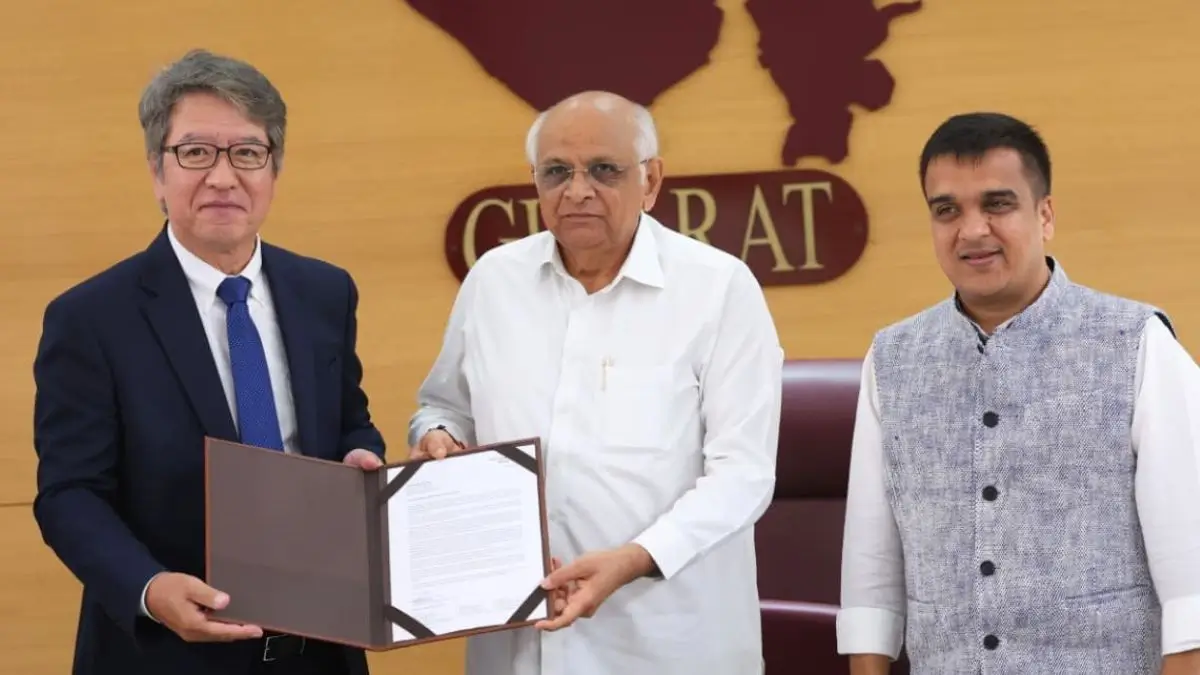
The Maharashtra Cabinet has recently approved the ₹4,775 crore Bembla River Irrigation Project to expand irrigation infrastructure in the drought-prone region of Yavatmal district. This key decision, taken at a Cabinet meeting chaired by Chief Minister Devendra Fadnavis, aims to address chronic irrigation shortages and boost agricultural productivity across eastern Maharashtra.
Overview of the Bembla River Irrigation Project
The Bembla River Irrigation Project is a large-scale irrigation initiative designed to provide assured water supply for agriculture across 58,768 hectares (approximately 52,000+ hectares reported) in five talukas — Ner, Babhulgaon, Kalamb, Ralegaon and Maregaon. The project falls under the jurisdiction of the Vidarbha Irrigation Development Corporation and lies within the Wardha sub-basin of the Godavari basin.
Originally conceived in 1983 and formally sanctioned in 1992, the project faced multiple delays, cost escalations and stalled execution for over three decades. The latest approval signifies renewed momentum to complete the project within a stipulated timeframe following directions from Prime Minister Narendra Modi.
Expected Agricultural Benefits
Once completed, the project will enable year-round irrigation by constructing canal distribution systems, lift irrigation facilities, micro-irrigation networks, and closed pipeline channels. The irrigation coverage will benefit thousands of farmers, reduce dependence on erratic monsoon rains, and support crop diversification — enabling a switch from subsistence farming to high-value cash crops.
Extended Benefits Beyond Irrigation
While irrigation remains the core focus, the project’s impact will extend to drinking water supply for local communities and support for fishery activities, contributing to rural livelihood diversification. The Cabinet also approved ₹89.32 crore for the rehabilitation of Mouza Dhamak village in Amravati district, which is to be developed into a model settlement for families affected by submergence due to project works.
Strategic Importance for Regional Growth
Agriculture is central to the economy in Vidarbha, yet the region has historically suffered from irrigation inadequacies and farmer distress. Reliable irrigation infrastructure from the Bembla project is expected to stabilise agricultural output, increase productivity and provide long-term water security. The development also aligns with national initiatives under the Pradhan Mantri Krishi Sinchayee Yojana (PMKSY) to strengthen irrigation in rain-fed areas.

Why This News Is Important for Government Exam Aspirants
Relevance in Agricultural & Infrastructure Policy
The approval of the ₹4,775 crore Bembla River Irrigation Project carries major implications for policies on water resource management, rural development and agricultural sustainability — key topics in exams like UPSC, State PSCs, SSC CGL, and Railway/Banking GK sections. The project underscores how governments prioritise long-term solutions to agrarian distress, especially in drought-prone zones such as Vidarbha.
Linkage to Government Schemes and Governance
This development ties directly to flagship schemes such as Pradhan Mantri Krishi Sinchayee Yojana (PMKSY), which aims to increase water use efficiency and irrigation coverage across India. Understanding such linkages reflects the government’s integrated approach to development — a key area examined under Governance, Economic Development and Public Policy in both prelims and mains exam formats.
Gender, Rural Livelihood & Employment Impact
Reliable irrigation can improve crop yields, diversify agriculture and create employment opportunities during construction and subsequent allied activities such as fisheries and agro-processing. This has socioeconomic relevance for sections like rural employment, women in agriculture, and poverty alleviation, often appearing in current affairs and analytical questions.
Environmental and Climate Context
Understanding water resource projects also requires awareness of environmental sustainability — how infrastructure is adapted to mitigate climate risk and improve water security in regions suffering from erratic rainfall, a critical issue in Environment and Ecology syllabi.
Historical Context of the Bembla River Irrigation Project
Origin and Early Sanction
The Bembla Irrigation Project was first proposed in 1983 to tap the waters of the Bembla river — a tributary in the Wardha sub-basin of the Godavari basin — intending to expand irrigation in the drought-stricken Vidarbha region. The project was formally sanctioned in 1992 with an estimated cost of ₹190.36 crore, reflecting the initial push towards water infrastructure development in the region.
Years of Delay and Cost Overruns
Over the next three decades, the project witnessed significant delays and multiple cost escalations, with limited irrigation benefits realised on the ground. It became a symbol of administrative inertia — with government reviews noting unfinished canals, stalled work and limited impact despite funds being allocated.
Renewed Focus and Political Direction
In recent years, the central and state governments prioritised the re-energising of long-pending infrastructure projects. A high-level review chaired by the Prime Minister directed the project’s completion within a timeline, leading to the Maharashtra Cabinet’s approval of ₹4,775 crore for the revived project — marking a turning point in longstanding agrarian infrastructure plans.
Key Takeaways from Bembla River Irrigation Project Approval
| S.No. | Key Takeaway |
|---|---|
| 1 | Maharashtra Cabinet approved ₹4,775 crore for the Bembla River Irrigation Project. |
| 2 | The project is located in Yavatmal district, aimed at expanding irrigation to drought-prone areas. |
| 3 | It intends to bring irrigation to over 58,000 hectares across five talukas. |
| 4 | Additional funds of ₹89.32 crore were approved for rehabilitation of affected villagers. |
| 5 | The project supports agricultural growth, drinking water supply and rural livelihoods under schemes like PMKSY. |
FAQs: Frequently Asked Questions
1. What is the Bembla River Irrigation Project?
The Bembla River Irrigation Project is a large-scale irrigation initiative in Maharashtra, approved with a budget of ₹4,775 crore, aimed at providing irrigation to drought-prone areas in Yavatmal district and nearby regions.
2. Which areas will benefit from the project?
The project will benefit over 58,000 hectares across five talukas: Ner, Babhulgaon, Kalamb, Ralegaon, and Maregaon, enhancing agriculture, drinking water, and rural livelihoods.
3. When was the project first proposed?
The project was initially proposed in 1983 and sanctioned in 1992, but execution faced significant delays due to administrative and financial hurdles.
4. What is the role of PMKSY in this project?
The project aligns with the Pradhan Mantri Krishi Sinchayee Yojana (PMKSY), which focuses on improving water use efficiency, expanding irrigation coverage, and supporting sustainable agriculture.
5. Are there provisions for affected villagers?
Yes, the Maharashtra Cabinet approved an additional ₹89.32 crore for the rehabilitation of villages affected by submergence due to the project, ensuring livelihood support and resettlement.
6. How will this project impact agriculture?
It will provide assured irrigation, reduce dependence on monsoon rainfall, enable crop diversification, and support high-value cash crop cultivation.
7. What is the strategic importance of the project?
It strengthens regional water security, boosts agricultural productivity, creates employment opportunities, and aligns with sustainable development goals in Maharashtra.
Some Important Current Affairs Links