





India Japan Coast Guard HNS drill in Mumbai enhances maritime safety, bilateral cooperation, and preparedness against hazardous chemical spills at sea.
India‑Japan Coast Guards Hold Joint HNS Response Drill in Mumbai – Current Affairs Article for Government Exam Preparation
📌 Introduction: India‑Japan Coast Guard Joint HNS Response Drill
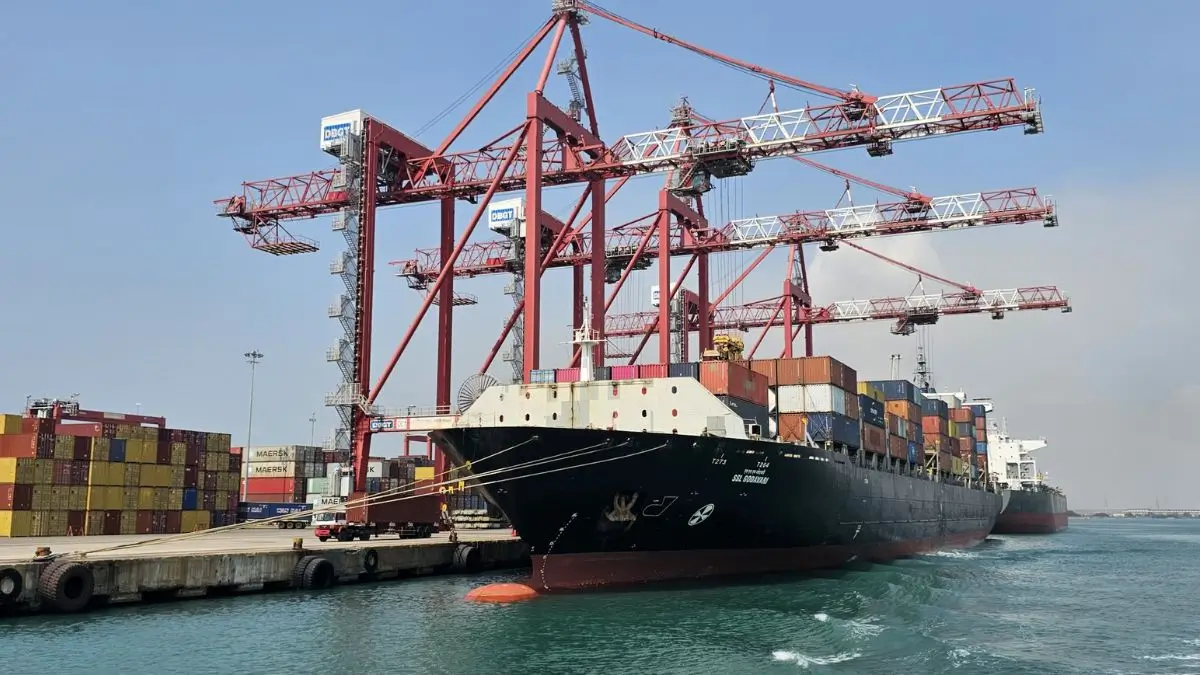
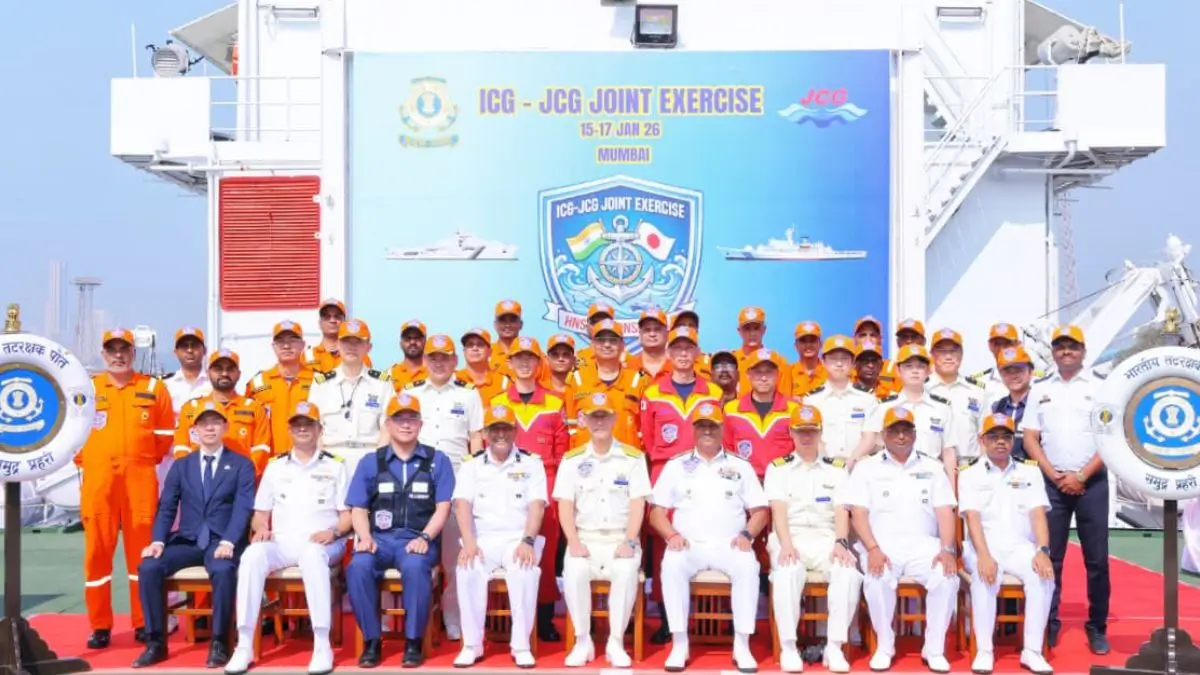
The Indian Coast Guard (ICG) and the Japan Coast Guard (JCG) recently conducted a joint Hazardous and Noxious Substances (HNS) response drill in Mumbai to enhance maritime safety cooperation and strengthen operational coordination between the two maritime forces. The drill took place on the Indian Coast Guard pollution response vessel, ICGS Samudra Prahari, involving specialised teams from both nations.
This joint training exercise is part of ongoing efforts to deepening bilateral maritime cooperation, showcasing the shared commitment of India and Japan to a free, open, and secure Indo‑Pacific region.
🌊 HNS Response Drill: Building Enhanced Operational Preparedness
The main focus of this exercise was the Hazardous and Noxious Substances (HNS) response drill, which involved simulated scenarios of chemical spills at sea. This type of maritime pollution training is essential in preparing coast guard teams for real‑world emergencies involving dangerous substances that threaten marine ecosystems, coastal communities, and shipping lanes.
Detailed planning sessions, classroom interactions, and coordinated rehearsals were conducted in Mumbai before the exercise at sea. Participants reviewed standard operating procedures, exchanged best practices, and developed interoperable response strategies for handling HNS incidents.
🤝 High‑Level Engagement between ICG and JCG Officials
The event also included a high‑level engagement between senior officials from both coast guards. A delegation led by Japan Coast Guard Commandant Admiral Yoshio Seguchi visited the Indian Coast Guard Regional Headquarters (West), where he met Inspector General Bhisham Sharma, Commander of Coast Guard Region (West). Both sides emphasised the importance of operational cooperation, information sharing, and capacity building.
This interaction reinforced the long‑standing collaboration under the existing Memorandum of Cooperation (MoC) between the ICG and JCG, which aims to promote joint training, personnel exchanges, and annual exercises.
📍 Significance of Joint Maritime Drills
Joint drills like the HNS response exercise play a critical role in enhancing maritime domain awareness and preparedness against environmental threats. In an era of increasing maritime traffic and complex security challenges, such collaborations improve the ability of both nations to respond quickly and effectively to maritime hazards.
Moreover, participating in joint exercises boosts interoperability and fosters stronger trust and communication between maritime forces — a key requirement for maintaining peace and stability in the Indo‑Pacific region.

📌 Why This News is Important for Competitive Exams
Relevance to Government Exam Aspirants
This news is particularly important for students preparing for competitive exams such as UPSC (IAS), SSC, Banking, Railways, Defence (NDA/CDS), State PSCs, and Police Services because it highlights India’s strategic maritime partnerships and defence diplomacy initiatives. Understanding such exercises helps candidates prepare for questions related to international relations, maritime security, environmental protection at sea, and India’s role in the Indo‑Pacific.
Maritime Security and India’s Strategic Posture
India’s engagement with the Japan Coast Guard signifies strengthened maritime cooperation, which is crucial as India seeks to secure its coastline and sea lanes. Exam questions often target India’s strategic partnerships, collaborative military drills, and responses to environmental and security challenges – making this a key current affairs topic.
🕰️ Historical Context: India‑Japan Coast Guard Cooperation
India and Japan have maintained long‑standing maritime cooperation under a Memorandum of Cooperation (MoC) signed in 2006 to facilitate regular interactions, joint exercises, training exchanges, and professional visits between their coast guard forces. Over the years, this collaboration has expanded to cover pollution response, search and rescue operations, training exchanges, and joint drills aimed at improving maritime safety and security.
Joint HNS response drills are part of this broader framework that seeks to enhance operational interoperability, share best practices, and build capacity in dealing with emergency situations at sea. Both nations share common interests in maintaining a free and open Indo‑Pacific, countering threats such as maritime pollution, piracy, and illegal activities.
📌 Key Takeaways from India‑Japan Coast Guard HNS Response Drill
| S. No. | Key Takeaway |
|---|---|
| 1 | The Indian Coast Guard and Japan Coast Guard conducted a joint Hazardous and Noxious Substances (HNS) response drill in Mumbai. |
| 2 | The exercise was held onboard the Indian Coast Guard pollution response vessel ICGS Samudra Prahari. |
| 3 | Japan Coast Guard Commandant Admiral Yoshio Seguchi led the delegation and met senior ICG officials. |
| 4 | The drill focused on enhancing preparedness for maritime chemical spill emergencies. |
| 5 | The joint exercise reinforces bilateral maritime cooperation and commitment to a free and open Indo‑Pacific. |
FAQs: Frequently Asked Questions
1. What was the purpose of the India-Japan Coast Guard HNS response drill in Mumbai?
The drill aimed to enhance preparedness and operational coordination in responding to Hazardous and Noxious Substances (HNS) incidents at sea, ensuring maritime safety and environmental protection.
2. Which vessel was used for the joint HNS response exercise?
The exercise was conducted onboard the ICGS Samudra Prahari, a specialized Indian Coast Guard pollution response vessel.
3. Who led the Japanese delegation during the joint drill?
Admiral Yoshio Seguchi, Commandant of the Japan Coast Guard, led the delegation and engaged with senior Indian Coast Guard officials.
4. Why is this drill significant for India’s maritime strategy?
The drill strengthens bilateral maritime cooperation, enhances operational interoperability, and reflects India’s commitment to a free and secure Indo-Pacific region.
5. Under what framework do India and Japan conduct such joint exercises?
India and Japan conduct joint coast guard exercises under a Memorandum of Cooperation (MoC) that facilitates regular training, exchanges, and joint operational exercises.
6. What are HNS incidents, and why are they critical to manage?
HNS stands for Hazardous and Noxious Substances, including chemicals and dangerous cargo. Managing such incidents is crucial to prevent environmental damage and ensure safety of maritime traffic.
7. How do joint drills benefit government exam aspirants?
Students preparing for exams like UPSC, SSC, Banking, Defence, Railways, and State PSCs can answer questions related to international relations, maritime security, disaster management, and India’s strategic partnerships.
Some Important Current Affairs Links