Museveni secures seventh term in Uganda 2026 presidential elections with 71.65% votes. Learn about opposition claims, constitutional changes, and election significance for exams.
📌 Museveni Secures Seventh Term as President of Uganda: What Happened
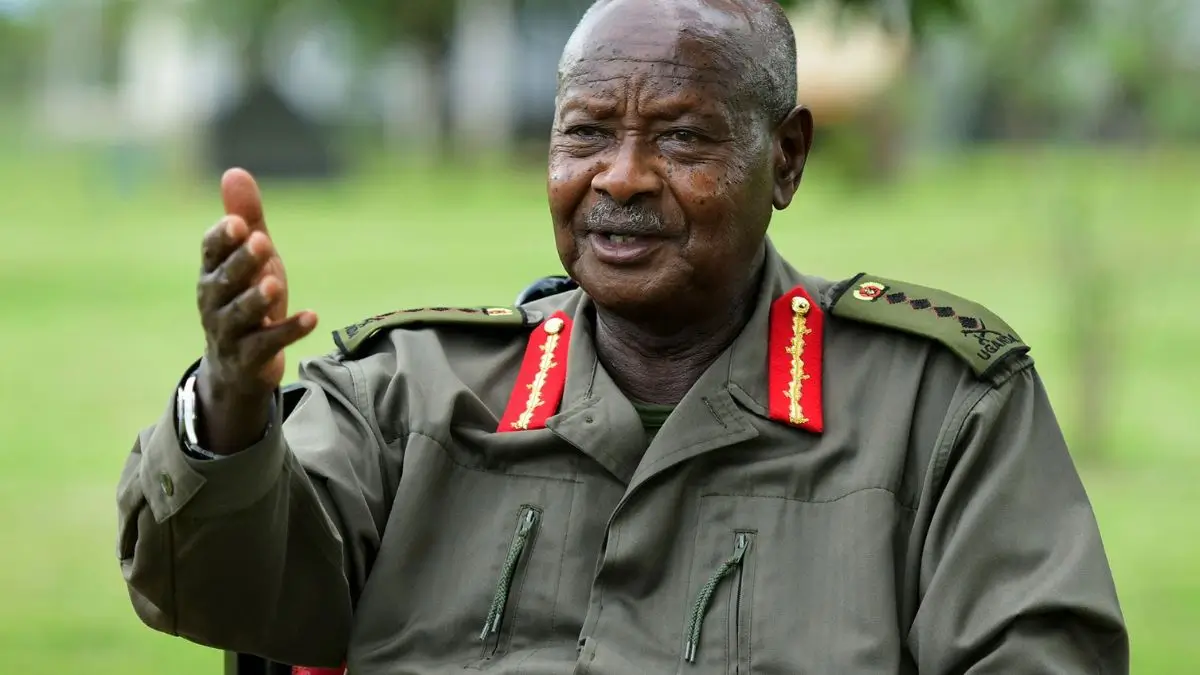
In a controversial and closely watched election held on 15 January 2026, Ugandan President Yoweri Kaguta Museveni was declared the winner of the presidential election, securing his seventh term in office. According to the Uganda Electoral Commission, Museveni received a commanding 71.65% of the total valid votes, well above the necessary threshold to avoid a runoff.
His main challenger, Robert Kyagulanyi Ssentamu — popularly known as Bobi Wine, representing the National Unity Platform (NUP), garnered about 24.72% of the vote but outrightly rejected the announced results, alleging widespread irregularities, ballot stuffing, and intimidation.
🗳️ Election Environment and Key Issues
The run-up to the election was marked by intense political tensions and reports of rights abuses and suppression of opposition activities. Security forces were frequently deployed during campaign events, and government critics reported harassment and arrests. Several opposition rallies were interrupted by security forces, and journalists covering events were reportedly attacked.
A nationwide internet blackout was also imposed by the government just days before the vote — a move the authorities defended as necessary to curb misinformation, though critics argued it undermined transparency and civil liberties.
After the election results were announced, the internet was partially restored to help economic activity, although key social media platforms remained restricted.
🇺🇬 Extended Leadership and Power Consolidation
Museveni, who first took power in 1986, is one of Africa’s longest-serving leaders. Earlier constitutional changes removed presidential term and age limits, enabling him to remain eligible for office well into his 80s.
While supporters credit him with political stability and infrastructure development, opposition voices and human rights organizations criticize his long hold on power, arguing that elections have lacked fairness and transparency.

🧠 Why This News Is Important
💡 A Major Political Development in Africa
This election is a significant political event not only for Uganda but also for global current affairs, especially in discussions relating to democratic processes, governance, and stability in Africa. For students preparing for competitive exams — including UPSC (IAS), PSCs, banking, and defense services — understanding such developments is crucial because it reflects ongoing debates about democracy vs. autocracy, the role of constitutional amendments, and the resilience of political institutions.
🌍 Implications for International Relations
Uganda’s political trajectory impacts regional dynamics in East Africa, particularly within the East African Community (EAC), and on issues like security cooperation, trade, and foreign investment. Additionally, international responses — including concerns from the United Nations and various human rights groups — highlight the importance of respecting civil liberties and electoral freedoms.
🧠 Relevance for Government Exam Aspirants
From an exam perspective, this news connects to topics such as:
- Constitutional amendments and executive power
- Election monitoring and credibility
- Human rights and governance
- International diplomatic reactions
Understanding these themes helps candidates answer questions on current affairs, international relations, and political systems with depth and clarity.
📜 Historical Context: Museveni’s Rule and Uganda’s Electoral Landscape
📅 Rise to Power
Yoweri Museveni first came to power in 1986 after a protracted guerrilla war against the then-government. His leadership ended years of political instability, which had included multiple coups and civil conflicts. For decades, he was seen both domestically and internationally as a stabilizing force.
🧑⚖️ Constitutional Changes
Museveni’s government introduced amendments to the Ugandan constitution that abolished presidential term limits (in 2005) and later removed age limits for presidential candidates (in 2017). These legal changes effectively allowed him to seek reelection well into his 80s, and many critics argue they weakened democratic checks and balances.
🗳️ Opposition and Democratic Challenges
Over successive elections, opposition figures such as Bobi Wine have gained popularity, especially among Uganda’s youth. However, elections have often been overshadowed by allegations of intimidation, media restrictions, and internet shutdowns, raising concerns about free and fair electoral processes.
Despite criticism, Museveni’s National Resistance Movement (NRM) has retained control of the government and parliamentary seats, and Uganda has never experienced a peaceful transfer of presidential power since independence in 1962.
📌 Key Takeaways from Uganda’s Election: Museveni Secures Seventh Term
| S. No. | Key Takeaway |
|---|---|
| 1 | President Yoweri Museveni secured his seventh term with 71.65% of the votes. |
| 2 | Opposition leader Bobi Wine rejected the results, alleging fraud and irregularities. |
| 3 | The election was marred by an internet blackout and reports of intimidation. |
| 4 | Museveni’s continued rule is a result of constitutional changes removing term and age limits. |
| 5 | Partial internet restoration followed the election to aid business, though social platforms stayed blocked. |
FAQs: Frequently Asked Questions
1. Who won the 2026 presidential election in Uganda?
Answer: Yoweri Kaguta Museveni won the election, securing his seventh term as President.
2. What percentage of votes did Museveni secure in the 2026 election?
Answer: Museveni received approximately 71.65% of the valid votes.
3. Who was Museveni’s main opponent in the 2026 election?
Answer: The main challenger was Robert Kyagulanyi Ssentamu, popularly known as Bobi Wine.
4. Why did the opposition reject the election results?
Answer: The opposition alleged vote rigging, irregularities, intimidation, and unfair practices, questioning the transparency of the election.
5. What measures were imposed by the government during the election?
Answer: The government imposed a nationwide internet blackout and increased security at opposition rallies, citing misinformation concerns.
6. How long has Museveni been in power?
Answer: Museveni has been in power since 1986, making him one of Africa’s longest-serving leaders.
7. Why is this election important for students preparing for government exams?
Answer: It covers topics on democracy, governance, constitutional amendments, human rights, and international relations, which are frequently asked in exams like UPSC, PSC, Banking, and Defence services.
Some Important Current Affairs Links